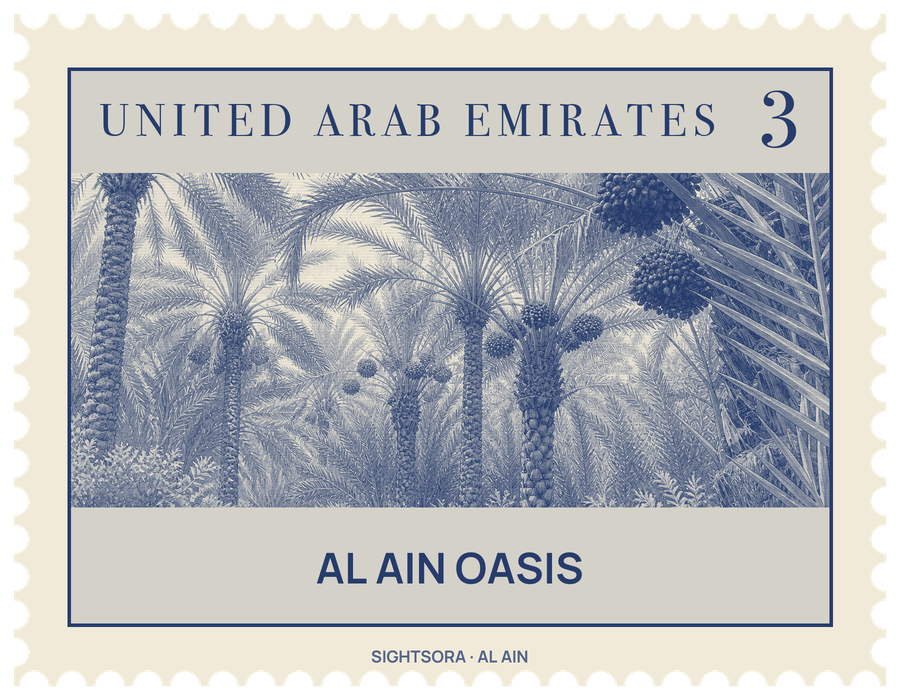
Its Arabic name means "Oasis of the Spring", and people have lived and farmed here for around 4,000 years. The oasis is part of a UNESCO World Heritage Site, and the border with the Omani town of Al Buraimi lies just to the northwest.
What keeps the palms alive in the desert is the falaj, an irrigation method thousands of years old in which dug channels, many of them underground, carry water from the mountains and from boreholes to the plots. Two systems serve the oasis, Al Aini and Dawood, and walkers can follow the open stretches of channel along the paths. The flow changes with the season, so a channel may be dry on one visit and running on the next. The same technique is found across Oman, Iran and India as well as the Emirates.
A visit here is mostly a slow walk under the palms on shaded lanes, with benches along the way, the sound of water in the channels and birds in the trees. The Eco-Centre uses interactive displays to explain how the oasis and its water system work. Around two hours is enough to see a good part of it. The Al Ain Palace Museum stands on the western edge, while Sultan Bin Zayed Fort and the Al Ain National Museum lie on the east side; Al Ain itself is about a 90-minute drive from the city of Abu Dhabi.