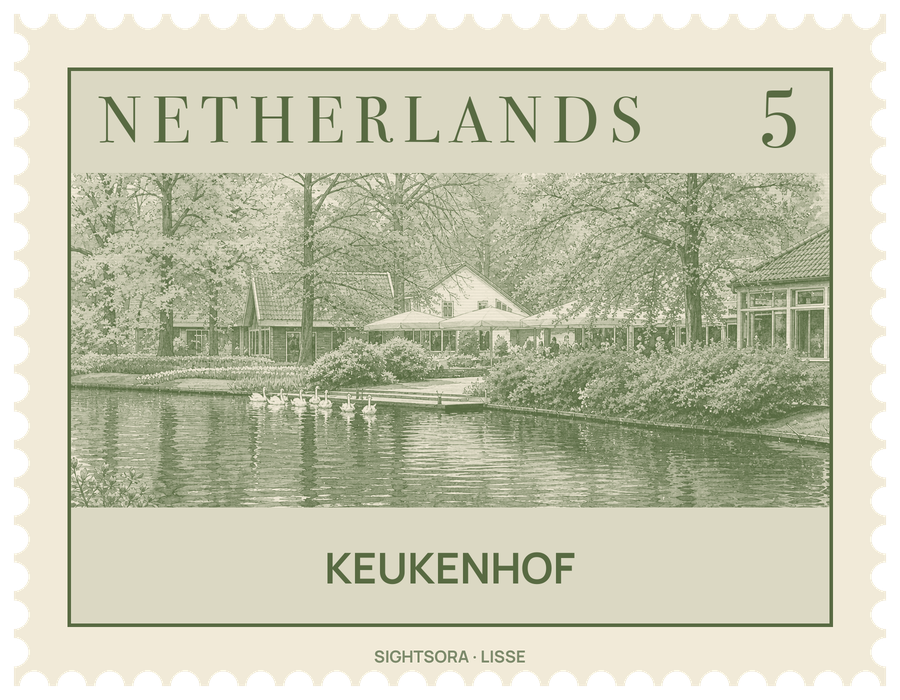
Across 32 hectares, around 7 million bulbs are planted every year; tulips are what most people come for, but the beds also hold hyacinths, daffodils, lilies, roses, carnations and irises. The park opens to the general public only for a display of about eight weeks in spring, while the castle grounds are used for private events and festivals the rest of the year.
The name means "kitchen garden": in the 15th century this land was the hunting ground of Slot Teylingen and supplied the castle with game, fruit and vegetables, and its best-known resident was Countess Jacoba van Beieren. In 1638 Adriaen Maertensz Block, who served the Dutch East India Company as captain and governor, bought the estate and three years later built a manor house, today's Castle Keukenhof. In 1857 the owners, Baron and Baroness Van Pallandt, brought in the father-and-son landscape architects Jan David and Louis Paul Zocher, who also laid out Amsterdam's Vondelpark, to rework the grounds around the castle in the English landscape style that still shapes the gardens. The flower park itself was set up in 1949 by bulb growers and flower exporters as a showcase for their trade and opened to visitors in 1950.
The display is planned months ahead. Every autumn 40 gardeners put the bulbs into the ground, supplied by more than 100 growers, and each spot gets three bulbs in layers: the shallowest flowers first for about three weeks, then the ones below take over, so the beds keep blooming for the whole opening period. Besides the tulip fields, visitors can walk through an English landscape garden of winding paths and sudden views, a walled historical garden with old varieties, a Nature Garden where shrubs and perennials grow among the bulbs, and a Japanese Country Garden. Four pavilions hold changing flower shows. The park receives no government subsidy and is run on ticket sales and its food and drink outlets.
Getting there
Buses run to Keukenhof from the train stations of Haarlem and Leiden and from Schiphol.