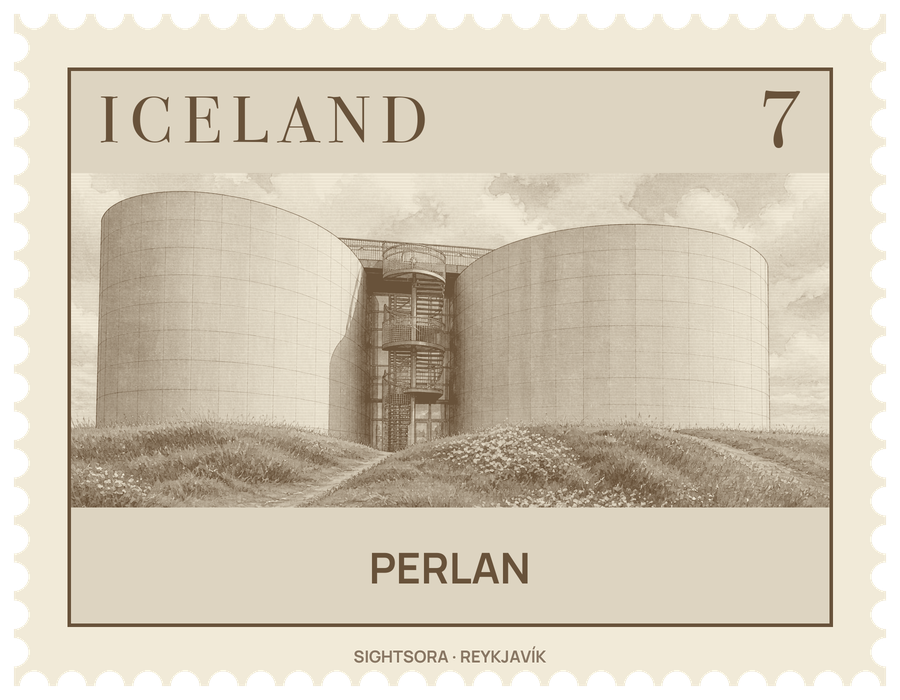
The tanks still matter to the city: four of them continue to serve the district heating system, while the other two have been turned into an ice cave and a planetarium. Inside, Perlan works as a natural history museum where Icelandic nature is explained through hands-on exhibits.
The first tank went up on the hill in 1939. At 61 metres above sea level it gave enough pressure to send water anywhere in Reykjavík, as high as the 10th floor of a building, and five more tanks were added over the next two decades. They were demolished and rebuilt in the late eighties, and on June 21, 1991, the new structure designed by the engineer Jón Búi Guðlaugsson opened to the public, a project pushed forward by Davíð Oddsson while he was mayor. Each tank can hold up to five million litres of hot water.
The ice cave, built inside one of the tanks, runs for 100 meters and roughly 400 tons of snow, ice and volcanic ash went into it; and it sits alongside an interactive exhibition on Icelandic glaciers. In the planetarium, a Northern Lights show called Áróra plays on the dome. The Wonders of Iceland exhibition covers geysers, earthquakes, volcanoes, birds and the mammals of Icelandic waters, with a timeline of how the island formed; one of its centrepieces is a ten-meter-high replica of the Látrabjarg seabird cliff. The Icelandic Museum of Natural History adds its own exhibition, Water in Icelandic Nature, and a Lava Show film recreates a volcanic eruption.
On top of the tanks, an observation deck wraps all the way around the dome, looking out over Reykjavík, the surrounding mountains and the Atlantic Ocean. Under the dome a restaurant and café turn through a full 360°, and the building also has an ice cream parlour and a gift shop.