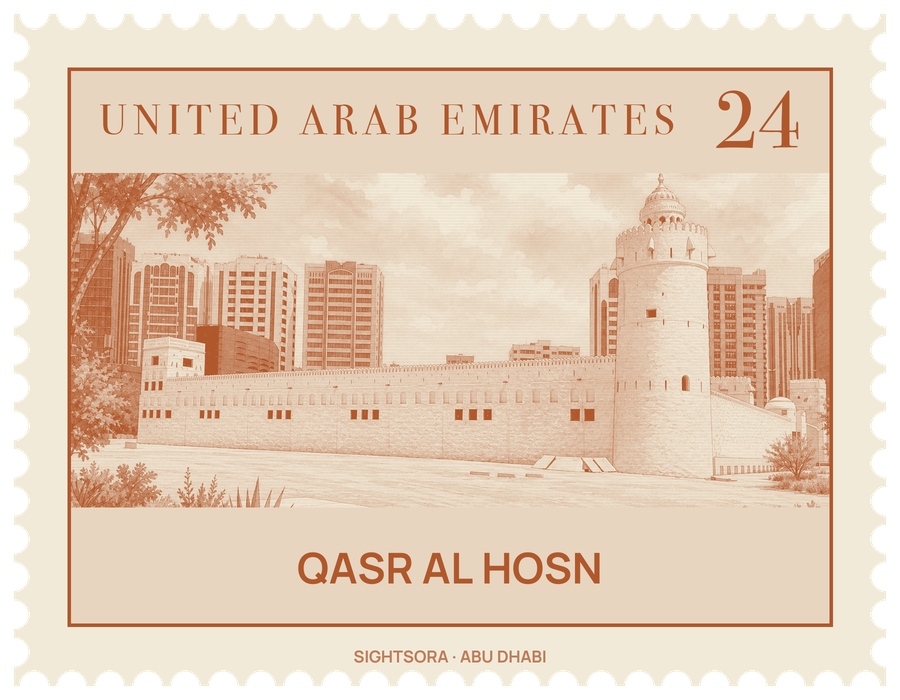
In 1793 the ruler Shakhbut bin Dhiyab Al Nahyan enlarged it into a small fort and made it the permanent home of the ruling sheikh. Its present shape dates from a major extension in the late 1930s, paid for with income from the first oil licence granted in Abu Dhabi, and it remained the ruler's palace and the seat of government until 1966.
It is also known as the White Fort or the Old Fort, although its walls were not originally white: they were painted bright white during renovations between 1976 and 1983. After a conservation and restoration project lasting a decade, the fort opened again in 2018 as a museum, with artefacts and pictures that trace the history of the country and weapons used in the region over the centuries.
The fort is the heart of the wider Al Hosn complex, which also takes in the House of Artisans, the Cultural Foundation and the building of the National Consultative Council. At the House of Artisans, traditional Emirati crafts are shown and taught in workshops and demonstrations of Sadu, Khoos and Talli. Every year the grounds host the Qasr Al Hosn Festival, an 11-day event of music and dance from the UAE's heritage, when some normally restricted parts of the fort are opened. On nearby Zayed the First Street stands the historic Zayed the Second Mosque, a different building from the Grand Mosque.