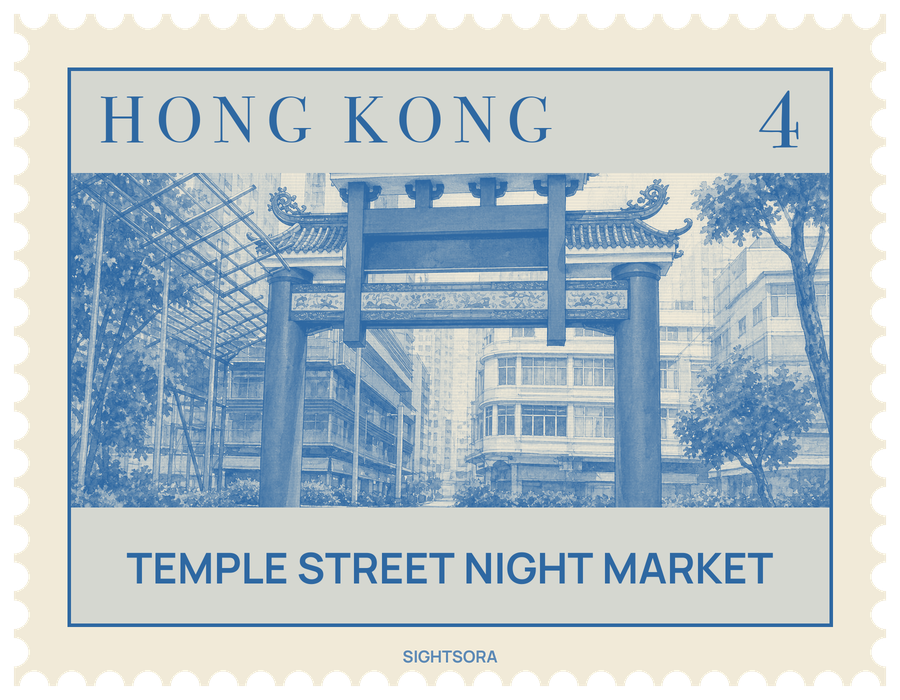
The street dates from the Qing dynasty and takes its name from the Tin Hau temple that was built on the site. Its market has long been nicknamed Men's Street because so much of what is sold is aimed at men: jeans, T-shirts, trousers, shoes, lighters and accessories, piled onto carts alongside mobile phones and watches.
Mixed in with the new goods are cheap second-hand finds such as cassettes, video tapes, old newspapers and antiques, and haggling over prices is part of the routine, as in other night markets of Southeast Asia. Food is as much of a draw as shopping: snack stalls and roadside tables serve local street cooking, and seafood restaurants along the street offer rice hot pots. Old clinics practising traditional Chinese medicine also line the street, some of them run by the same physicians for many years.
Filmmakers have used Temple Street as shorthand for every walk of Hong Kong life, and gangster films in particular have cast it as a street of crime. Queen of Temple Street (1990) and The Prince of Temple Street (1992) are named after it, and appears in Stephen Chow's The God of Cookery. The first Temple Street Festival was held in September 2003.
Getting there
Yau Ma Tei MTR station, Exit C, is about a minute's walk from the street; from Jordan station, Exit A, the walk takes around ten minutes.