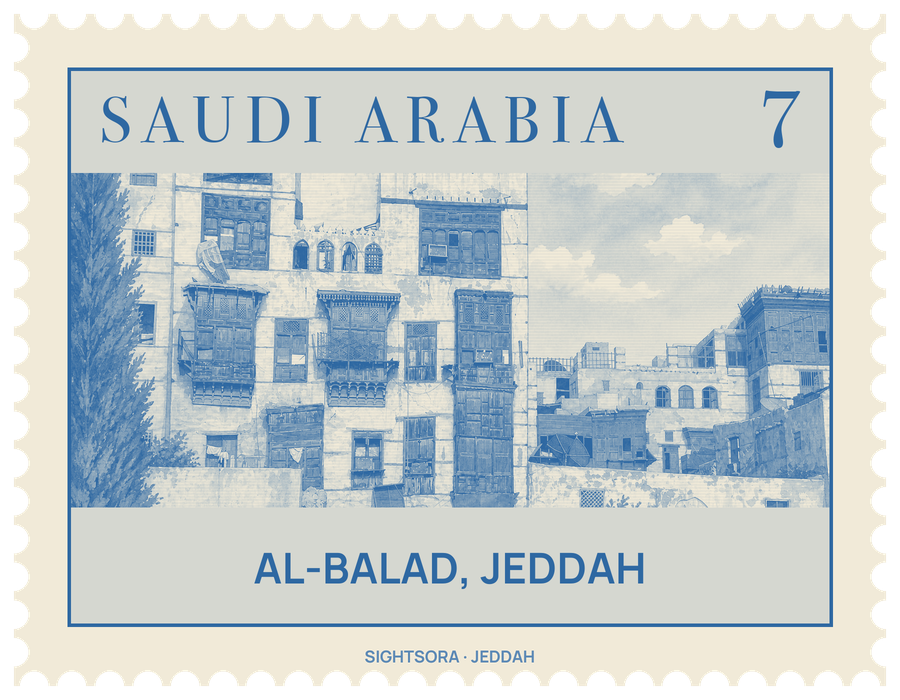
Founded in the 7th century, it remained the centre of the city for most of its history, and as Jeddah Historic District it was added to the UNESCO World Heritage list in 2014.
The old town lost its defensive walls in the 1940s, and during the oil boom of the 1970s and 1980s many families moved to newer districts in the north. Preservation work by the city began in the 1970s, and in 1991 the municipality set up the Jeddah Historical Preservation Society to look after the architecture and culture of the district. A government programme for Historic Jeddah now protects and rehabilitates the heritage buildings and carries out research and excavation, with the aim of reviving the area as a centre for culture and the arts.
Al-Balad is divided into historic quarters. Al-Mazloum in the northeast holds Dar Al-Qabil, the Al-Shafi'i Mosque and the Souq Qabil market; Al-Sham in the north has Dar al-Zahid and Dar al-Sarti; Al-Yemen, south of Al-Alawi Street and named for the direction of Yemen, contains Dar Al-Nassif, Dar Al-Jumjum and Dar Al-Shaarawi; and Al-Bahr in the southwest faces the sea.
The best-known houses include, in the Al-Yemen quarter, Al Nassif House and Al Jamjoom House, Al Baeshen House, and Dar Al Banaja and the Al Zahed houses in Al-Sham, along with Al Qabal Mosque. Some of these buildings rise more than 30 metres and remain in good condition. Walking the lanes, visitors also pass carved wooden doors, Beit Noor Wali in the Al-Yemen quarter and Beit Amir Al Bahr, the House of the Prince of the Sea.