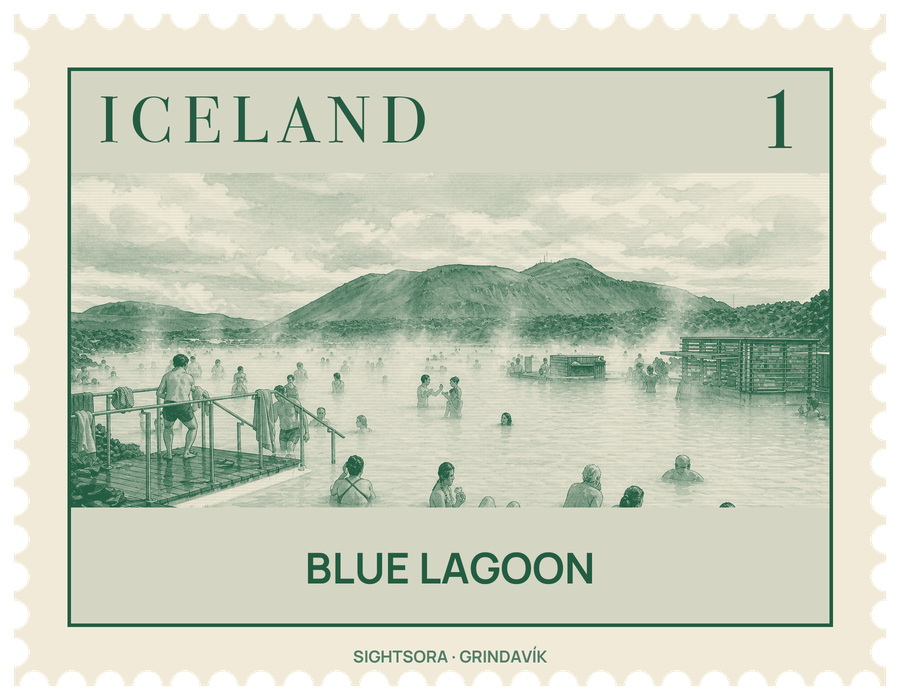
Its water comes from the neighbouring Svartsengi geothermal power station: superheated water drawn up from the ground drives the plant's turbines and then heats a municipal water system before it is fed into the lagoon. Keflavík International Airport lies approximately 20 km away.
The milky blue colour comes from silica, which settles on the bottom as a soft white mud that bathers smear on their skin. The water also carries salts and algae, has a salt content of 2.5% and renews itself every two days; in the bathing area it averages 37–39 °C. Its minerals are too concentrated for the water to be reused, so after the lagoon it soaks back into the porous lava field nearby, where the deposits gradually seal the ground and new ponds have to be dug.
Pools began to form from the plant's runoff soon after Svartsengi opened in 1976. In 1981 a man with psoriasis bathed in them and found that his symptoms eased, and word spread; bathing facilities followed in 1987, the Blue Lagoon company was founded in 1992 and a psoriasis clinic opened in 1994. From 1995 the company began selling skin products made with silica, algae and salt, sold under the Blue Lagoon Skin Science name.
A ramp running down into the water and a shower chair make the lagoon accessible to wheelchair users, and a private changing room is available for guests with special needs.