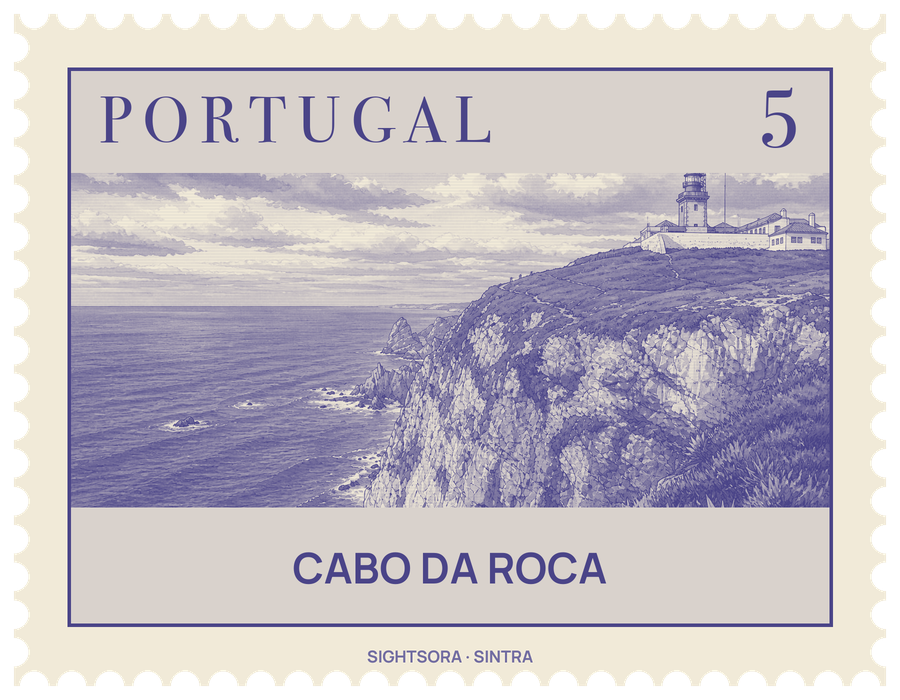
The cape marks the western tip of mainland Portugal and of continental Europe, and a monument at the site carries a stone plaque inscribed with its coordinates. The Romans called it Promontorium Magnum, and sailors of the Age of Sail knew it as the Rock of Lisbon.
The lighthouse, the Farol do Cabo da Roca, began working in 1772 and stands 165 metres above the sea on a promontory of granite boulders mixed with limestone. Around it the cliffs drop more than 100 metres to the water. They are the last western remnant of the old volcanic Sintra massif, and the rocks change along the shore, from rose-coloured granite on the north side to syenite further south, with gabbro-diorite and volcanic breccia nearby and limestone pockets caught in the granite.
The cape lies inside the Sintra-Cascais Natural Park. Plants here keep low against salt and wind, and much of the ground is now carpeted by Carpobrotus edulis, a creeping succulent that residents once planted as ground cover and that has since spread over the headland. Migratory and sea birds rest on the cliffs and in the sheltered coves. The ocean keeps the climate mild: summers are cool and nearly dry but often foggy, July and August are the windiest months, and September tends to be warmer than July, while winters bring rain.