In the Ming and Qing dynasties the pair were favourites of scholars and students hoping to do well in the civil examinations, and worshippers still come here to pray for success in study and in business, bringing joss paper, incense sticks, vegetables and round fruits such as oranges.
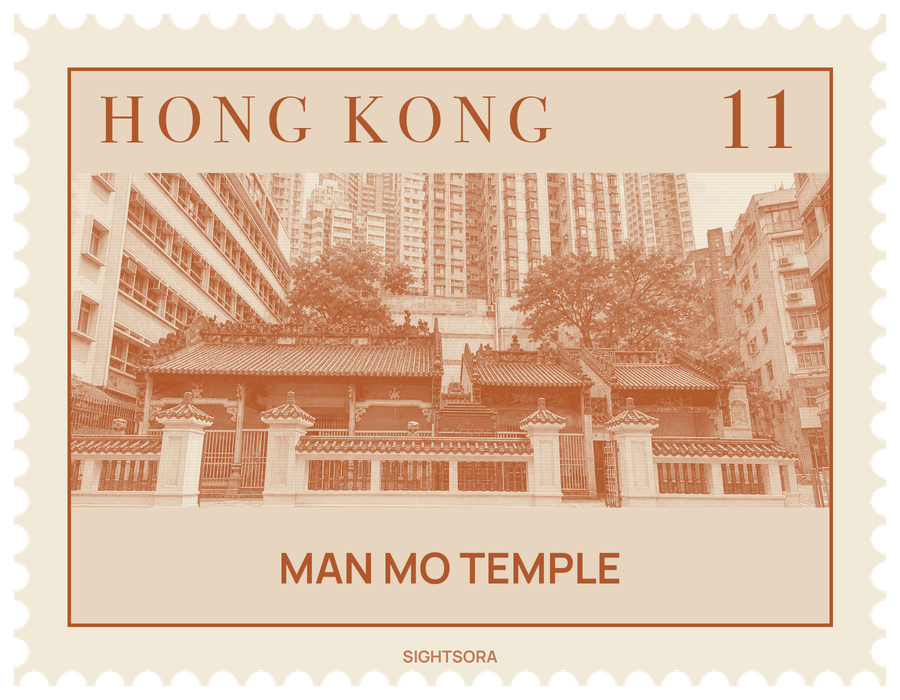
Wealthy Chinese merchants built the compound between 1847 and 1862 as three blocks divided by two narrow alleys. The Man Mo Temple is the main building; Lit Shing Kung, beside it, was dedicated to every deity of the Chinese pantheon; and Kung Sor served as a meeting hall where the Chinese community of the neighbourhood dealt with local affairs and settled disputes. In 1908 a dedicated ordinance placed the temple in the care of Tung Wah Hospital, and the Tung Wah Group of Hospitals still runs it; each year its board gathers here for the Autumn Sacrificial Rites. The compound was declared a monument in 2010.
The temple itself has two halls of three bays, with two granite drum platforms at the front and a pair of screen doors in the front hall. Following traditional Chinese layout, the rear hall with the altars of the gods sits a few steps higher than the front one. Between them lies a courtyard under a double-eaved hip-and-gable roof carried on four granite columns. The decoration combines ceramic figurines, carved granite and timber, moulded plaster and painted murals, and the old objects inside include a bronze bell from the Qing Dynasty, cast in 1847, and a sedan chair made in 1862. At Kung Sor the original granite doorframe, carved with the year of construction, survives.