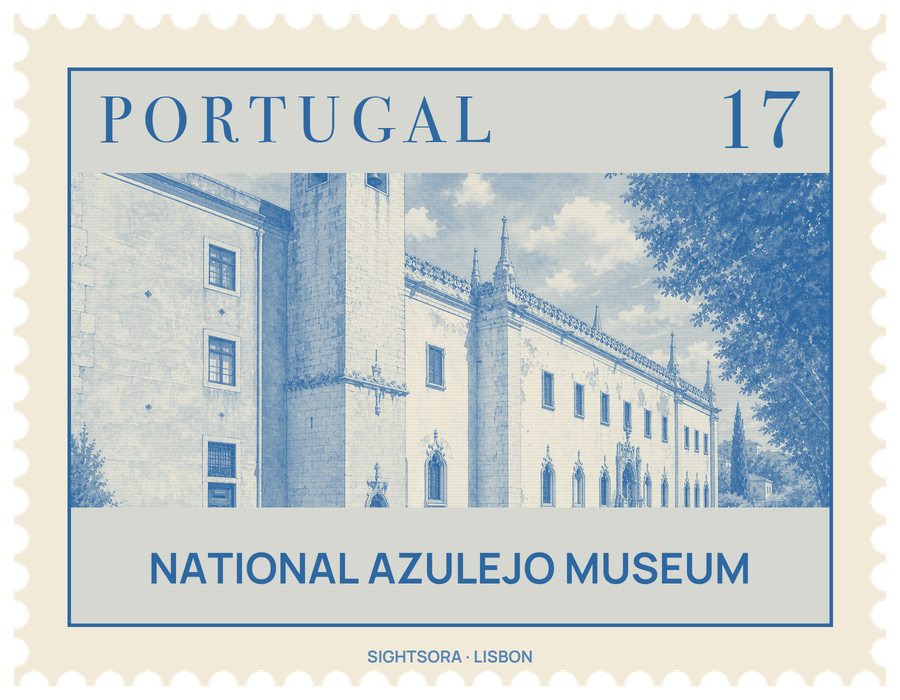
It occupies the former Madre de Deus Convent, which Queen D. Leonor founded in 1509. The museum opened in 1965 and was raised to the rank of a national museum in 1980.
The tiles on show begin in the later 15th century and continue up to today, joined by ceramics, porcelain and faience of the 19th and 20th centuries. The visit begins with the materials and techniques used to make azulejos and then follows the story in chronological order. Among the best-known pieces are the 16th-century Nossa Senhora da Vida altarpiece, an Eucharistic Allegory from about 1660, and the Great View of Lisbon, a long tiled panorama of the city made around 1700.
The convent itself is part of the display. Visitors pass through its 16th-century mannerist cloister into a church lined with paintings and tiles, a sacristy with a Brazilian wood cabinet and carved frames, and a high choir of gilded woodwork. The Chapel of Saint Anthony carries 18th-century Baroque decoration and many canvases painted by André Gonçalves, and the chapel of Queen Leonor also belongs to the route.