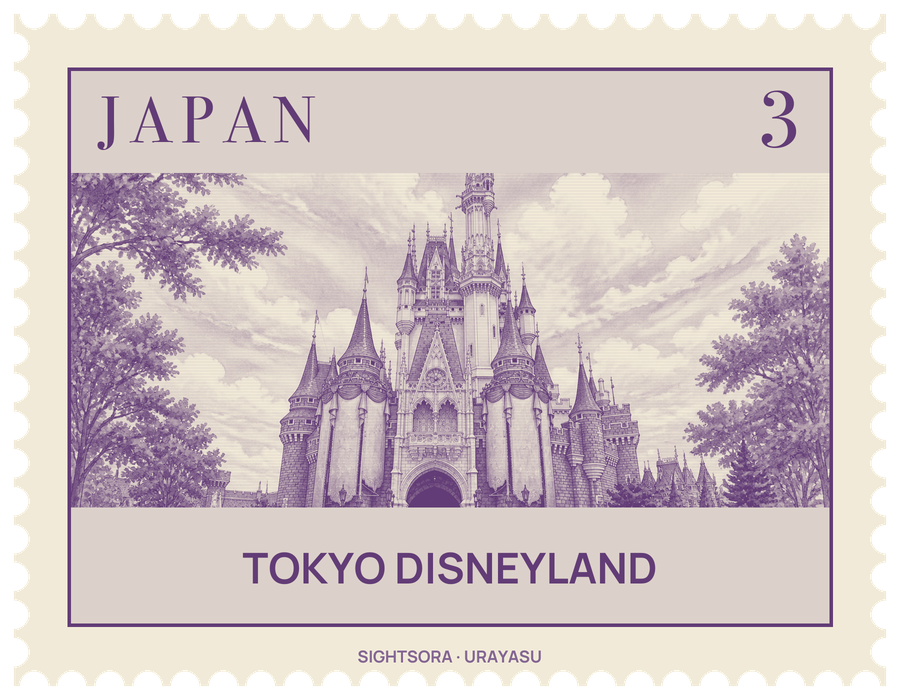
WED Enterprises designed it in the manner of Disneyland in California and the Magic Kingdom in Florida, but the park belongs to the Oriental Land Company, which licenses the characters and stories from the Walt Disney Company. Together with its companion park, Tokyo DisneySea, it forms the Tokyo Disney Resort.
The site was part of a large landfill set aside in the 1960s for recreation for the Tokyo metropolitan area. The Oriental Land Company invited Disney executives to Japan in 1974, and its president Masatomo Takahashi signed the first construction contract in April 1979; Japanese engineers and architects toured Disneyland in California before work started a year later. The park was laid out with wide open spaces to handle large crowds.
The park has seven themed areas. Visitors enter through the World Bazaar, a shopping street styled on early 20th-century America; its Main Street, leading to Cinderella Castle, and the crossing Center Street run under a permanent canopy that keeps off the weather. Adventureland combines a New Orleans quarter with a jungle area, Westernland is the old-west zone around Big Thunder Mountain and the Rivers of America with the Mark Twain Riverboat and Tom Sawyer Island, and the small Critter Country is built around the Splash Mountain log flume.
Fantasyland, entered through the castle, is mostly dark rides through scenes from Pinocchio, Peter Pan and Snow White and the Seven Dwarfs, and since September 2020 includes a Beauty and the Beast section with its own castle and Belle's Village. Toontown takes its look from the 1988 film Who Framed Roger Rabbit and has character houses for Mickey and Minnie as well as Chip 'n Dale's Treehouse. Tomorrowland treats the future as science-fiction fantasy, with Space Mountain and Star Tours among its rides.
Getting there
Maihama Station and Tokyo Disneyland Station both sit right beside the park's main gate.