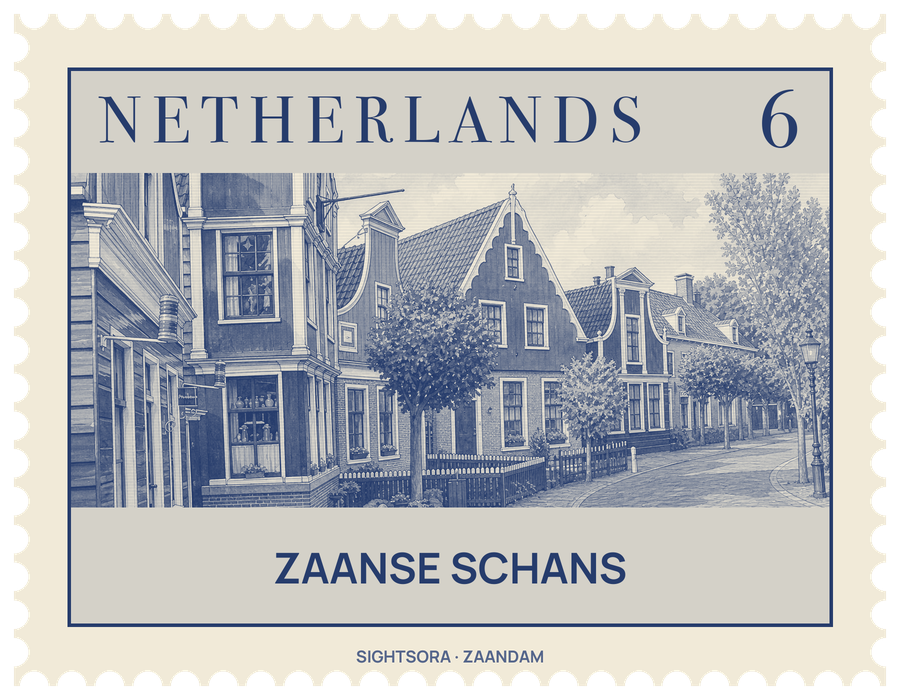
Most of its buildings did not start out here: from 1961 to 1974 historic timber houses and mills from across the Zaanstreek were moved in by road on low trailers and over the water, so that they would be preserved. The architect Jaap Schipper had proposed the plan in 1946. Only two of the windmills stand where they were first built.
The name combines the river with schans, Dutch for a sconce, recalling a defence built here against Spanish troops during the Eighty Years' War. The area is a protected village scene, valued for its timber architecture and its landscape, and it ranks among the anchor points on the European Route of Industrial Heritage. People still live in many of the houses, so the village is a place where residents and visitors share the streets.
Each of the windmills had its own trade. De Huisman ground mustard; De Gekroonde Poelenburg, Het Jonge Schaap and Het Klaverblad were sawmills; De Kat made dye; and De Os, De Zoeker and De Bonte Hen pressed oil. Between the mills, visitors can look into a cheese factory, a workshop where wooden shoes are made, a bakery museum smelling of fresh biscuits and a pewter foundry, as well as shops and a pancake restaurant. The Zaans Museum, opened in 1994, lies at the southern end of the area, and boat and bicycle trips start from the village.
Getting there
Zaandijk Zaanse Schans railway station is 18 minutes by train from Amsterdam Centraal. Parking at and around the village is limited, and the village itself recommends public transport.