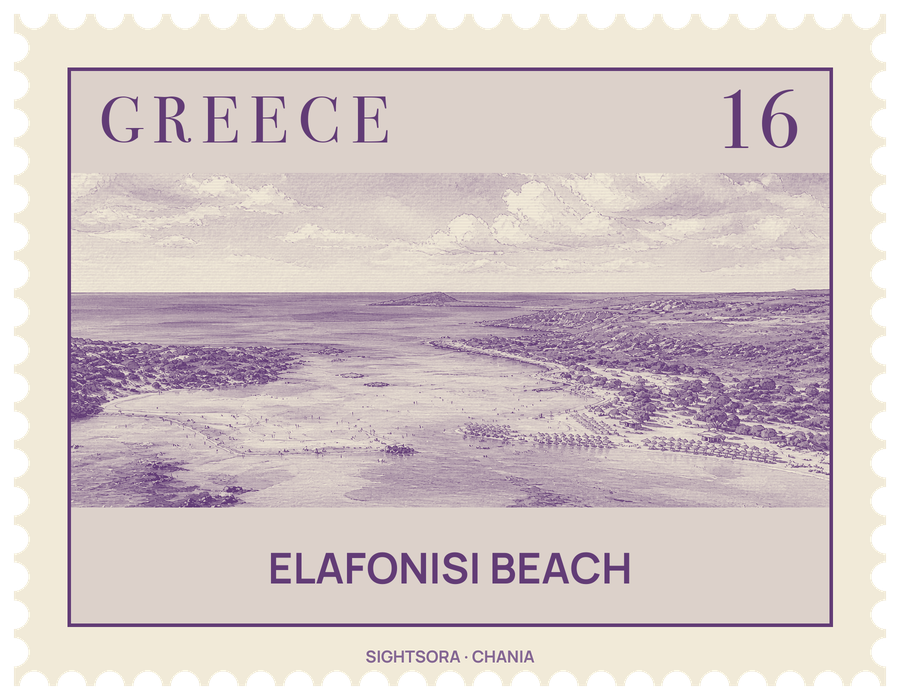
The colour comes from tiny pigmented organisms that live alongside the local seaweed and are washed up by tides and waves. The island belongs to the municipality of Kissamos in the regional unit of Chania and is a protected nature reserve. In fine weather the water between it and the shore of Crete is shallow enough to wade across.
The calm setting hides a grim history. A plaque on the island's highest point recalls Easter of 18 April 1824, during the Greek War of Independence: forty armed men had sheltered here with women, children and old people while waiting for a ship to the Ionian Islands, but Ottoman soldiers camped on the opposite beach found them after one of their horses waded across. Several hundred people, most of them women and children, were killed, and survivors were sold into slavery in Egypt.
A large wooden cross marks a later tragedy. On 22 February 1907 the Imperatrix, a passenger steamer of the Österreichischer Lloyd, was wrecked here; 38 people died when their lifeboat tried to reach land in strong northwest winds, and they were buried on the island. The wreck still lies on the seabed off the island's cliffs. It led to the building of a lighthouse on a hilltop, which German occupying troops destroyed in the Second World War.