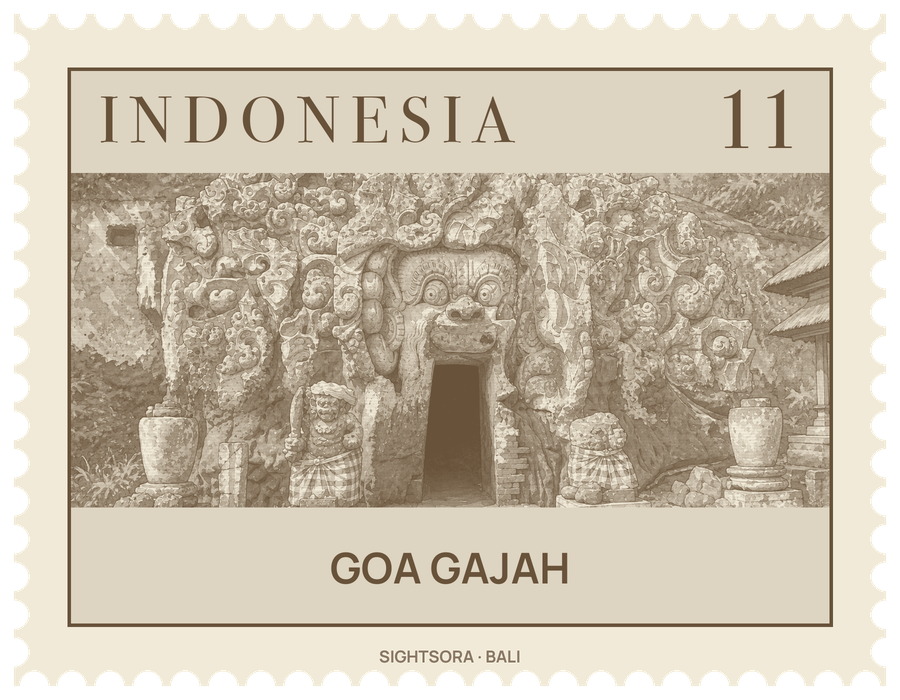
Visitors reach the cave mouth down a long flight of stairs and find a façade carved with menacing faces, probably meant to keep evil spirits away. The small chamber inside is usually hazy with white incense smoke. Folklore says the giant Kebo Iwa dug it out with his fingernail, and the site is already mentioned in the Javanese poem Desawarnana of 1365.
The complex mixes Hindu and Buddhist imagery. Inside the cave are a lingam and yoni, symbols of Shiva, and a stone statue of Ganesha, which some say gave the place its name; others hold that the main carved figure was once taken for an elephant. Down by the river, stupas and chattra are carved in the rock. Dutch archaeologists rediscovered the cave in 1923, but the fountains and the large bathing pool were only uncovered in 1954. Statues of women holding water pitchers stand for seven holy rivers of India, among them the Ganga, Yamuna and Narmada; one of the seven was destroyed by an earthquake.