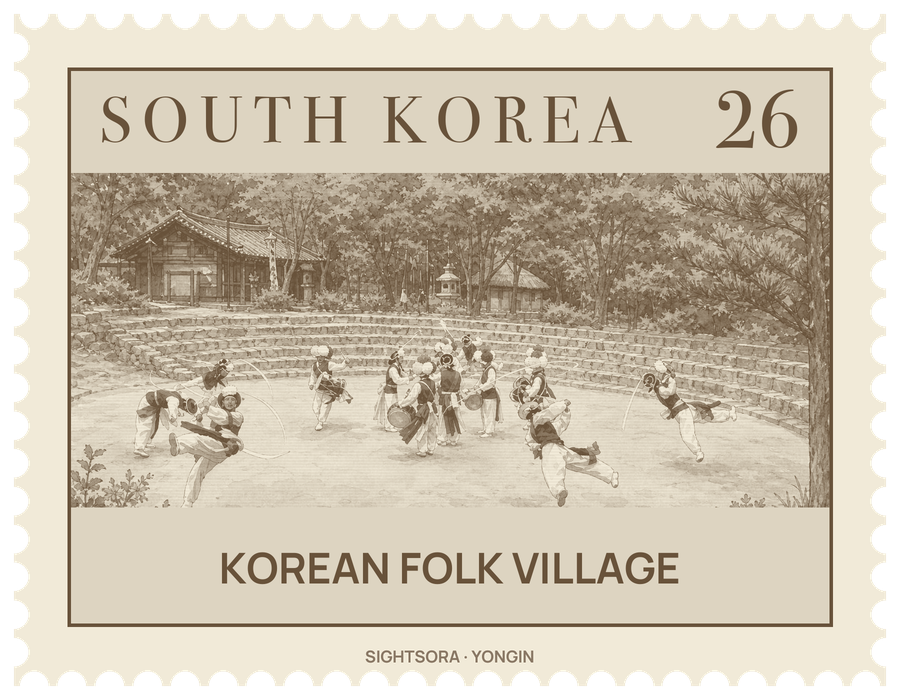
It opened on October 3, 1974 as the first open-air museum built in South Korea, built to safeguard customs put at risk as Korea westernised and industrialised quickly in the 1960s, from traditional architecture to food and clothing. Everland, a large amusement park, is nearby.
The houses show how different classes lived in different regions, from peasants to landowners and the yangban elite, and workshops among them show traditional crafts such as woodworking and metalworking. Staff dressed as Joseon characters, from governors to a kumiho, the nine-tailed fox of legend, appear around the village. The main performances are a Nong-ak play, tightrope walking, a display of martial arts on horseback and a traditional wedding, and traditional wedding ceremonies are also offered to visitors.
There are exhibition halls with world folk artefacts, earthenware and masks, while the amusement section mixes rides and games with an art museum and a sculpture garden, plus a Korean Folk Museum and, devoted to traditional ways of life in other countries, the World Folk Museum. A traditional street market and the food market, the Jumak, sell Korean snacks, and there are craft and souvenir shops selling instruments, artworks and accessories.
The village is a familiar backdrop from Korean television: scenes of Jewel in the Palace, Sungkyunkwan Scandal, Kingdom and Moon Embracing the Sun were filmed here, the last using its markets and commoners' houses and for night scenes.