Wolfgang Kiessling founded it in 1972 on just 1.3 hectares with 150 parrots, and the name means "parrot park" in Spanish. The park itself puts its living collection at more than 400 species, set among dense tropical planting.
Parrots of every kind, from macaws and amazons to cockatoos and parakeets, fill the aviaries, and the park also has a parrot museum and the Loro Show. Other birds include black swans, golden pheasants, kookaburras, flamingos, pelicans, penguins and puffins. Beyond the birds, visitors see chimpanzees, western lowland gorillas, jaguars, white tigers, lions, red pandas, pygmy hippos, meerkats, Galápagos tortoises and American alligators, along with sharks, seahorses and other fish.
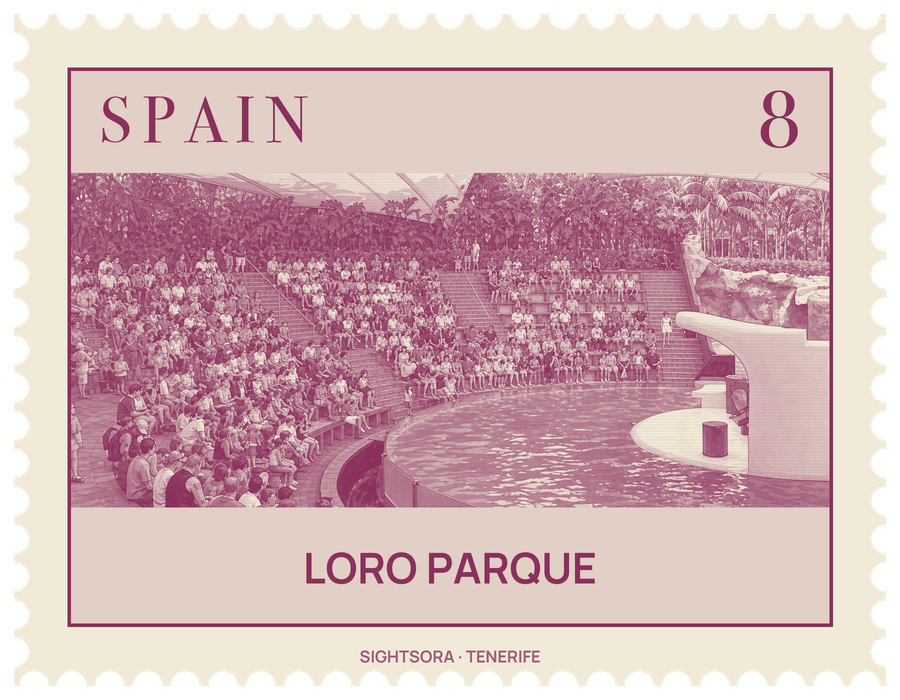
Marine mammals are a large part of the day. Sea lions, bottlenose dolphins and orcas appear in scheduled presentations, and the orca facility, Orca Ocean, received its first animals in 2006 on loan from SeaWorld, which handed over full ownership in 2018. Keeping orcas has drawn criticism from groups such as Whale and Dolphin Conservation and PETA, and in 2018 the tour operator Thomas Cook stopped selling tickets to the park over animal welfare concerns; after a trainer was killed by an orca in 2009, trainers no longer enter the water with them.
For families there is the Kinderlandia children's playground, the Gambian Market and a parrot baby station, and an indoor cinema shows a short nature film. The park also runs a guided behind-the-scenes tour lasting 90 minutes. Its foundation, the Loro Parque Fundación, was set up in 1994 and funds conservation work abroad, including captive breeding of the Spix's macaw and the release of captive-bred great green macaws into the Ayampe Reserve in Ecuador between 2017 and 2019.