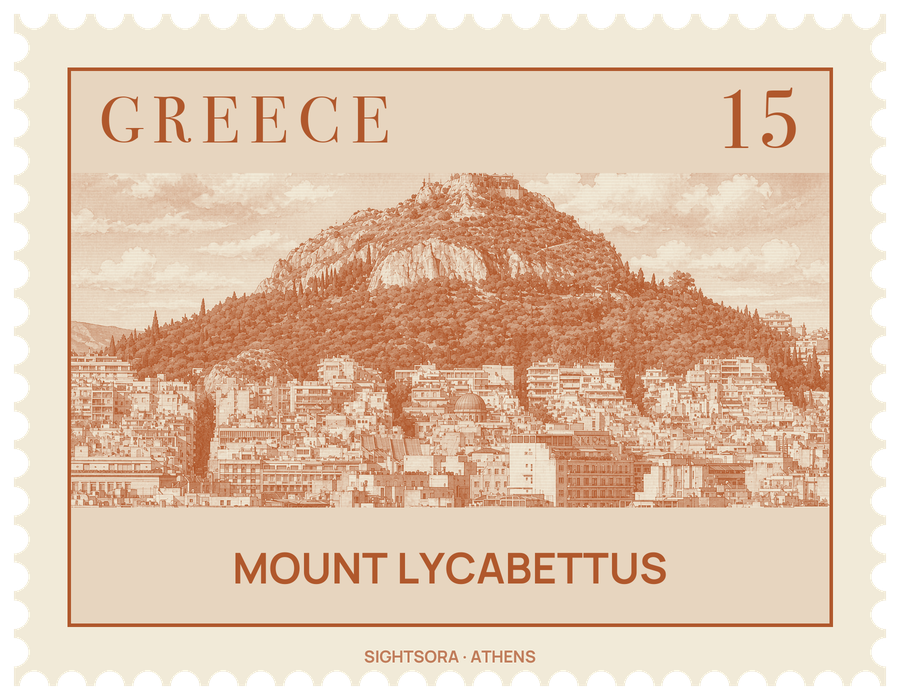
From the top the whole of Athens spreads out below, with the best views towards the Acropolis and Piraeus; on a clear day the view reaches as far as the island of Aegina. The name is often explained by the wolves, lycos in Greek, said to have once lived on the hill, and legend credits it to Athena, who dropped a mountain of limestone here while carrying it to build the Acropolis.
On the summit stands the whitewashed 19th-century chapel of St. George, whose interior keeps its religious paintings, alongside a café-restaurant. Near the top is the open-air Lycabettus Theatre, a semicircular auditorium of about 3,000 seats designed by the architect Takis Zenetos and begun in 1964 on the site of an old quarry; Ray Charles, Leonard Cohen, Radiohead and the Pet Shop Boys are among the many performers who have played there. Lower down, the small chapel of Agios Isidoros dates from somewhere between the 15th and 16th centuries.
Getting there
The Lycabettus Funicular climbs to the top from a lower station on Aristippou Street in the Kolonaki district.