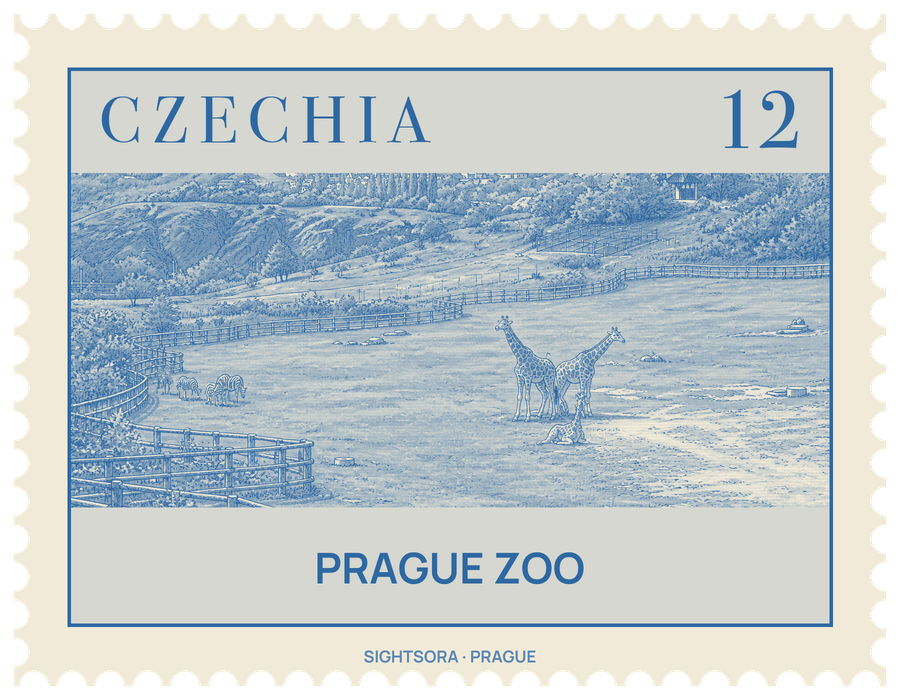
Its gates first opened on 28 September 1931, with Jiří Janda as founding director, with the aim of advancing zoology, protecting wildlife and educating visitors. In 2013 it covered 58 hectares, 50 of them given over to exhibits, and kept around 5,000 animals of 676 species, 132 of them listed as threatened.
Breeding and conservation run through its history. The zoo has done much for Przewalski's horse, and over many years it bred these wild horses and sent them to the steppes of Mongolia; in 2011 four of them travelled there to be released as part of the Return of the Wild Horses project. Recent arrivals include Brazilian mergansers, rare fish-eating ducks from South America first hatched here in March 2025, and Lord Howe Island stick insects, insects up to 15 cm long nicknamed "tree lobsters", for which the zoo built the "Ball's Pyramid" exhibit with greenhouses and beds where their food plants are grown.
The grounds are organised around large pavilions. The Indonesian Jungle opened in 2004, Elephant Valley followed in 2013, the year the zoo's first elephant calf, Sita, was born, and a pavilion for Chinese giant salamanders opened in 2014. Brown fur seals have had an enlarged pool with a grandstand since 2009. A chairlift, opened in 1977, carries visitors up the hillside.
In 2002 floodwater swept over a large part of the zoo and 134 animals died, four hippos, a gorilla, a lion and an elephant among them. One brown fur seal, Gaston, swam down the Vltava and the Elbe as far as Dresden in Germany, where he later died; a statue of him now stands in the zoo. Donations and public support after the disaster helped the zoo rebuild over the following decade.