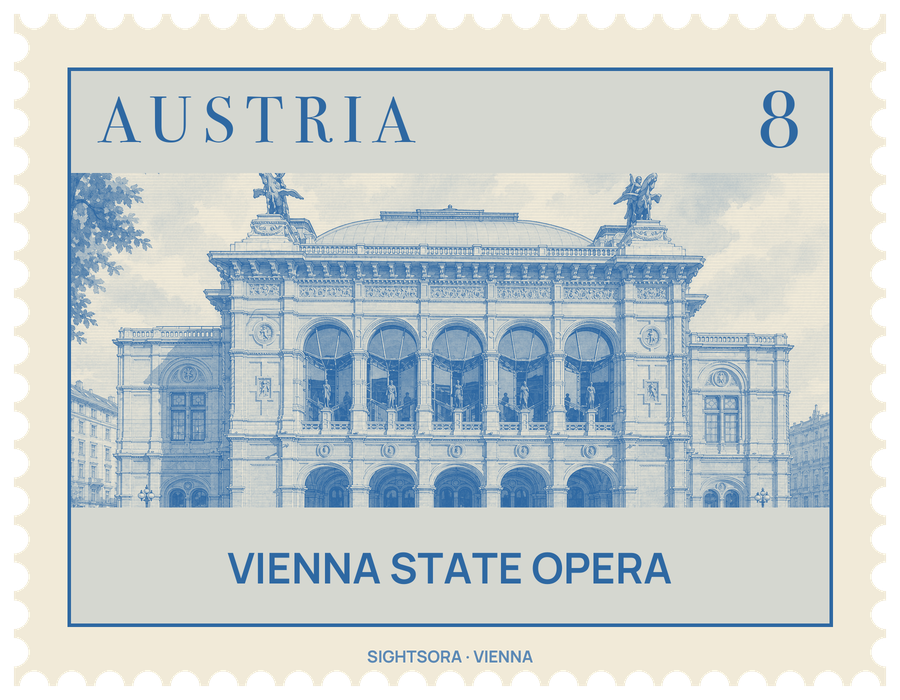
Opera and ballet share its stage: it is home to the Vienna State Ballet, and the Vienna Philharmonic draws its players from the opera's own orchestra. Once a year, in the carnival season, the auditorium is turned into the ballroom of the Vienna Opera Ball.
The plans were the work of two architects, Eduard van der Nüll and August Sicard von Sicardsburg; Josef Hlávka built it; and Emperor Franz Joseph chose the site and paid for the work, which ran from 1861 to 1869. The Viennese were unimpressed at first: the level of the street in front was raised by a metre after building began, so the house looked sunk, and it was mocked as "a sunken treasure chest". Neither architect lived to see it finished; van der Nüll took his own life and Sicardsburg died weeks later. As the Court Opera, it opened on 25 May 1869 with Mozart's Don Giovanni in front of the emperor and Empress Elisabeth, and it took its present name in 1921.
Gustav Mahler, who directed the house from 1897 to 1907, swapped lavish historical sets for spare Jugendstil designs and began dimming the house lights during performances, a change the audience disliked at first but his successors kept. On 12 March 1945 American bombs set the building on fire, destroying the auditorium, the stage and the sets and props of more than 120 productions. The walled-off front survived, and that is why the vestibule, the grand stairs, the tea room and the foyer painted by Moritz von Schwind still look as they did in the 19th century.
Rebuilt with help from donations large and small, including coins dropped into collection boxes around the city, the house reopened on 5 November 1955, months after the State Treaty had restored Austrian independence, with Beethoven's Fidelio under Karl Böhm. Erich Boltenstern's new auditorium kept close to the original but used wood for its acoustics, a choice Arturo Toscanini was among those to recommend. Since 1998 the safety curtain has served as an exhibition space, with a new artwork fixed to it for each season by artists such as David Hockney, Maria Lassnig, Jeff Koons and Cy Twombly. Children's productions are staged in a tent on the roof.