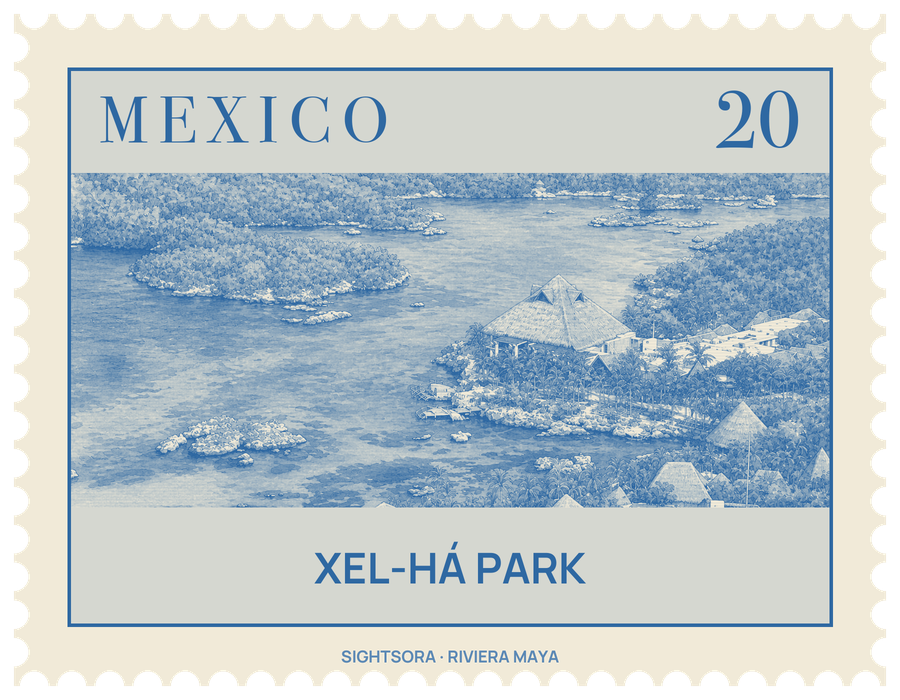
It lies in the municipality of Tulum along Highway 307, the tourist corridor known as the Riviera Maya, about 122 kilometres south of Cancún; the Maya ruins of Tulum are some 13 kilometres further south. The park opened in 1984 and is run by the Mexican company Experiencias Xcaret, which also operates Xcaret and Xplor.
The inlet and its lagoon are the heart of the park. They work as a natural aquarium for tropical fish and a wealth of plant life, and visitors swim and snorkel there, with a fence stretched across the mouth of the lagoon to keep sharks out. Under the water the limestone has worn away into small caves and grottoes. Besides the cove, people can swim in the river and in the park's cenotes, ride water zip-lines that drop into the river, and use slides and jumping points.
On land, trails run through the jungle and among mangrove roots, and there are hammocks for resting between swims. The Scenic Lighthouse, 40 metres tall, gives a 360° view over the coast and forest, and there are attractions set aside for children. The park has a turtle reserve where research into marine life is carried out, and the name Xel-Há comes from a Maya archaeological site, part of which lies on land leased to the park.
A programme to rescue, reproduce and replant native plants has run in the park since 2000, and about 75% of its natural habitat has been kept. Its nurseries also supplied a wider replanting effort by the parent company in Cancún and along the Riviera Maya.