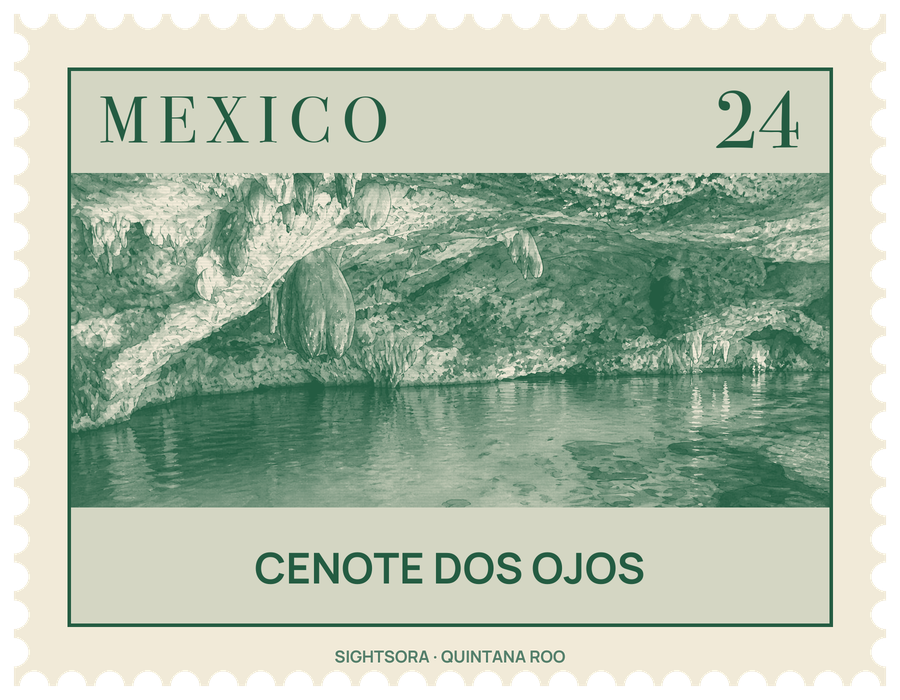
They are entrances to a flooded cave network beneath the Caribbean coast of Quintana Roo, and divers began exploring the whole system through these two pools in 1987. In January 2018 a link was found to the neighbouring Sistema Sac Actun, and Dos Ojos has since been counted as part of it.
The water stays at 25 °C all year and is unusually clear, because rainwater is filtered through very pure limestone with almost no soil above it; how far a visitor can see is set by the light rather than by the water. Near the two cenotes it is about 10 metres deep at most. Small fish, most well under 10 centimetres long, live in the cavern along with at least two kinds of freshwater shrimp. The system is anchialine, meaning sea water seeps in and the tides can be felt in the cenotes, and dye tests have shown groundwater flowing towards the coastal lagoon of Xel-Ha.
The cenotes are used for snorkelling and for cavern diving, mostly at depths of 5–7 metres. Underwater it is possible to pass into the adjoining "Bat Cave" cenote, which snorkellers visit too. Deeper inside the system, beyond the reach of ordinary visits, cave divers have mapped passages such as the Wakulla Room and The Pit, found in 1996, where the passage reaches a depth of 119.1 metres.
The caves have appeared on screen several times: in the 2002 IMAX film Journey Into Amazing Caves, in the 2006 BBC and Discovery Channel series Planet Earth, and in parts of the 2005 film The Cave.