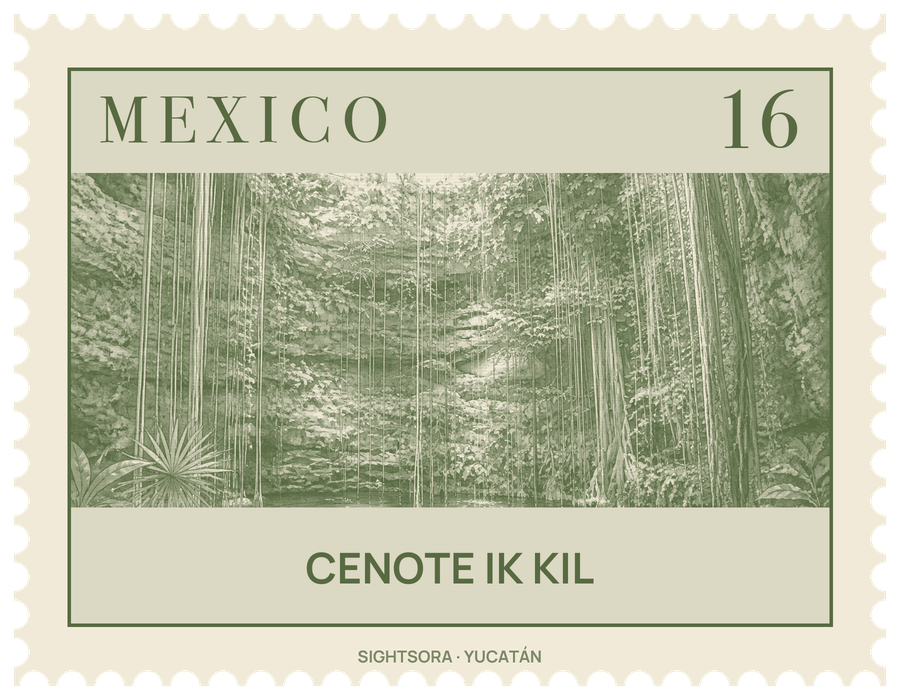
It formed when the roof of an underground cavern collapsed and exposed the water below, which is fed by hidden subterranean rivers. The pool is about 60 metres across and about 48 metres deep, and its surface sits some 26 metres below the surrounding ground, so the walls hung with plants and roots rise high above swimmers.
The Maya held the cenote to be sacred: for them such pools were gateways linking the sky and the earth with Xibalbá, the underworld. The site was used for human sacrifices offered to Chaac, the rain god, and archaeologists and cave explorers have recovered bones and pieces of jewellery from its water.
Today the cenote is the centre of the Ik Kil ecological and archaeological park, where a carved stairway goes down the rock to a platform at water level for swimming. Paths lead through the surrounding Maya forest, and the complex also has a restaurant and bungalows set among the trees for visitors who want to spend the night.