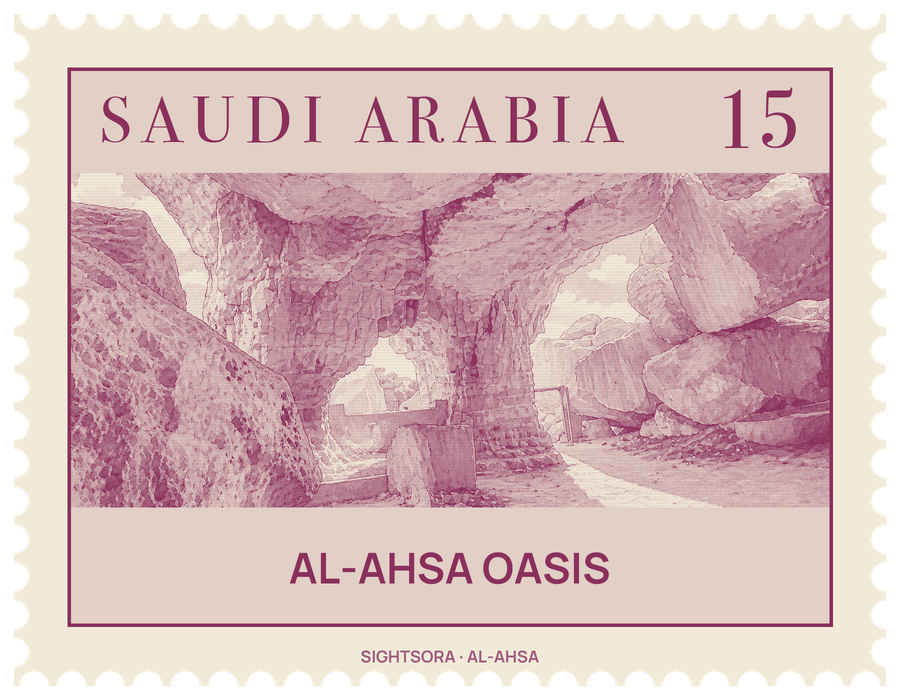
More than 280 artesian springs fed by a huge underground aquifer water it, so crops can be grown all year round in a land of sand desert. The oasis was listed as a UNESCO World Heritage site in 2018 and joined the UNESCO Creative Cities Network in December 2015.
The name explains the landscape: Al-Ahsa is the plural of Al-Ḥisā, sand lying over an impermeable layer that holds rainwater underground, so that a well can reach a cool spring. Water has drawn people here since prehistoric times, and date palms have been grown for millennia; the palms yield over 100,000 tons of dates a year. The region was also known for tailoring, especially the bisht, the traditional men's cloak, and was one of the few parts of the Arabian Peninsula where rice was grown.
Al-Ahsa changed hands many times. In 899 it became the seat of an independent Qarmatian state with its capital near modern Hofuf, and around 1000 it was a city of 100,000 inhabitants. Later ruled by the Uyunids, Usfurids and Jabrids, it came under Ottoman sovereignty in 1550, passed to the Banu Khalid in 1670 and joined the Emirate of Diriyah in 1795, before ibn Saud annexed it in 1913.
The World Heritage listing covers the Cultural Landscape of Al-Ahsa Oasis, which includes the Eastern Oasis and Northern Oasis palm groves, the Suq Al-Qaysariyah market, Qasr Ibrahim, the Jawatha archaeological site and Jawatha Mosque, the village of Al-'Oyun, the Ain Qannas archaeological site and Al-Asfar lake. Visitors from neighbouring Qatar have long crossed the border to explore these sights and to shop for food, spices and clothing in the bazaars.