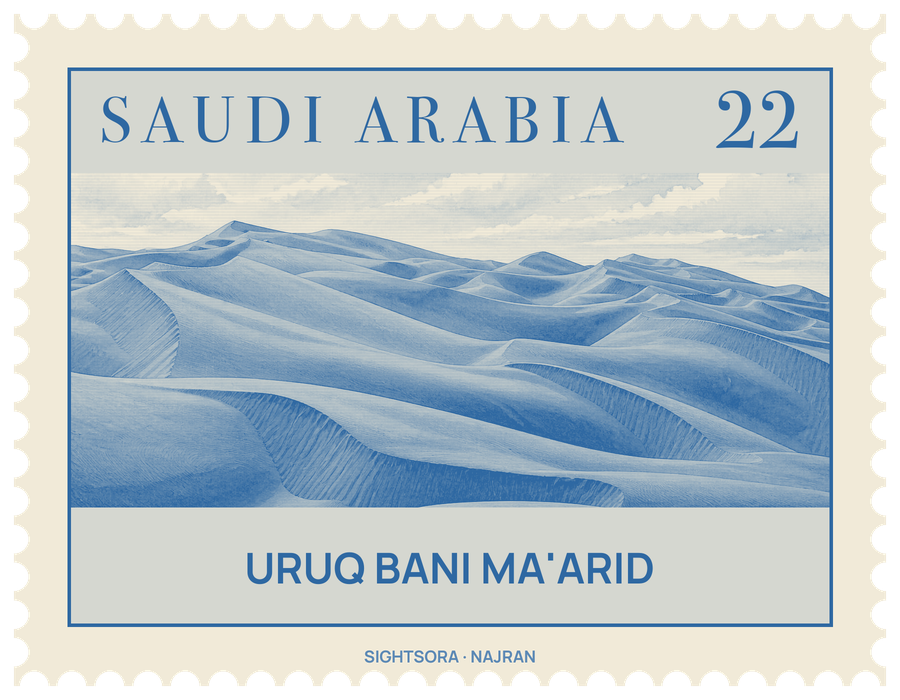
Covering 12,658 square kilometres, the reserve also takes in wadis, gravel plains and a section of the Tuwaiq Escarpment. On 20 September 2023 it was inscribed on the UNESCO World Heritage List.
Between the dunes run corridors floored with sand or gravel. The climate is hot and dry, with an average of about 30 mm of rain a year; when storms break over the escarpment, the wadis flow and the water soaks into the ground, where it is held. The reserve is divided into three zones: a core nature reserve, an area where controlled grazing is allowed and a hunting zone.
Plant life is richer here than in other parts of the Empty Quarter, with many species found only in the Arabian Peninsula, and the area is listed as an Important Plant Area; 106 plant species have been recorded. Acacias, grasses and perennial legumes grow in the wadis cut into the escarpment, Calligonum crinitum, sedges and grasses hold on to the dunes, and the corridors support Moringa peregrina, Commiphora myrrha and dwarf Haloxylon persicum. After rain the perennial plants put out fresh shoots.
The Arabian oryx once lived here before it died out in the wild, and the reserve was chosen to bring it back with animals from a captive breeding programme. Some 149 oryx were released between 1995 and 2013, by which year about 500 were estimated to be living in the unfenced reserve. Since 1995 the Arabian sand gazelle and the mountain gazelle have been brought back as well, and ostrich are among the species judged suitable for return.
Other animals include Rüppell's fox, red fox, sand cat, Cape hare, desert hedgehog, Cheesman's gerbil, the lesser Egyptian jerboa and the desert monitor. Of the 104 bird species recorded, only about 16 live here year-round; both the short-toed snake eagle and the lappet-faced vulture nest in the reserve, and houbara bustards are sometimes seen.