Established in 1957, it is small by Sarawak standards, but sixteen marked trails of different lengths lead through it, and many visitors come for the day from Kuching.
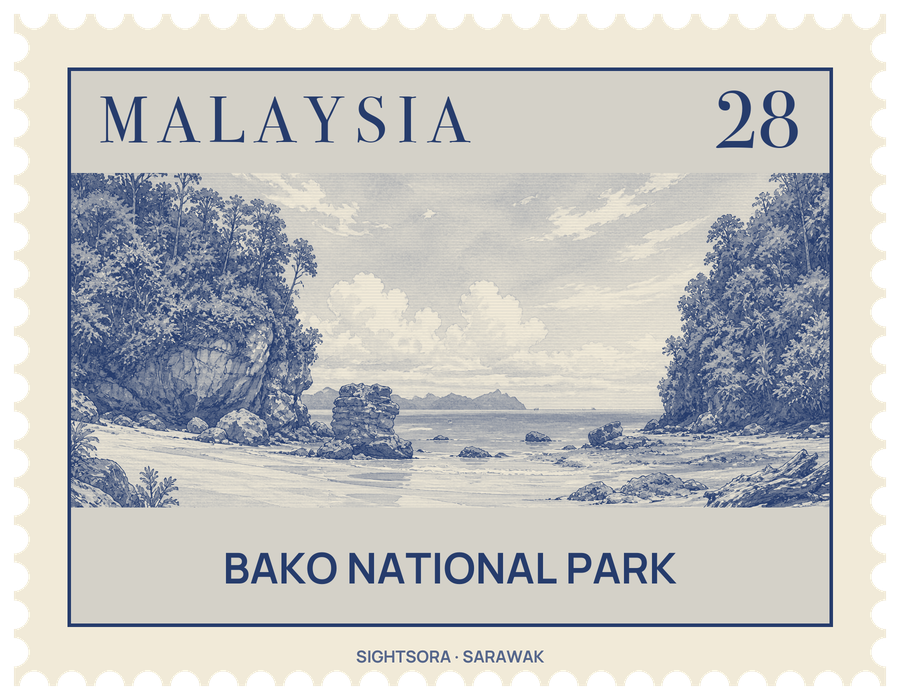
The coastline is the work of erosion on sandstone over millions of years. Waves have cut the bases of the cliffs into steep headlands, sea arches and sea stacks, streaked with colour where iron has been deposited, and some of these formations come into view on the approach to Teluk Assam Beach, which fronts the park. Boats from Teluk Assam or from Kampung Bako reach other beaches along the coast.
Bako holds plant life from seven complete ecosystems, among them beach and cliff vegetation, kerangas heath forest, mangroves, mixed dipterocarp forest, padang grassland and peat swamp forest. Carnivorous plants are a speciality, with four species of pitcher plant, sundews and bladderworts.
The park is home to about 150 proboscis monkeys, an endangered species found only in Borneo, and they can be seen both in the forest and near the headquarters on Telok Assam beach, along with long-tailed macaques, silvered langurs, Bornean bearded pigs, monitor lizards and otters. Over 150 bird species have been recorded, and after dark the forest belongs to colugos, pangolins, tarsiers, slow lorises and bats. Visitors who stay overnight can use the campground or the forestry bungalows.
Getting there
The park is about 40 kilometres by road from Kuching. It can only be reached by boat, a ride of about 20 minutes from the village of Kampung Bako.