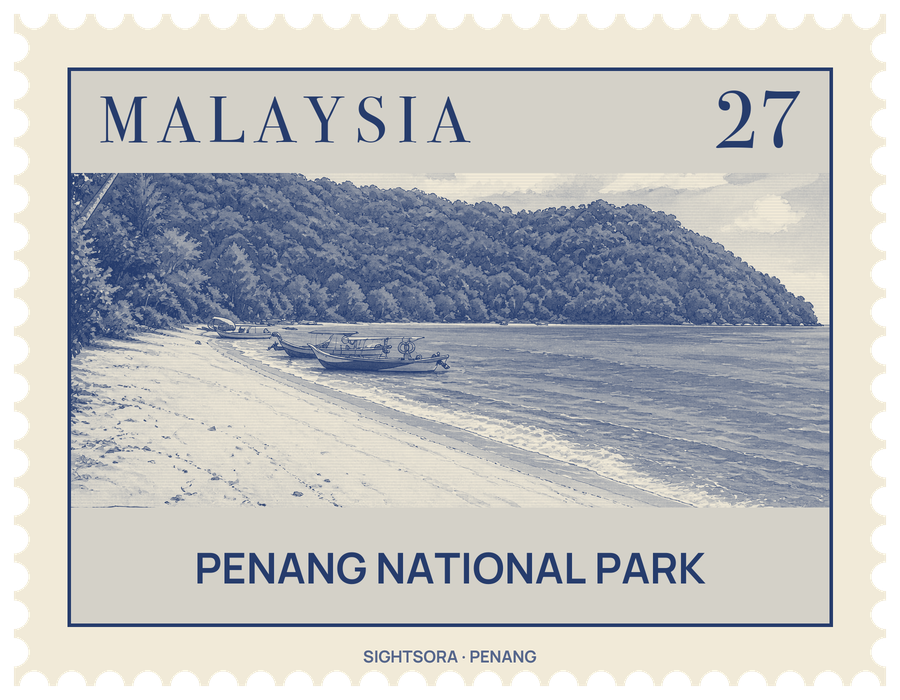
The land was known as the Pantai Acheh Forest Reserve until April 2003, when it became a national park, the first protected area to be legally gazetted under the National Park Act of 1980. Within a compact area it brings together hill and lowland dipterocarp forest, mangroves, sandy beaches, open coastal water and a seasonal meromictic lake.
The lake is the park's oddity: its lower layers are usually starved of oxygen, so little lives there, though the brackish water supports Faunus ater snails. On the steep slopes around Muka Head grow stands of seraya trees, and the secondary forest includes chengal, jelutong, gaharu, tongkat ali, wild orchids, casuarina and sea almond, with screw pines and ferns along the coast. Rare Nepenthes pitcher plants are among the park's flora.
Dusky leaf monkeys and long-tailed macaques live in the forest, and dolphins and hawksbill turtles have been seen in and around the park. Smooth-coated otters, wild boars, civets, mouse deer and monitor lizards also live here, along with 46 species of birds, from stork-billed kingfishers and great egrets to the occasional white-bellied sea eagle. Pantai Kerachut is a nesting beach for green turtles and olive ridley sea turtles, and Teluk Duyung is better known as Monkey Beach.