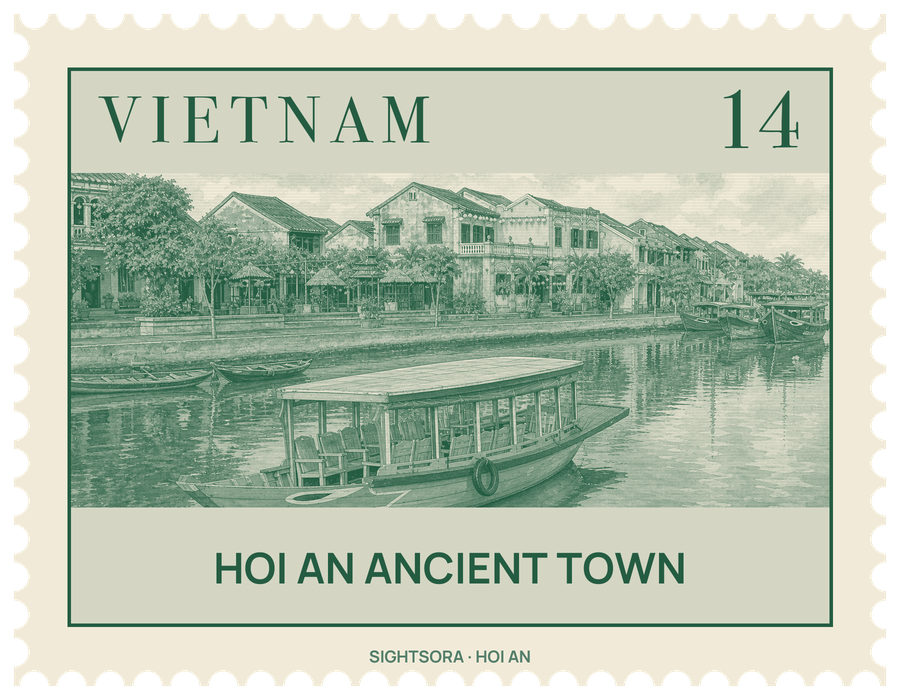
Foreign traders called here from the 15th to the 19th century, and the town holds 1360 historic monuments and sites, among them 1068 preserved houses and the wooden Japanese Bridge. UNESCO listed it as a World Heritage Site on 12 December 1999.
Long before the Vietnamese, the land belonged to the Sa Huỳnh culture and then, from the 2nd century, to the Kingdom of Champa, which made it a trading port on the maritime Silk Road; Cham wells and the archaeological site of Trảng Sỏi 1 survive from that time. Vietnamese settlers arrived from the late 15th century under the Nguyễn clan, and from the start of the 17th century Chinese and Japanese merchants settled too, each building their own streets and neighbourhoods. The port prospered for a couple of centuries, then slipped into decline in the 19th century as Da Nang took its trade.
That decline is why so much survives: with no money for rebuilding, the old houses were simply kept. The Chinese community built five assembly halls in traditional Chinese style, one of them serving as the central hall. The most notable Japanese contribution is the Japanese Bridge (cầu Nhật Bản), a 10-metre wooden bridge from the early 17th century. French rule in the 19th century added French-style townhouses to the streets, yet the original street plan of the trading town stayed intact.
The government owns the entire town, which the state classified as a National Cultural Heritage Site in 1985, raising it to special national status in 2009, and a buffer zone of 280 hectares surrounds it. Walking the town by day or after dark, visitors pass shopfronts, narrow alleys and Chinese-built temples.