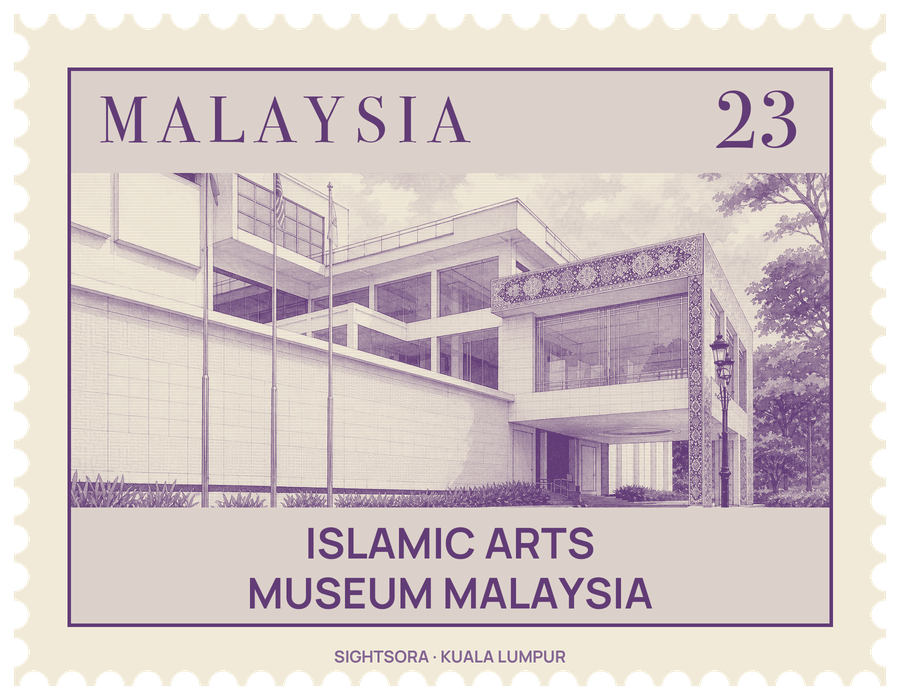
Opened on 12 December 1998, it combines clean modern lines with traditional details: the domes recall patterned textiles, and the entrance, shaped like an iwan, was decorated by Iranian tile workers.
Twelve galleries fill two floors. The first level covers architecture, the Qur'an and other manuscripts, and has separate galleries for the art of India, of China and of the Malay Peninsula. Upstairs are arms and armour, textiles, jewellery and coins, followed by three galleries arranged by material: metal, wood and ceramics. Old Islamic glassware is another strength of the collection.
A highlight is the Ottoman Room, a complete early nineteenth-century interior that the museum's conservators restored in full. The work gave them material for exchanges with colleagues abroad on caring for Islamic vernacular architecture, and on what a tropical climate such as Southeast Asia's does to painted wood. The building also houses research, education and conservation facilities.
Getting there
The museum is within walking distance of Kuala Lumpur railway station, to its west.