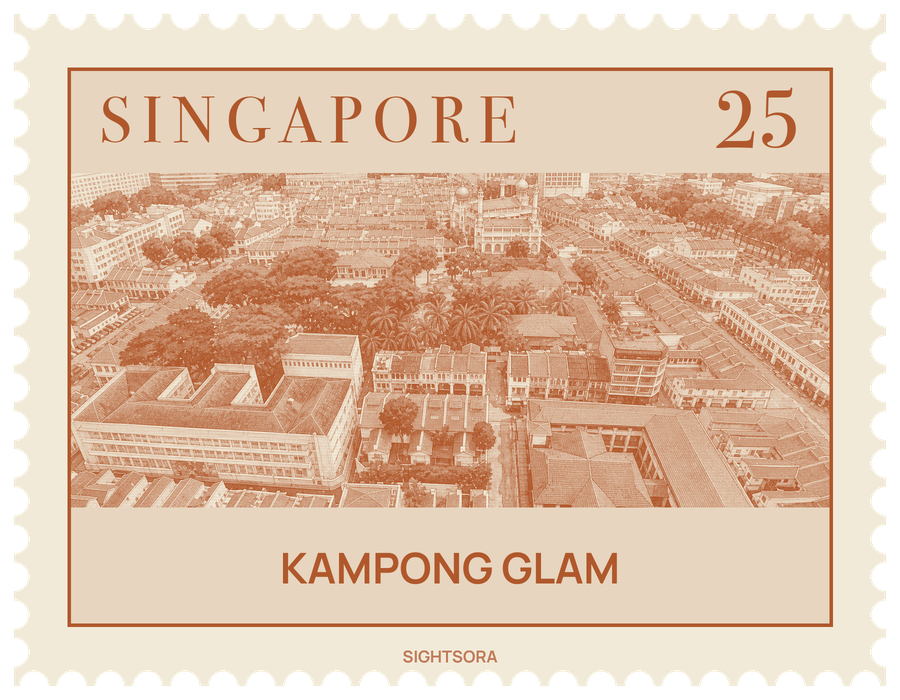
The name joins the Malay word for village, kampong, to gelam, a Melaleuca tree after which the area is thought to have been called.
Before the British arrived in 1819, this was where Singapore's Malay nobility lived. That year the East India Company signed a treaty with the Temenggong Abdul Rahman and with Sultan Hussein Shah of Johor; it gave the company its trading post and gave the Sultan land here for his household; under the Raffles Plan of 1822, which split the settlement into ethnic quarters, Kampong Glam was assigned to the Sultan and to Malay and Arab residents, many of them merchants. Through the 19th century newcomers from Sumatra, other parts of Indonesia and Malaya settled in their own kampongs, such as Kampong Java and Kampong Bugis, beside a small, prosperous community of Arab traders, and by the early 20th century new shophouses had drawn Chinese and Indians as well, making the quarter multi-ethnic.
Like Chinatown and Little India, the quarter has been restored, and its rows of conserved shophouses line Arab Street, Haji Lane, Bussorah Street and Baghdad Street. Design studios, galleries, craft and curio shops, cafes, bars and restaurants now share these streets with older trades: textile and carpet sellers and shops for Muslim religious goods. The area keeps close ties with the Malay and Muslim community, which is still strongly present, especially along Bussorah Street, and the Sultan Mosque remains a focus for Muslims across Singapore.