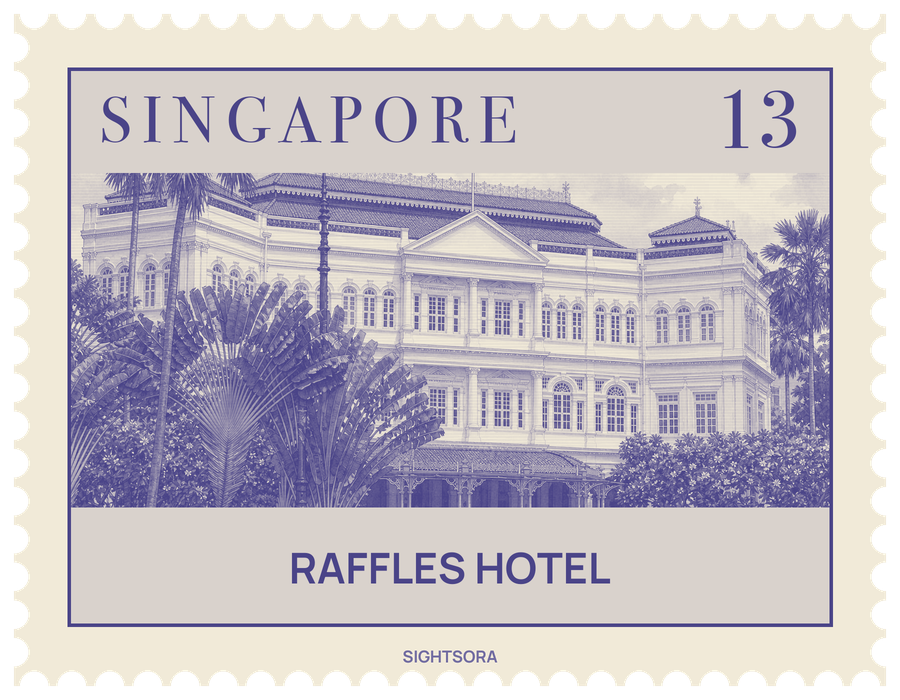
The hotel's architecture is Neo-Renaissance, and it became a national monument of Singapore in 1987, exactly one hundred years after its opening.
The hotel grew out of a private beach house from the early 1830s that later served as Emerson's Hotel and then as a boarding house for the Raffles Institution. When the Sarkies Brothers took over the lease, they opened a ten-room hotel on 1 December 1887, and its place by the beach and its high standards soon drew a wealthy clientele. Two wings followed in 1890, and the Palm Court Wing in 1894.
The present main building was the work of the Swan and Maclaren architect Regent Alfred John Bidwell, which replaced the old beach house on the same plot; when it opened in 1899 it had ceiling fans and electric lights, then new technology. Wings, a veranda, a ballroom and a bar and billiards room were added over the following years. The hotel has long been linked with writers and travellers, and Somerset Maugham was a regular at the Long Bar, the bar where the bartender Ngiam Tong Boon created the Singapore Sling, which the hotel dates to 1915.
The Sarkies Brothers went bankrupt in the Great Depression in 1931, and during the Japanese occupation the hotel was renamed Syonan Ryokan; when the occupation began, staff buried the hotel silver in the Palm Court. In 1987 the lost original drawings of the building were found in a Singapore archive. A two-year restoration that ended in 1991 brought the hotel back to the look of its 1915 heyday, turning all rooms into suites and moving the Long Bar into a new shopping arcade next door. A further renovation closed the hotel from December 2017 until 1 August 2019, when it reopened with 115 suites and the Writers Bar in a space of its own.