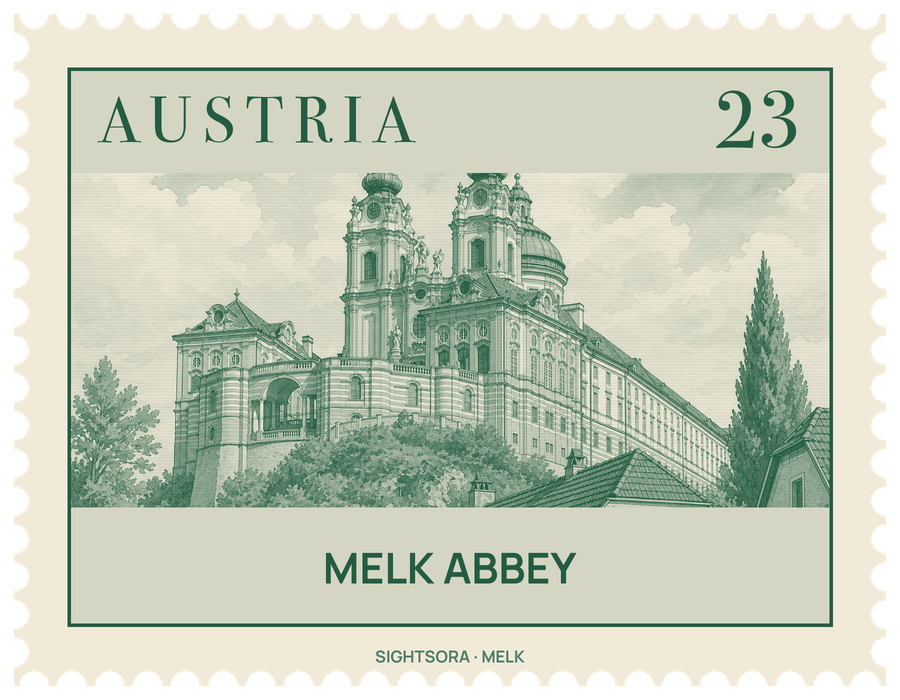
Monks have lived here since 1089, when Leopold II, Margrave of Austria, handed one of his castles to Benedictines from Lambach Abbey. The abbey belongs to the Wachau Cultural Landscape World Heritage Site, Saint Coloman of Stockerau is buried here, as are several of the Babenbergs, the first dynasty to rule Austria.
The present complex was built between 1702 and 1736 to plans by Jakob Prandtauer, replacing a medieval monastery that had burned in 1297 and been badly damaged during the Turkish invasion of 1683. Melk's reputation for learning helped it avoid the wave of closures under Emperor Joseph II between 1780 and 1790, and it also came through the Napoleonic Wars and the confiscations that followed the Anschluss in 1938. A fire in 1974 damaged the decorated rooms, and the restoration that ran from 1978 to 1995 used eight pounds of gold to regild the statues and altars.
The abbey describes the church and the library as the high points of a visit. The church is known for its ceiling frescoes by Johann Michael Rottmayr and Paul Troger, The library became known in medieval times for the manuscripts it collected and copied, and it keeps many rare ones alongside a large stock of Baroque books; in 2019 a researcher found in its archive a parchment strip of around 1300 with parts of 60 lines of Der Rosendorn, a medieval poem, which had been reused in the binding of a much later book. A staircase connects the library with the church.
The same visit takes in the abbey's state rooms, which house its museum and the restored Marble Hall with its painted ceiling, and the abbey also recommends the Stiftspark gardens. Umberto Eco paid tribute to the monastery by naming a character in The Name of the Rose Adso of Melk. Access to the abbey is step-free, and a large car park with electric charging points lies next to it; there is also a restaurant and a pavilion café.