


Cover: Valley of the Kings. The banner above is an illustration, not a photograph. It was drawn to suggest the place, and the details may differ from the real thing. Drawn from a photo on Wikimedia Commons (opens in a new tab) by Fotograf/Photographer: Peter J. Bubenik (1995). Photo licence: CC BY-SA 2.0 (opens in a new tab); the drawing is shared under the same licence.
Sights in Luxor
- UNESCO
- UNESCO
- UNESCO
- UNESCO
- UNESCO


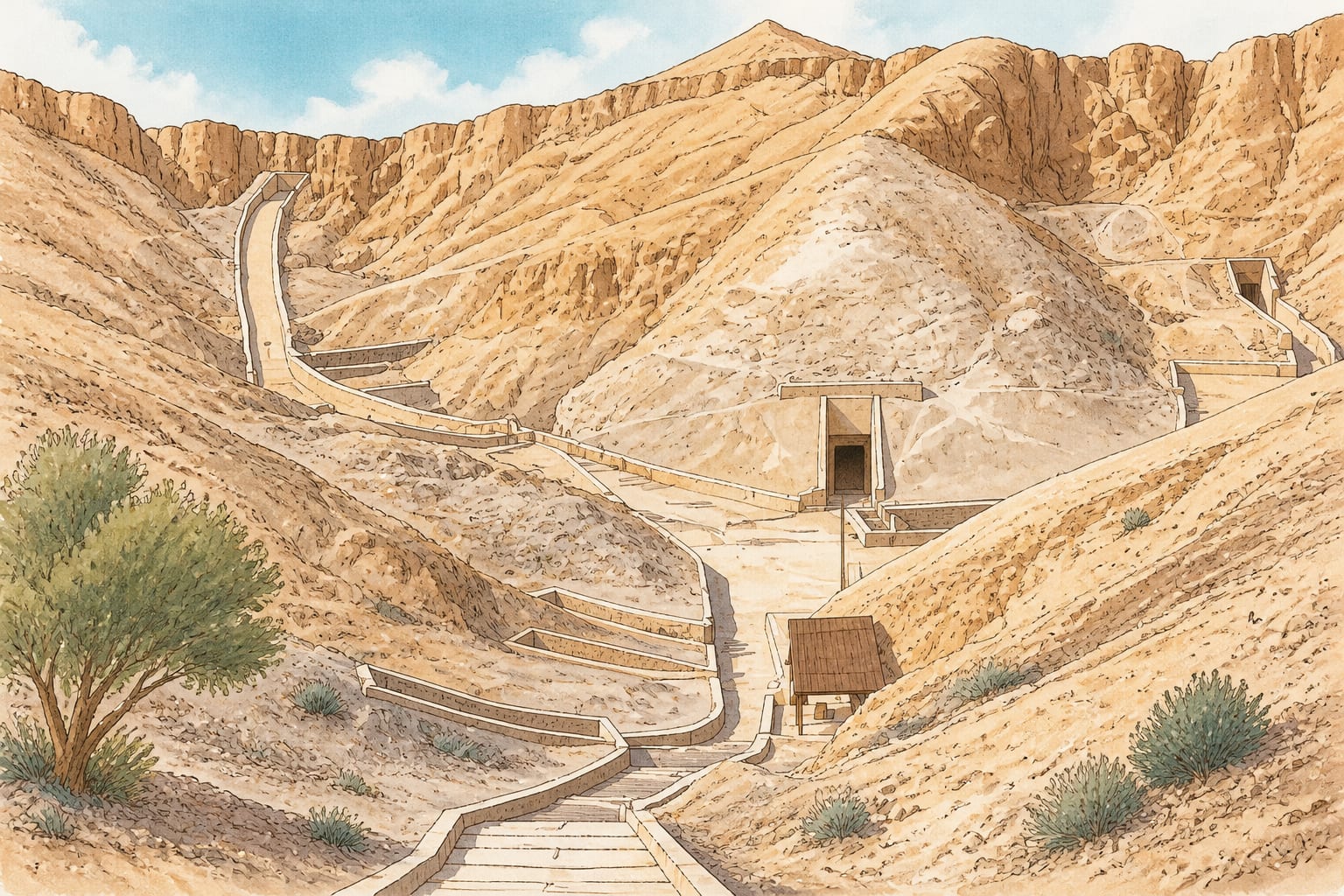
- Valley of the Kings
- In a dry wadi on the west bank of the Nile, across the river from Luxor, the pharaohs of the New Kingdom had their tombs cut deep into the limestone for close to 500 years, from the Eighteenth to the Twentieth Dynasty.
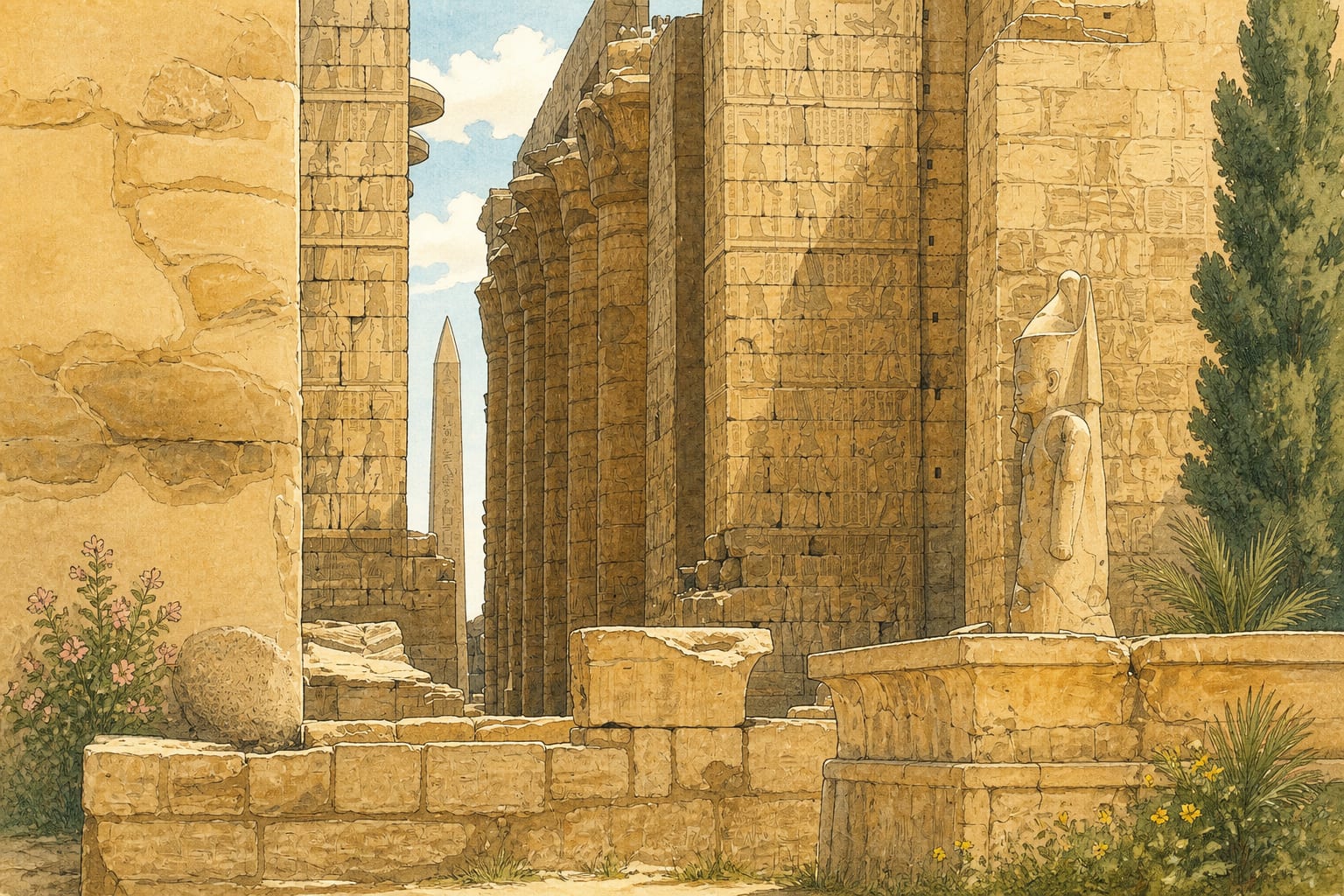
- Karnak Temple
- Karnak is a sprawling field of temples, pylons, chapels and obelisks at the village of El-Karnak, 2.5 kilometres north of Luxor, and was the chief sanctuary of Amun, head of the Theban gods.
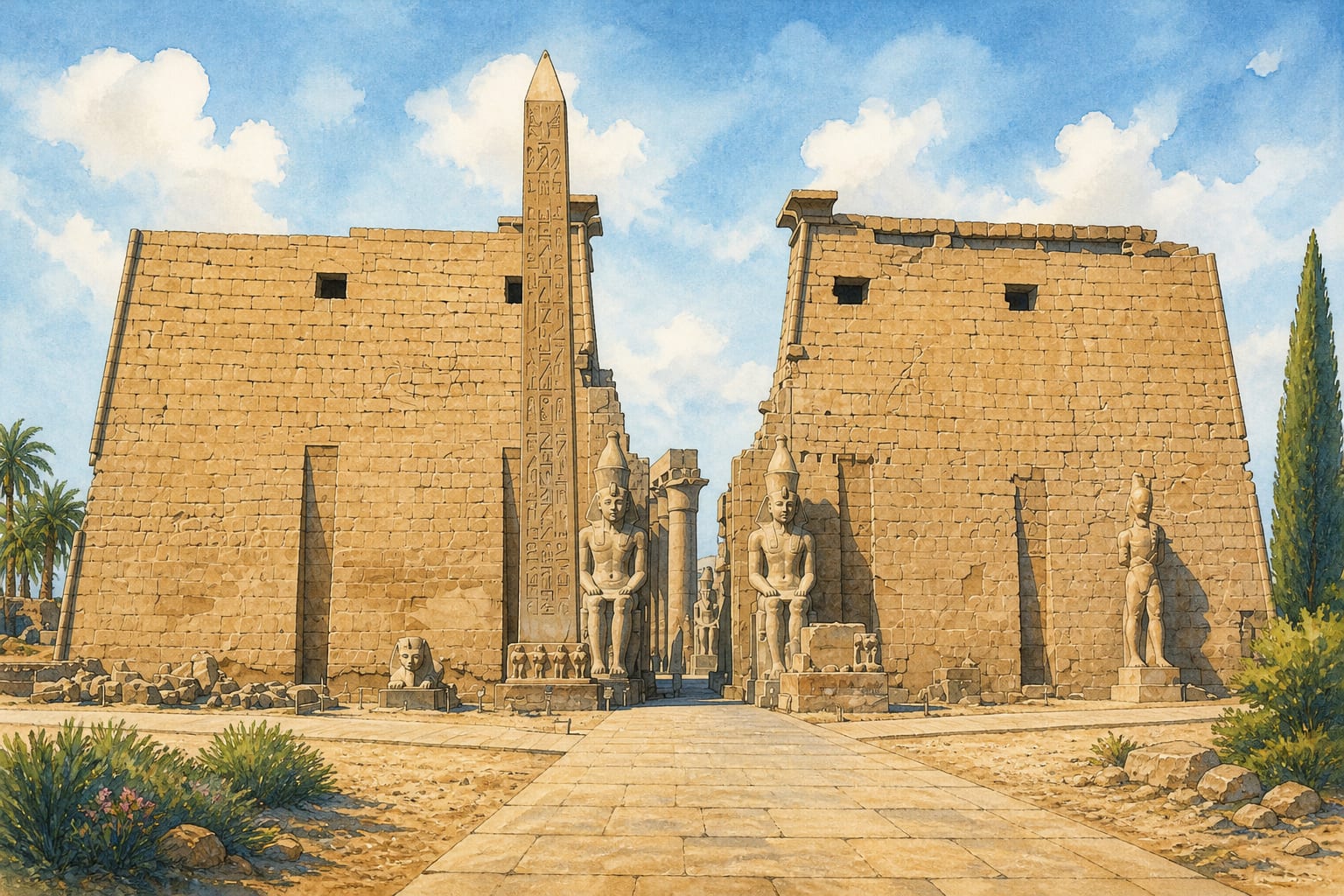
- Luxor Temple
- Luxor Temple rises on the east bank of the Nile in the middle of the modern city of Luxor, ancient Thebes, and was begun around 1400 BC.
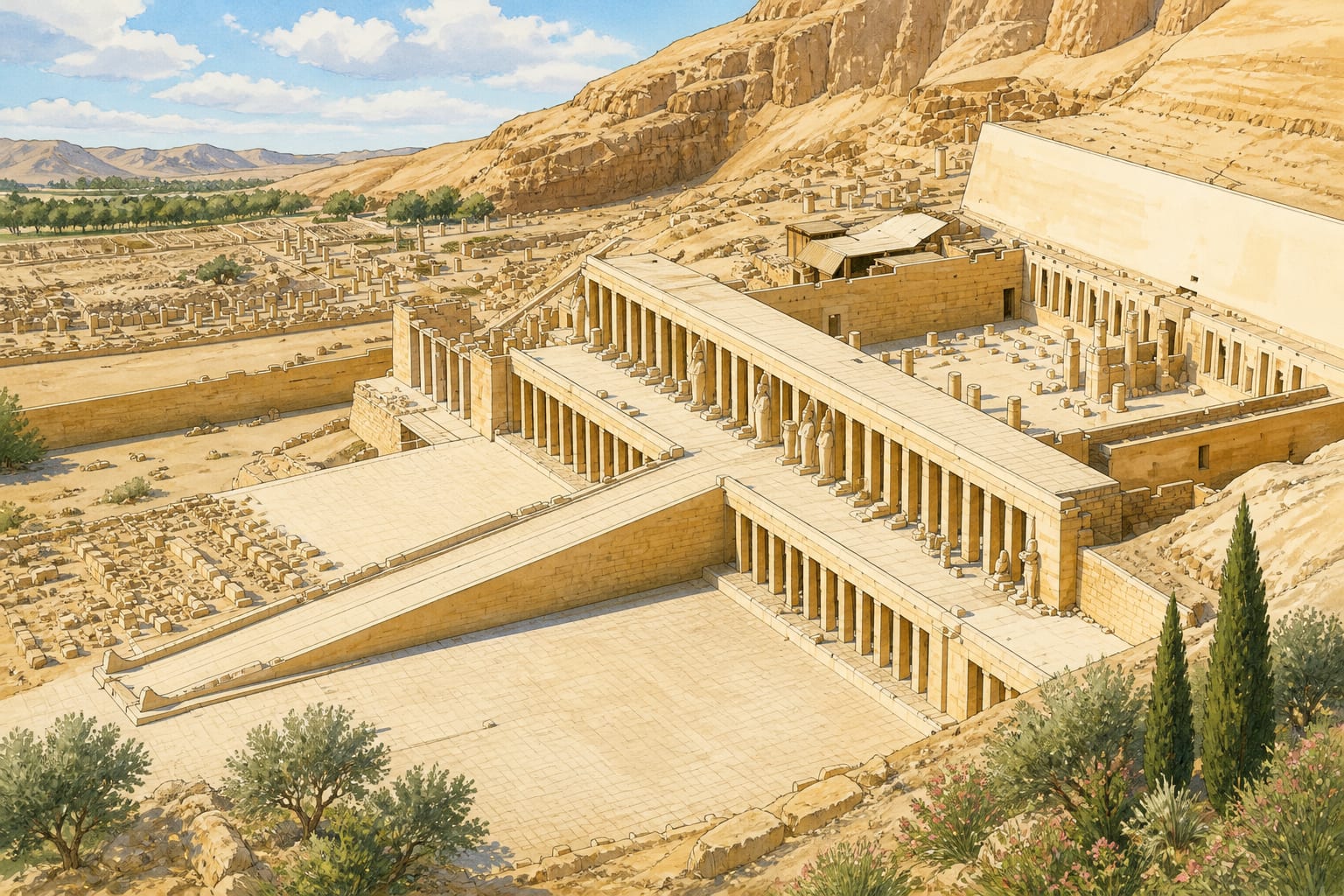
- Temple of Hatshepsut
- Three broad colonnaded terraces climb towards the sheer cliffs of Deir el-Bahari, across the Nile from Luxor: this is the mortuary temple that Hatshepsut, a female pharaoh of the Eighteenth Dynasty, built for herself and for the god Amun.
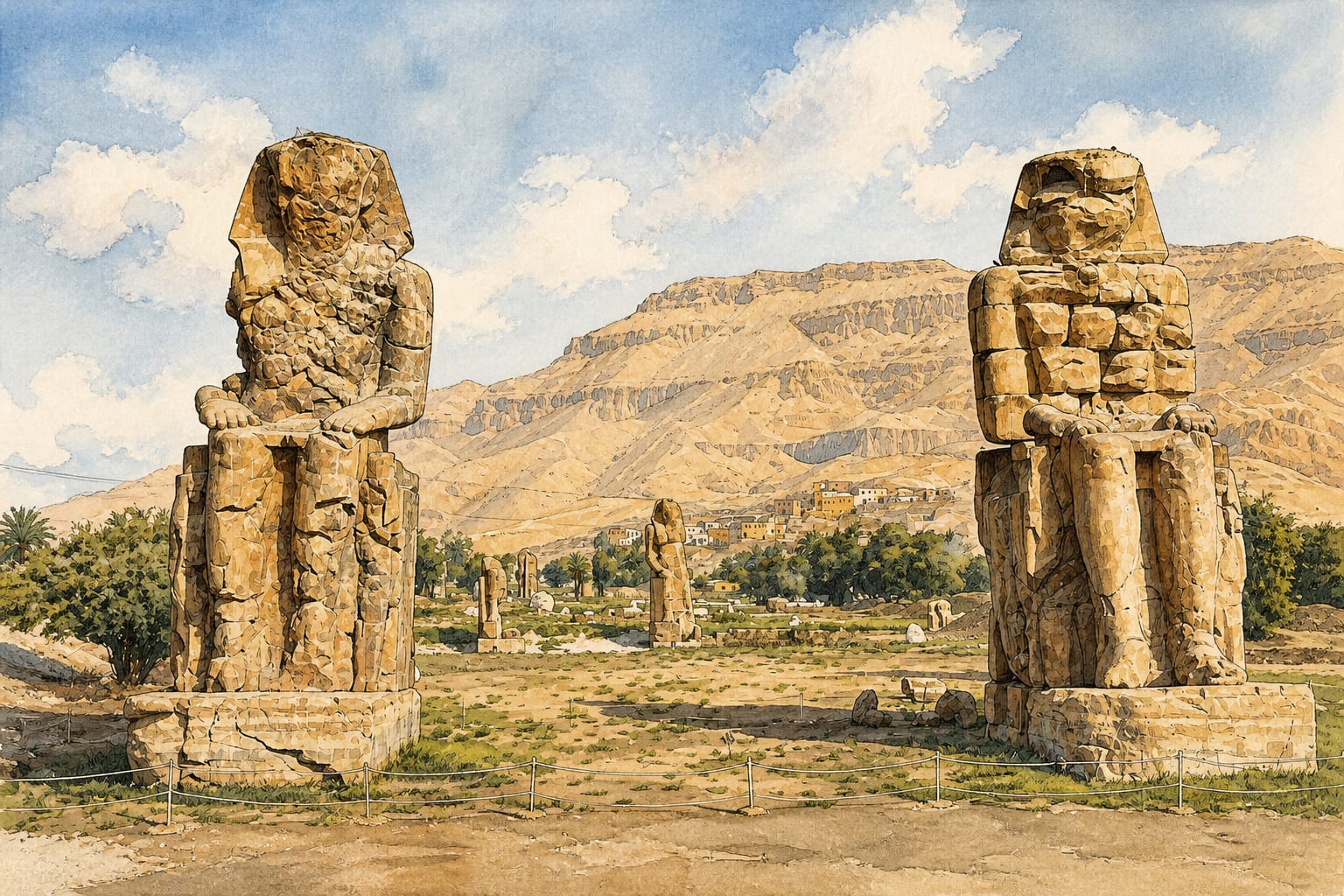
- Colossi of Memnon
- Two enormous seated figures of the pharaoh Amenhotep III have sat in the Theban Necropolis at Luxor since about 1350 BC, looking east towards the Nile with their hands resting on their knees.