


Cover: India Gate. The banner above is an illustration, not a photograph. It was drawn to suggest the place, and the details may differ from the real thing. Drawn from a photo on Wikimedia Commons (opens in a new tab) by A.Savin. Photo licence: FAL (opens in a new tab); the drawing is shared under the same licence.
Sights in Delhi
- UNESCO
- UNESCO
- UNESCO


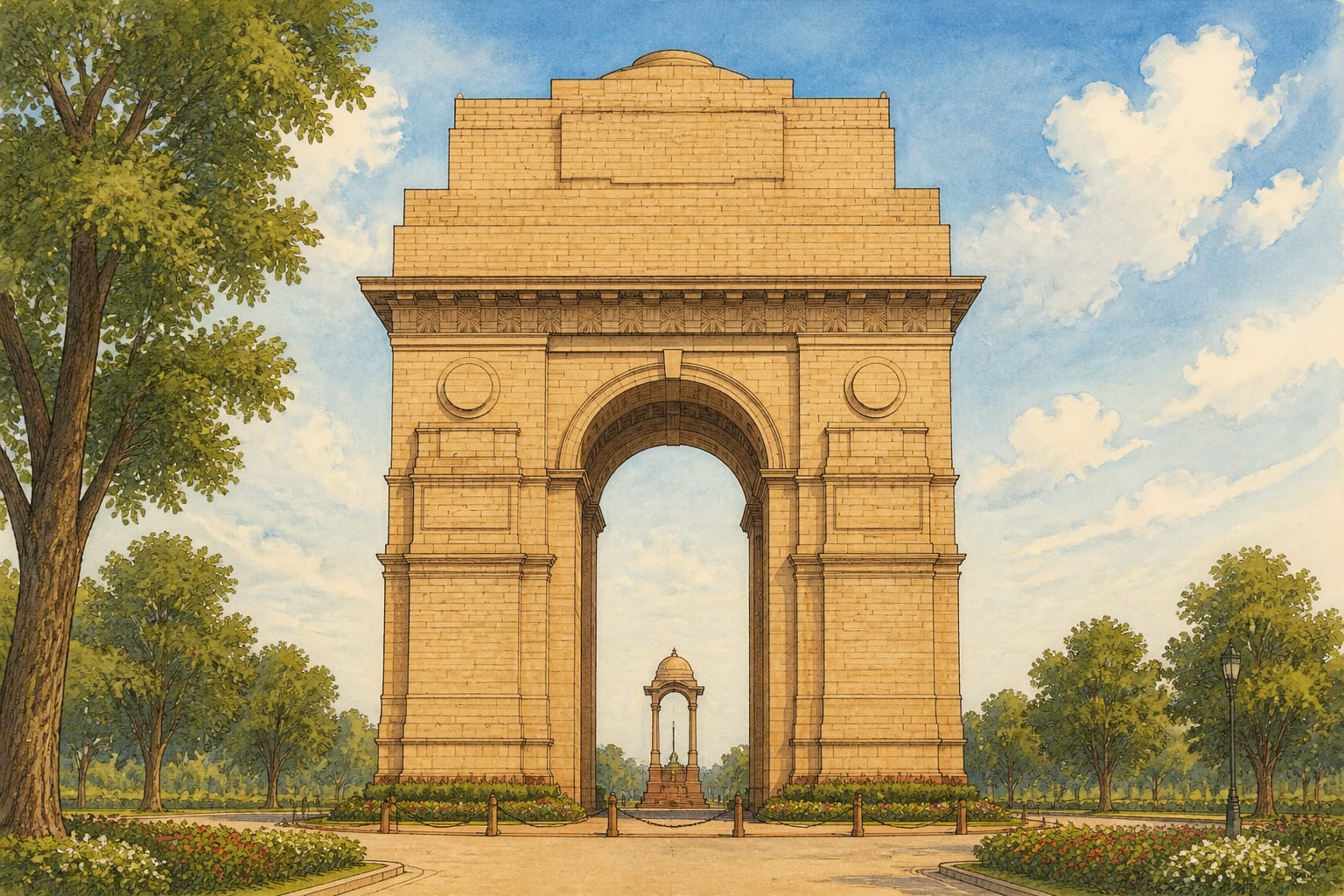
- India Gate
- A 42-metre stone arch at the eastern end of Kartavya Path, the old Kingsway, closes New Delhi's ceremonial axis.
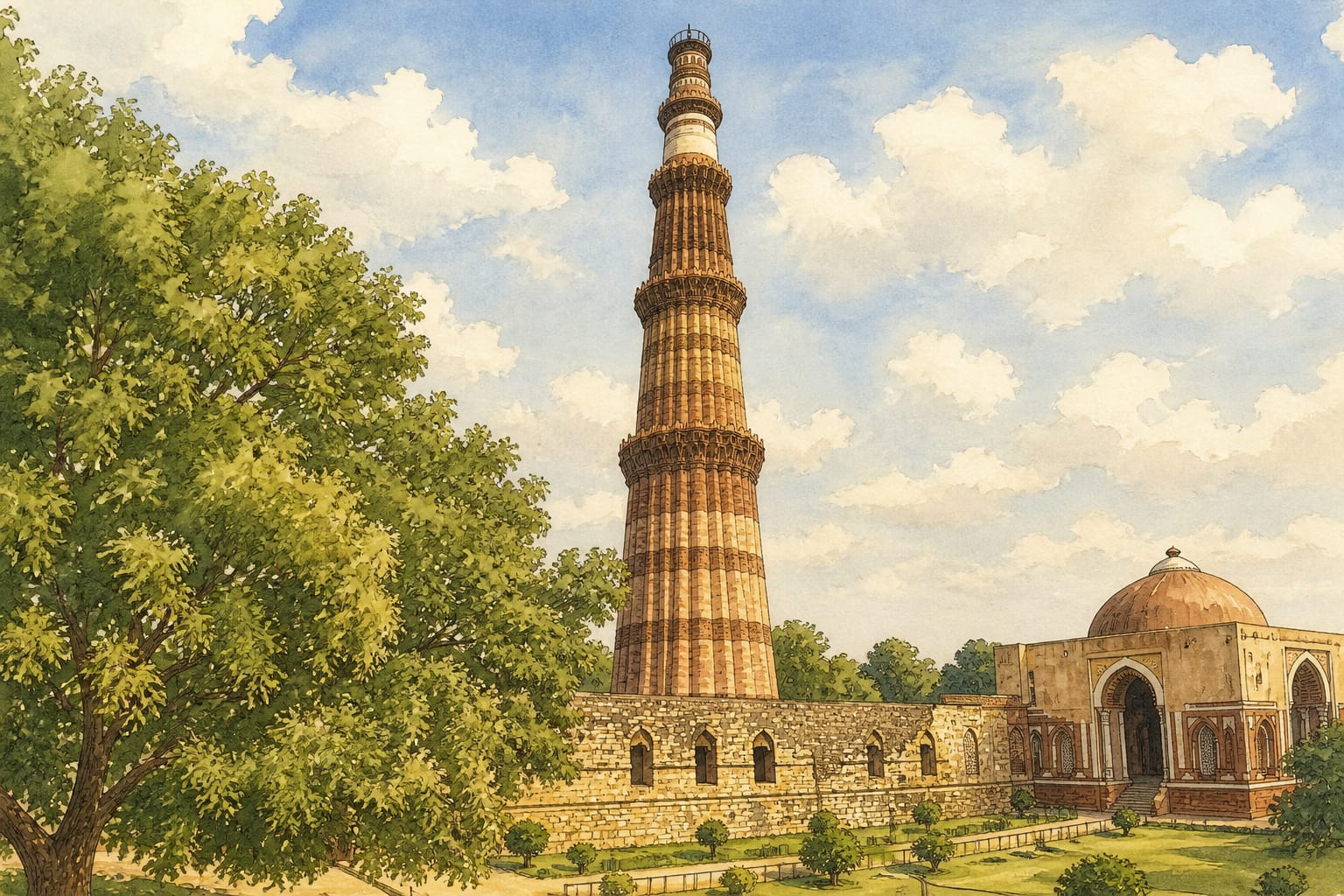
- Qutub Minar
- A fluted tower of red and grey sandstone, 72.5 metres high, rises in five stories over the ruins of Lal Kot in Mehrauli, South Delhi.
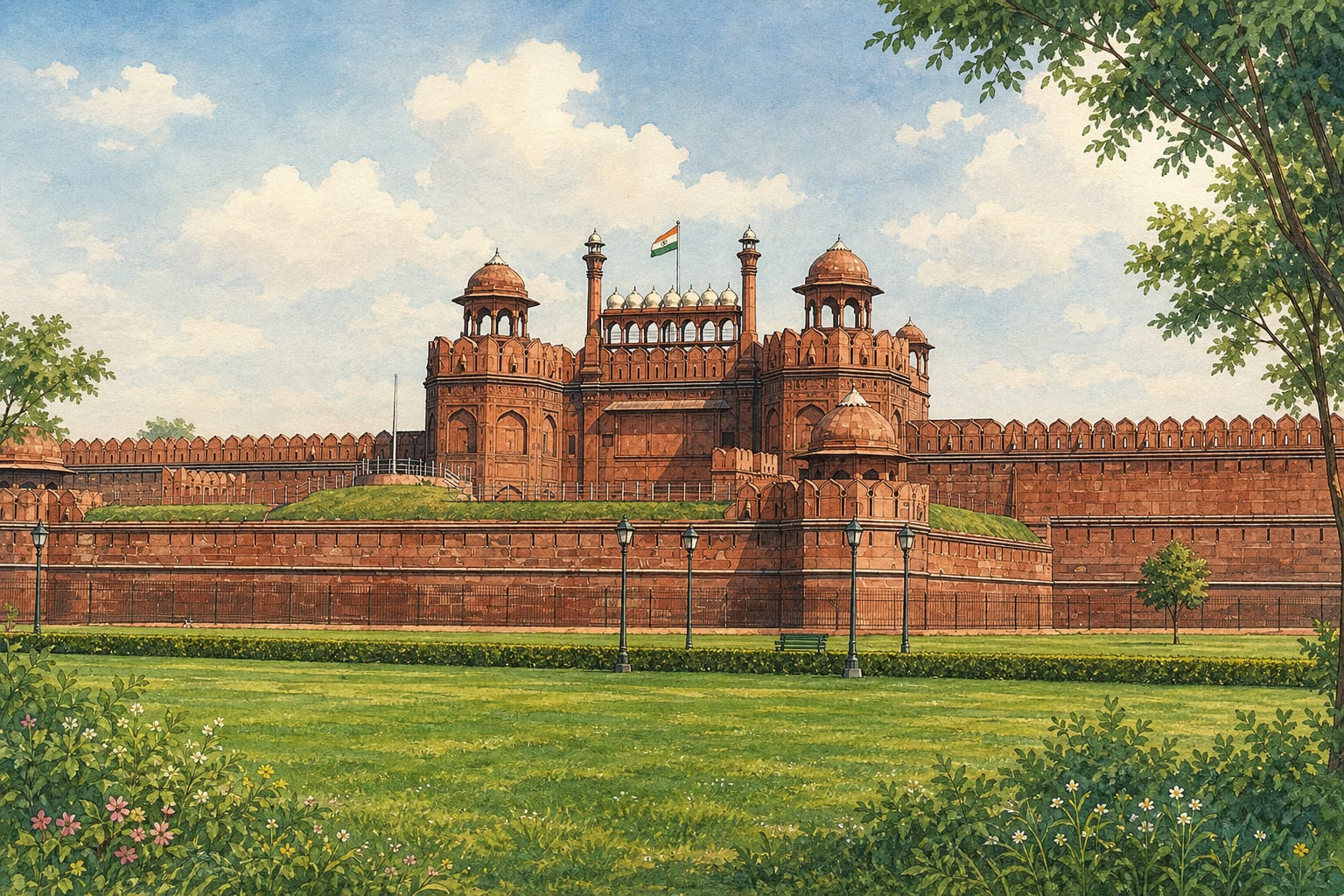
- Red Fort
- Red sandstone walls 2.41 kilometres long, rising from 18 metres on the river side to 33 metres facing the city, enclose the palace-fortress that Shah Jahan built when he moved the Mughal capital from Agra to Delhi.
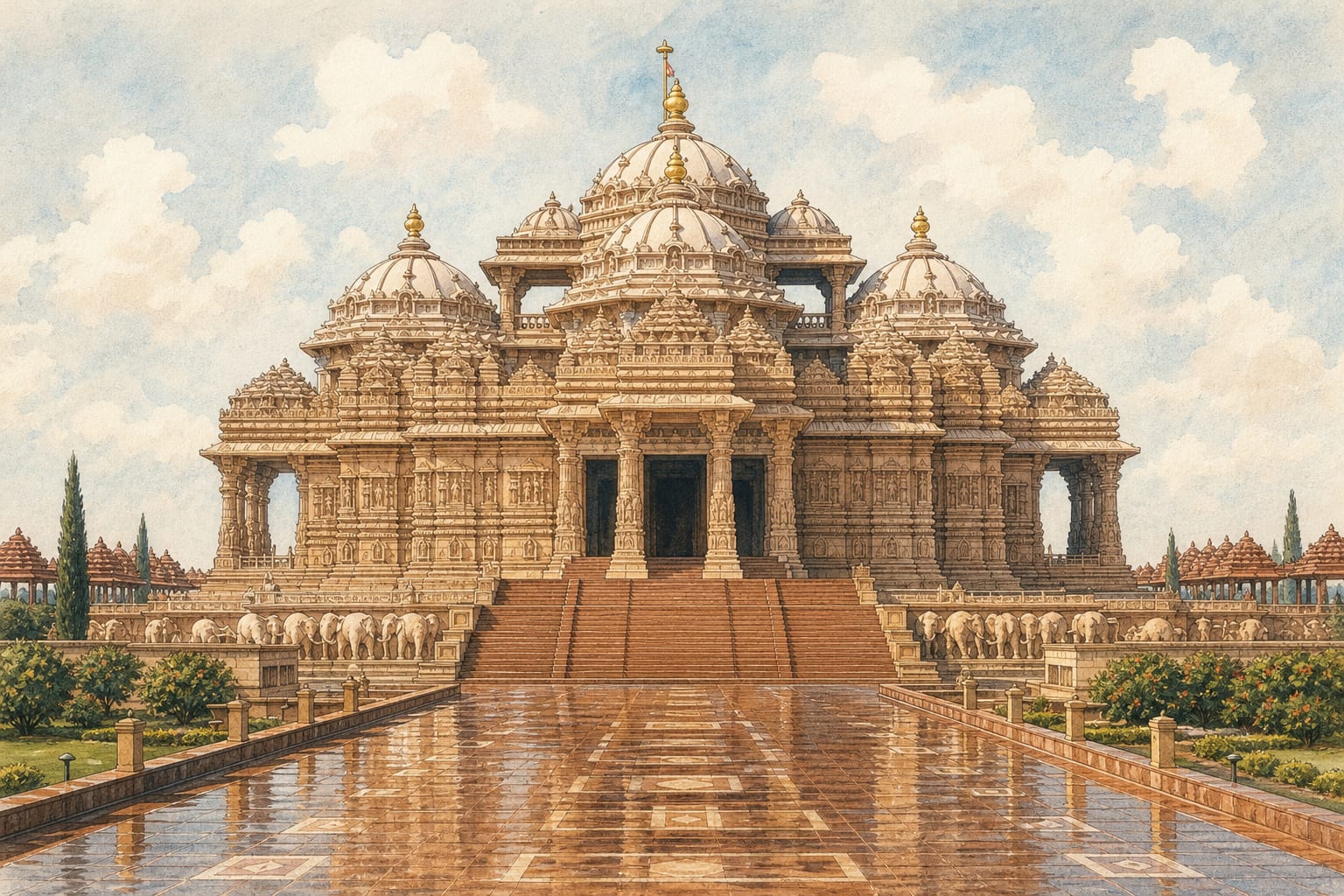
- Akshardham
- A carved temple of pink Rajasthani sandstone and Italian Carrara marble, 43 metres high, stands at the centre of a walled campus of gardens, pools and exhibition halls near the Yamuna in eastern Delhi, close to the border with Noida.
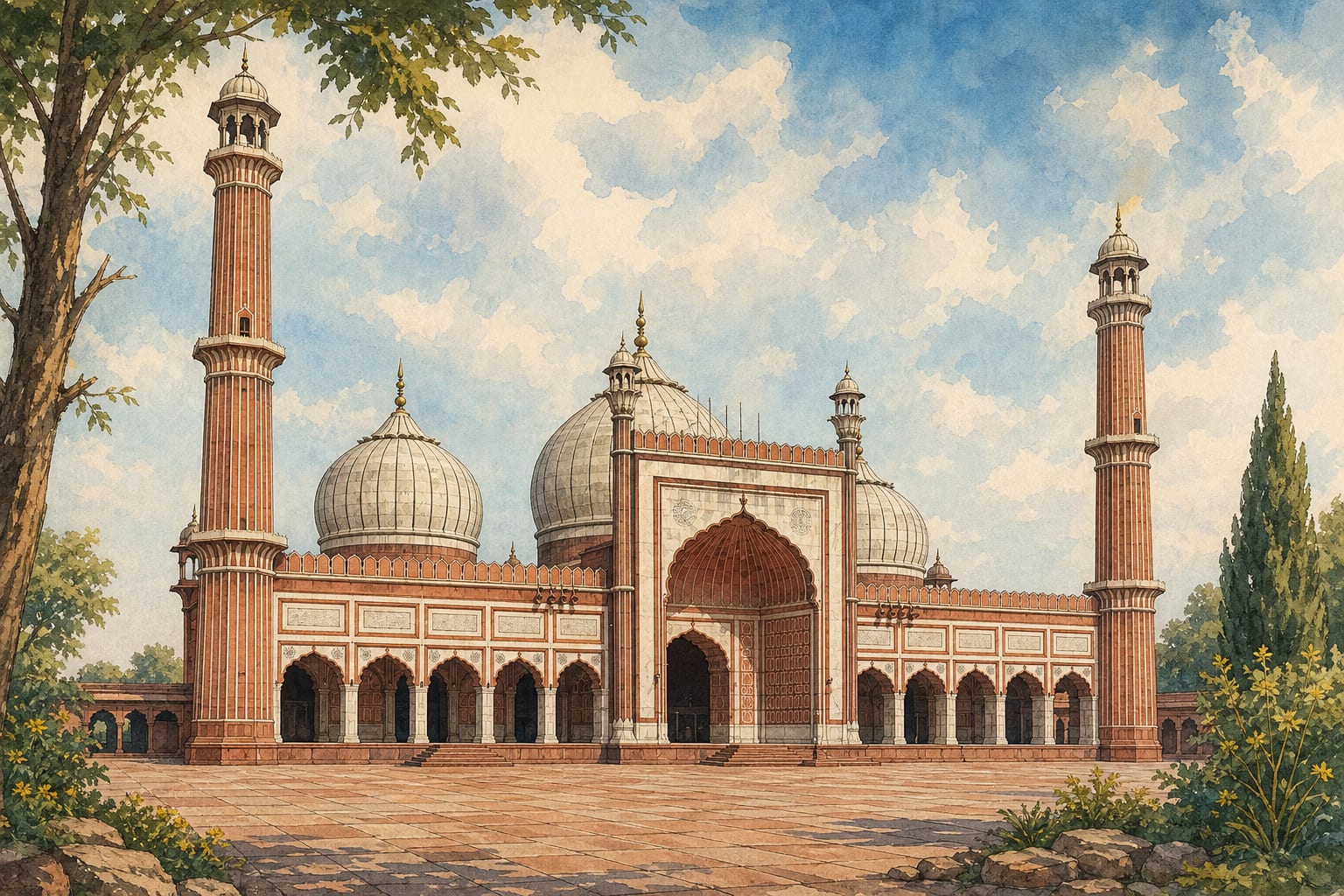
- Jama Masjid
- Three white marble domes and two striped minarets crown a red sandstone mosque that stands on a hill in Old Delhi, its courtyard raised 10 metres above the surrounding streets and facing the Red Fort.
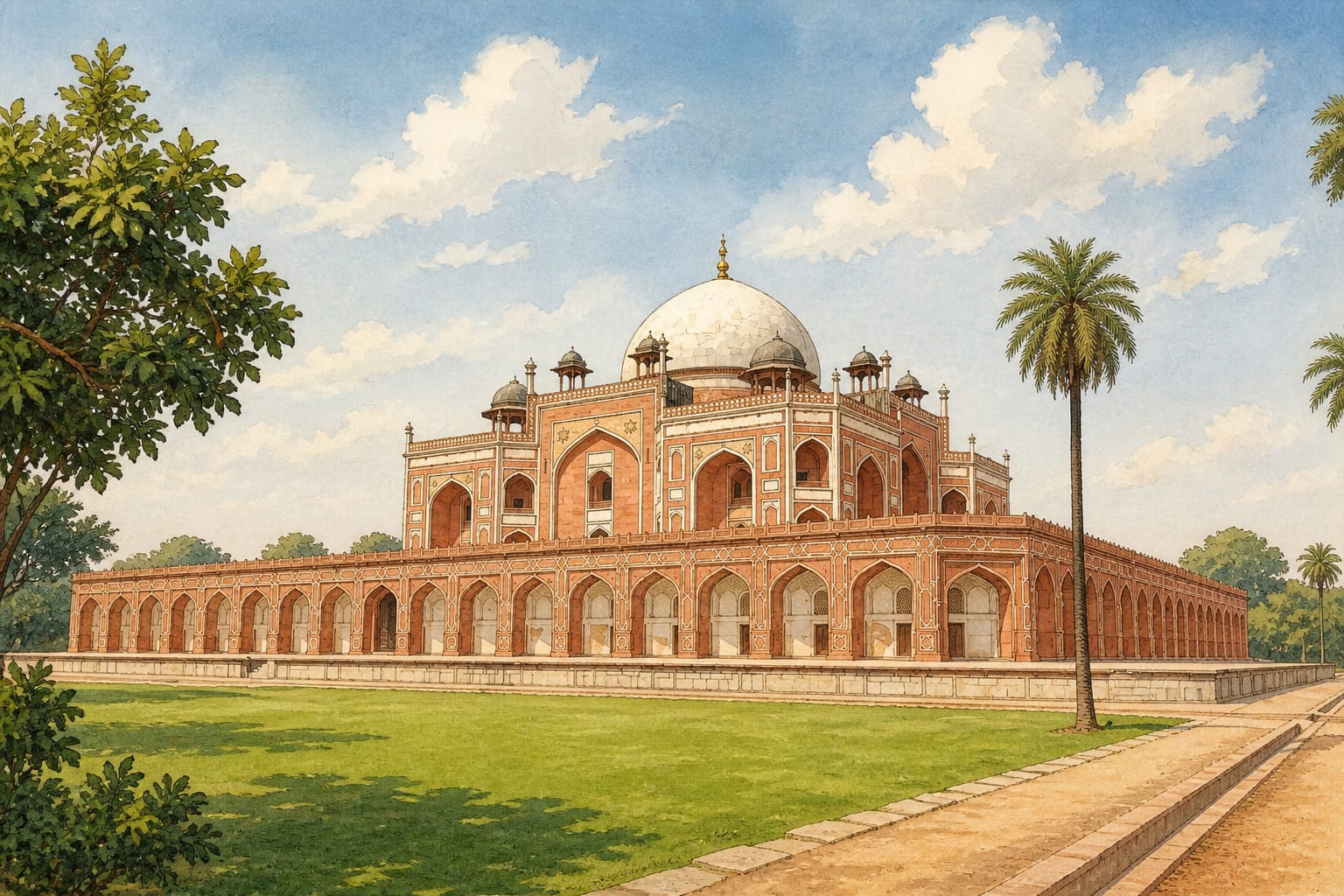
- Humayun's Tomb
- A red sandstone mausoleum trimmed with white and black marble and crowned by a white marble double dome rises 47 metres from a broad arcaded terrace in Nizamuddin East, Delhi, at the centre of a walled Persian-style garden.
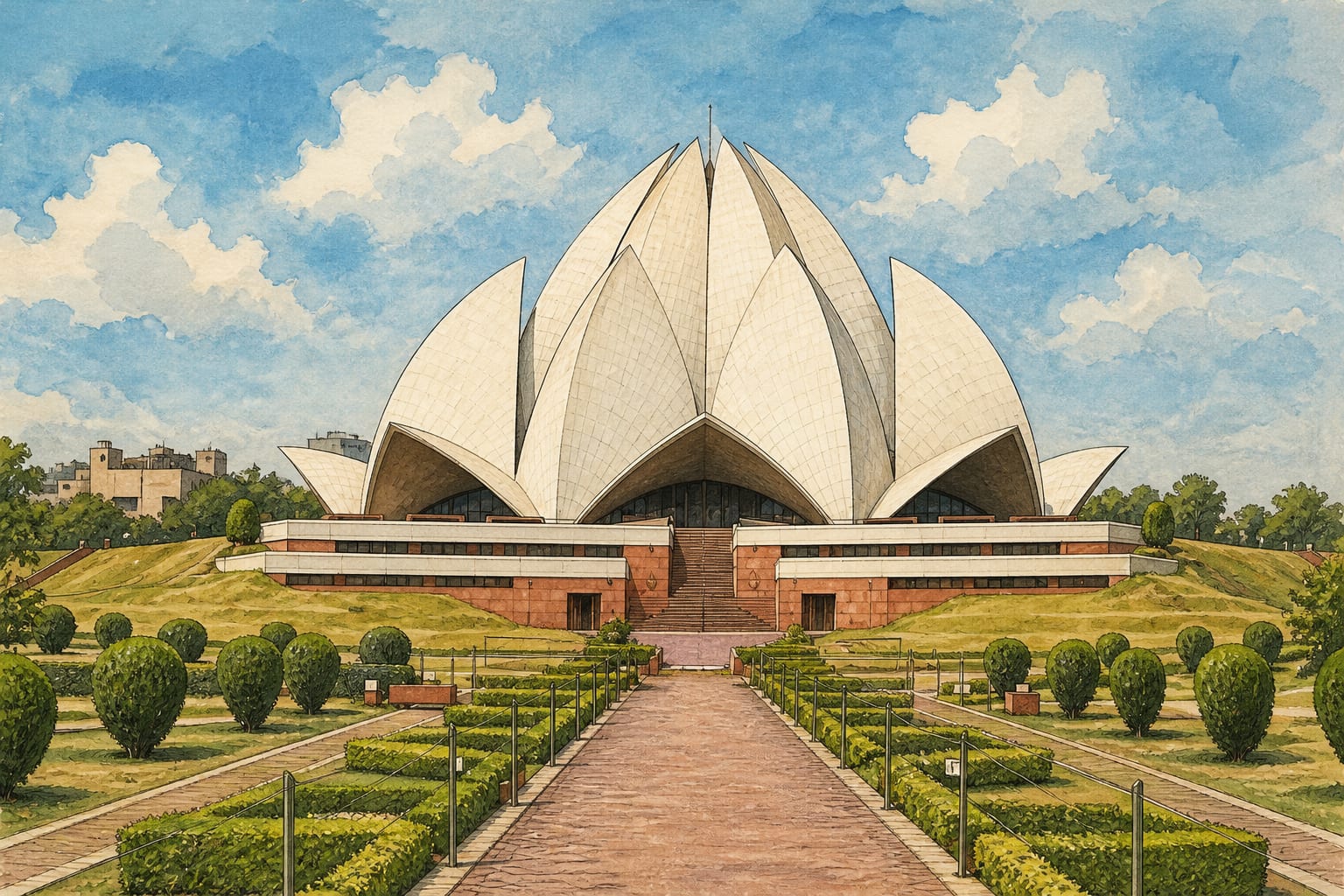
- Lotus Temple
- On a low rise at Bahapur in south Delhi, 27 white marble-clad petals open around a central hall in the shape of a half-open lotus: this is the Baháʼí House of Worship, known to everyone as the Lotus Temple.