


Cover: Colosseum. The banner above is an illustration, not a photograph. It was drawn to suggest the place, and the details may differ from the real thing. Drawn from a photo on Wikimedia Commons (opens in a new tab) by FeaturedPics. Photo licence: CC BY-SA 4.0 (opens in a new tab); the drawing is shared under the same licence.
Sights in Rome
- UNESCO
- UNESCO
- UNESCO
- UNESCO
- UNESCO
- UNESCO
- UNESCO


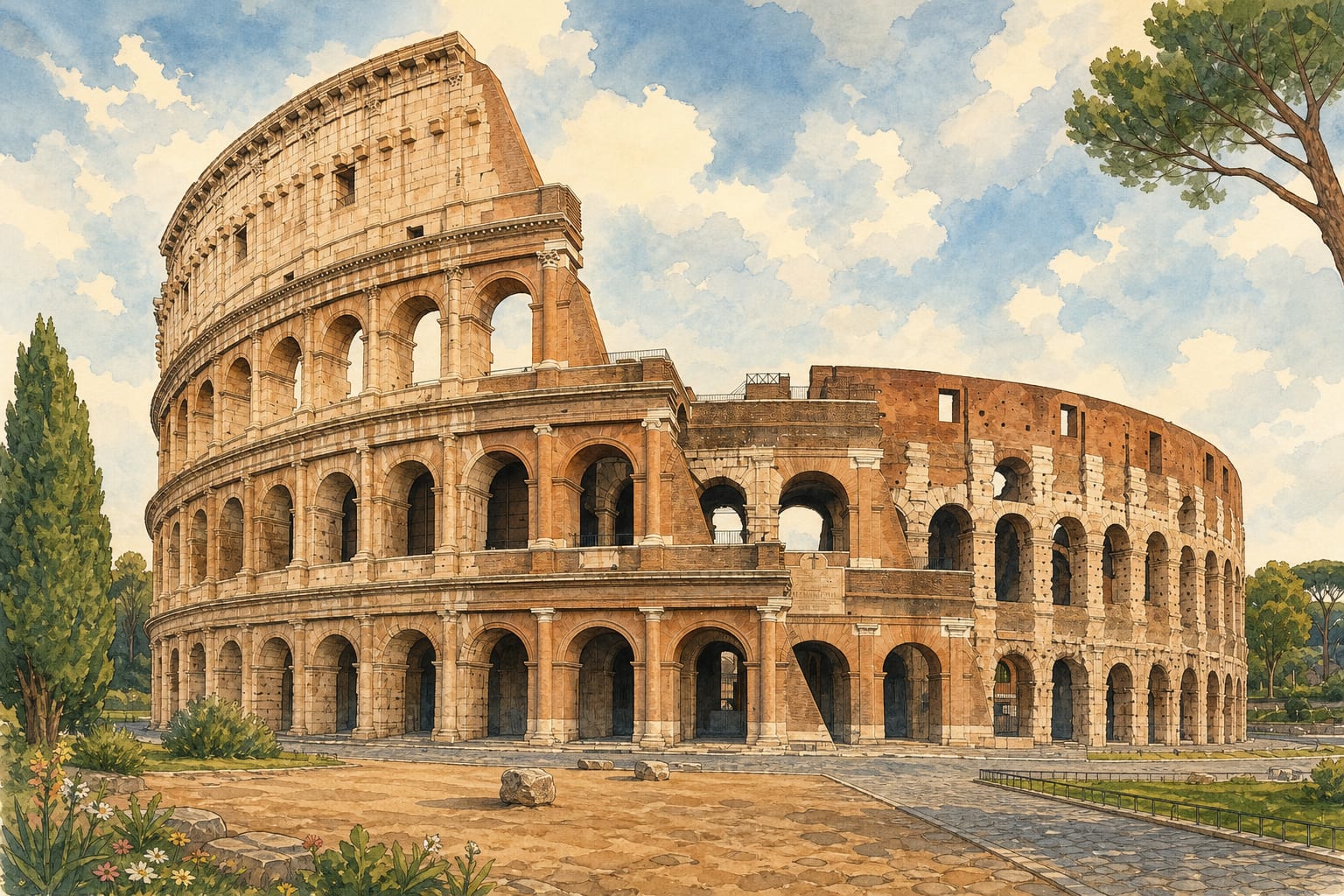
- Colosseum
- The Colosseum is the great elliptical stone amphitheatre of ancient Rome, standing in the city centre just east of the Roman Forum, its outer wall rising 48 metres in tiers of arches.
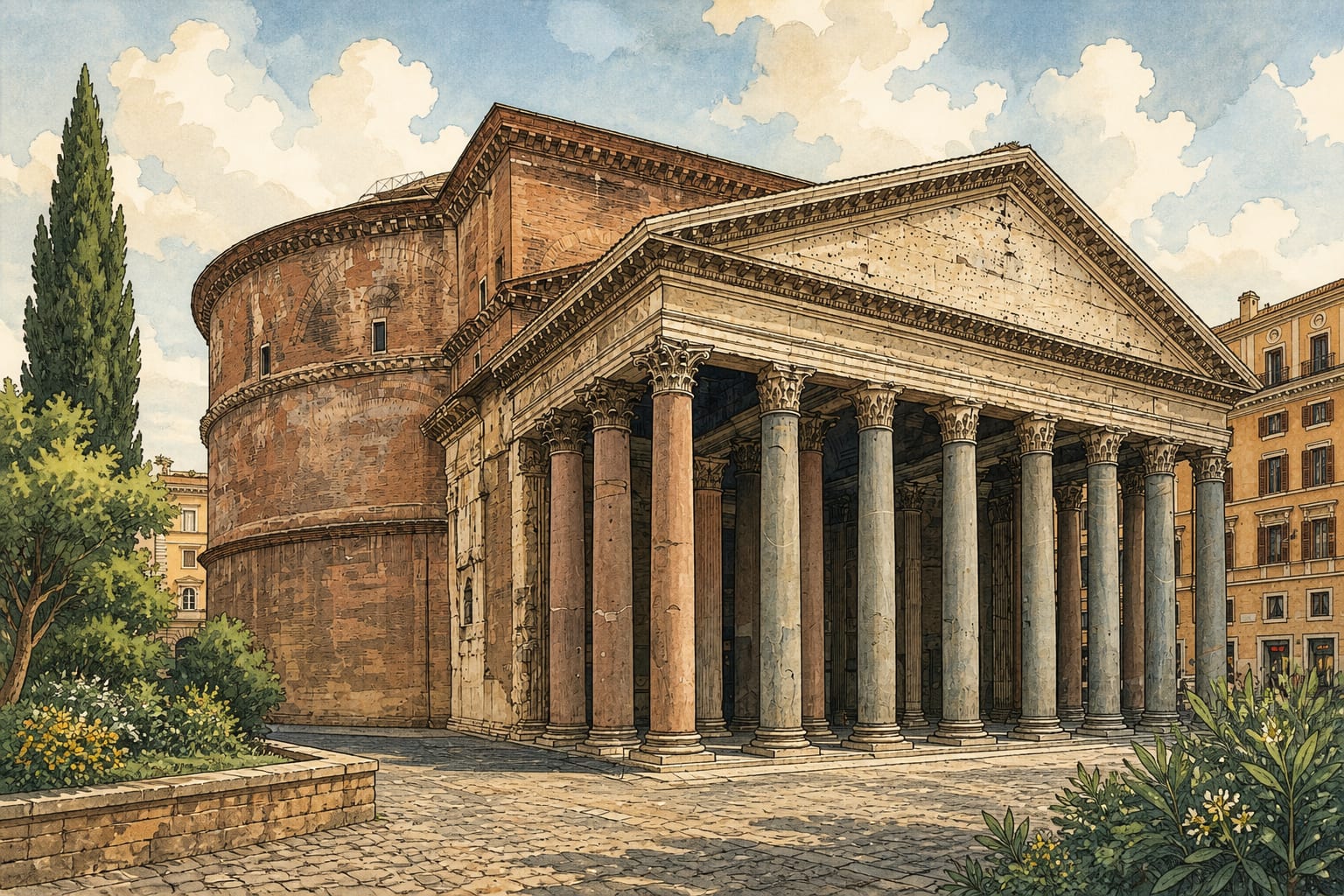
- Pantheon
- Behind a deep portico of granite columns on the Piazza della Rotonda in Rome, the Pantheon opens into a single round hall under a coffered concrete dome, lit only by the open oculus at its crown and by the door.
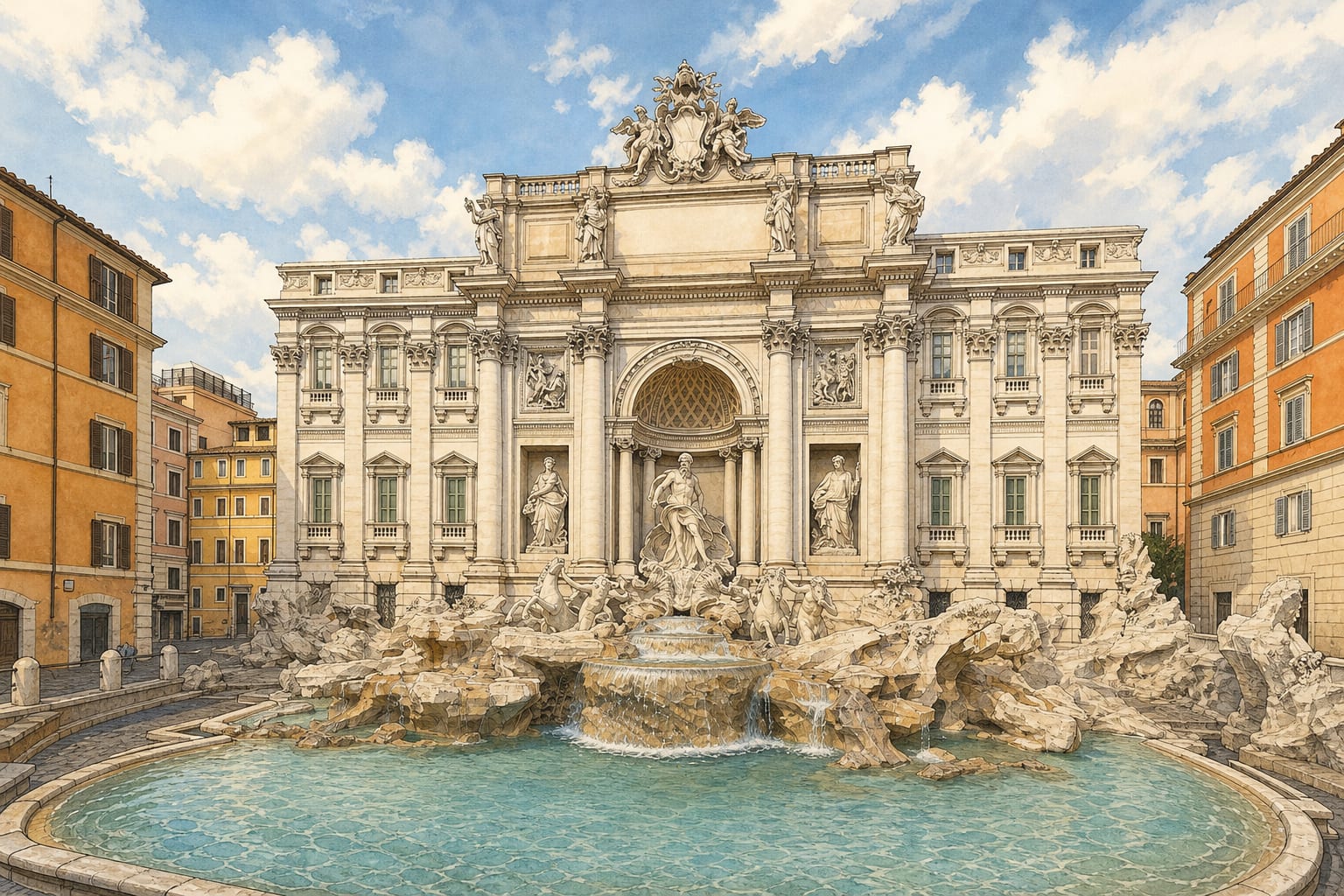
- Trevi Fountain
- The Trevi Fountain fills one end of a small square in Rome's Trevi district with a wall of carved travertine and falling water, 26.3 metres high and just over 49 metres wide.
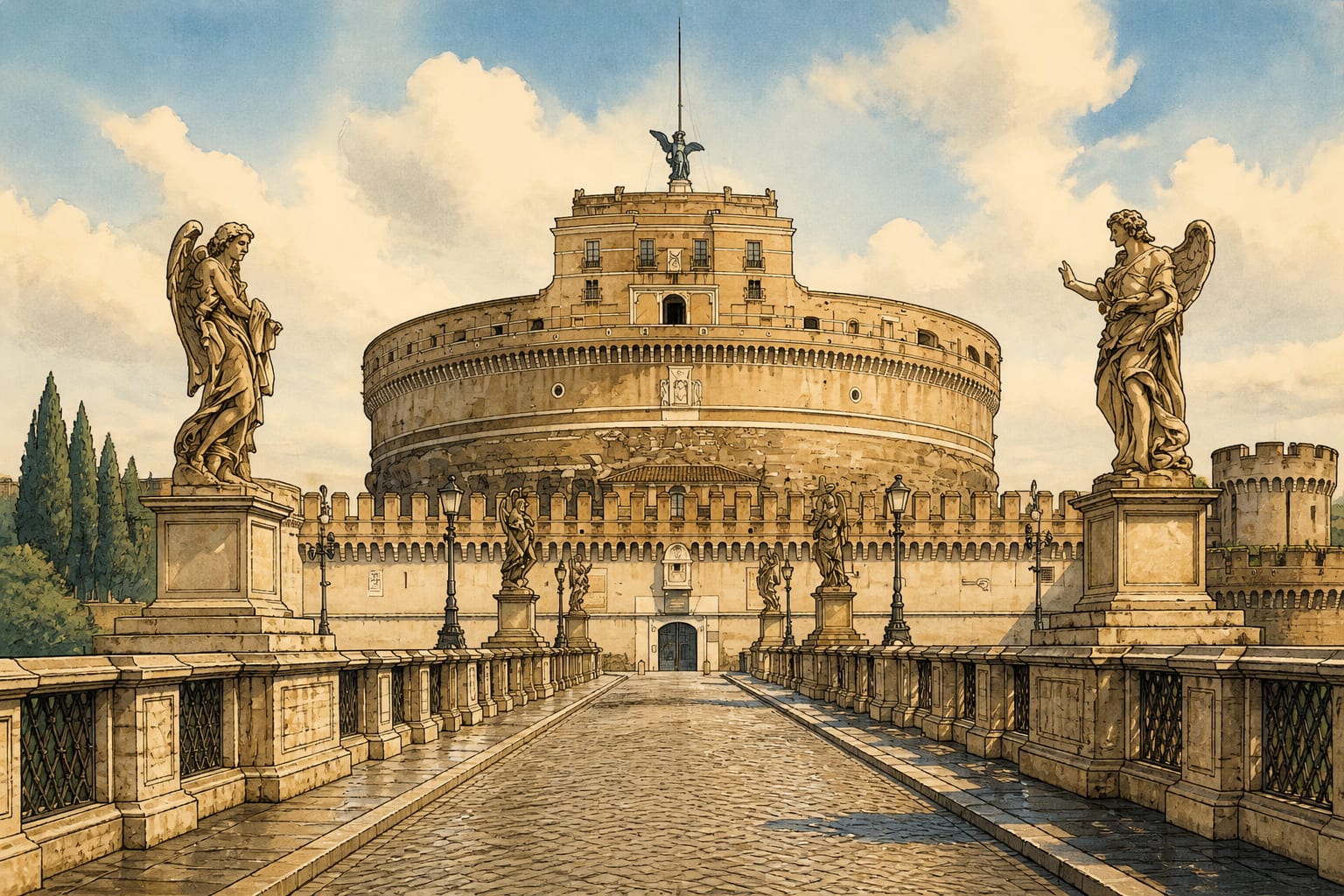
- Castel Sant'Angelo
- Castel Sant'Angelo is a massive round drum of masonry on the right bank of the Tiber in Rome, set in Parco Adriano and crowned by a bronze statue of the Archangel Michael.
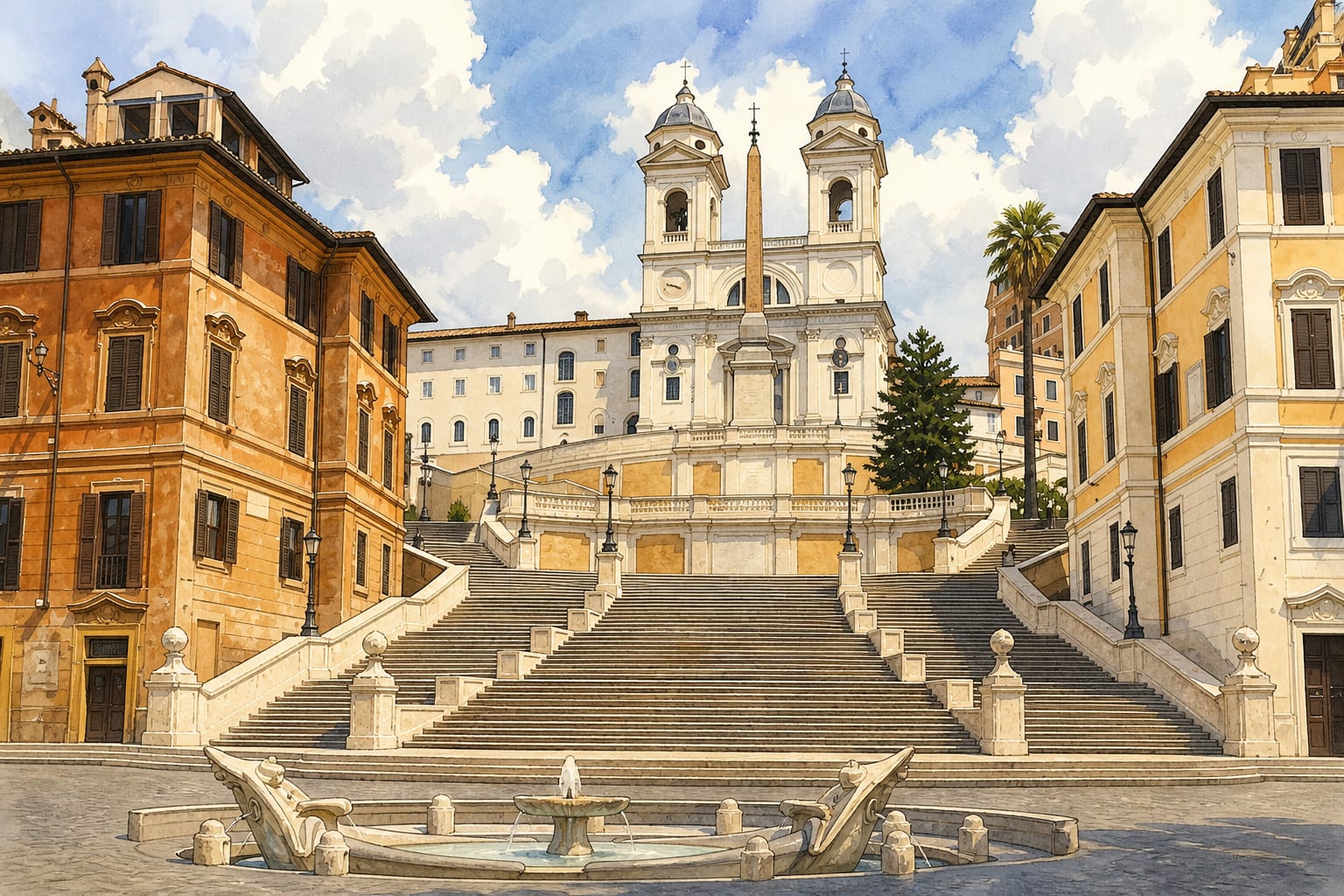
- Spanish Steps
- The Spanish Steps are a broad stairway of 135 steps that climbs a 29-metre slope in Rome, from the Piazza di Spagna at the bottom to the Trinità dei Monti church on a shoulder of the Pincian Hill at the top.
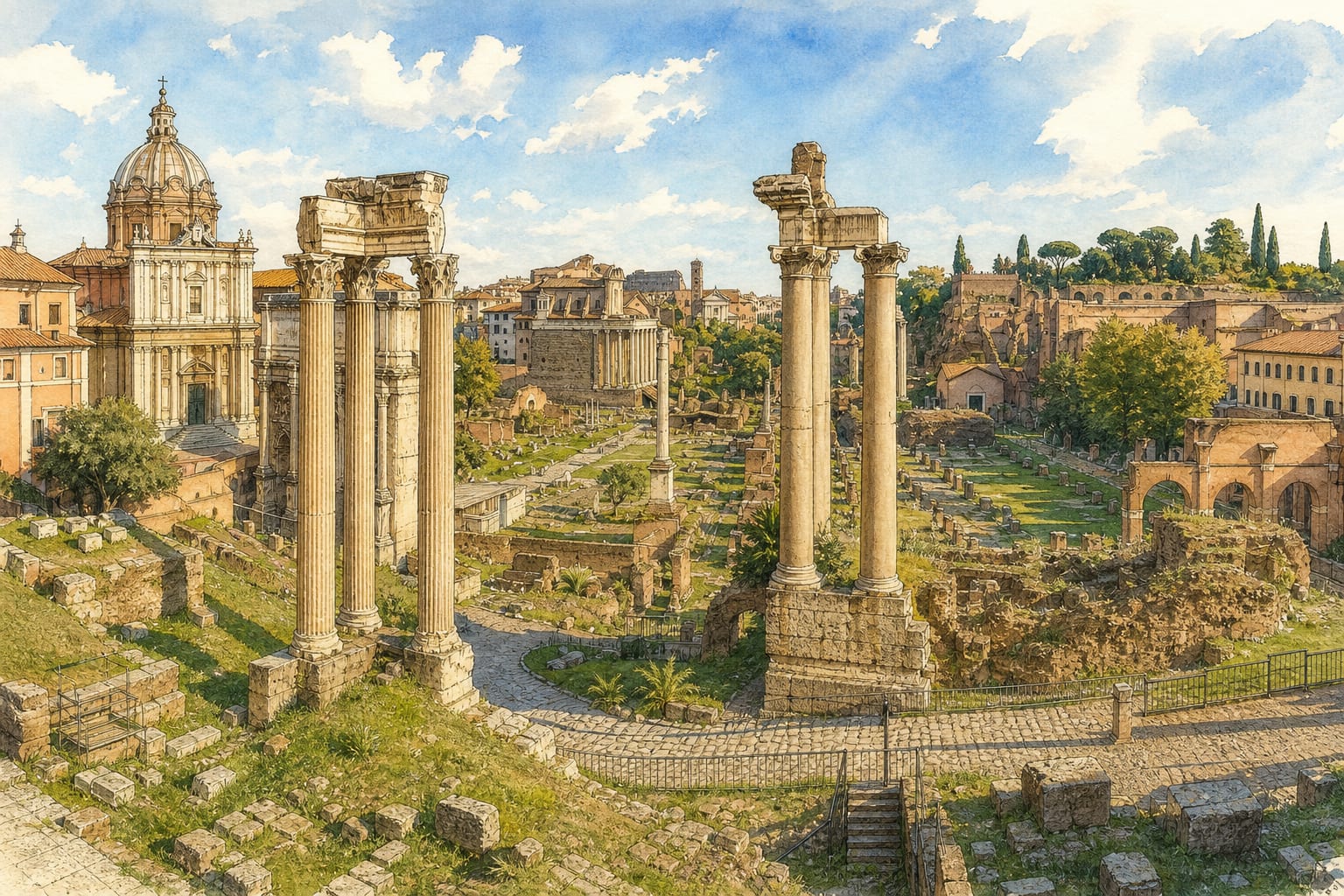
- Roman Forum
- The Roman Forum is the long, sunken field of ruins lying in the low ground between the Capitoline and Palatine Hills, where ancient Rome did its public business: triumphal processions and elections, speeches, criminal trials and trade all happened here.
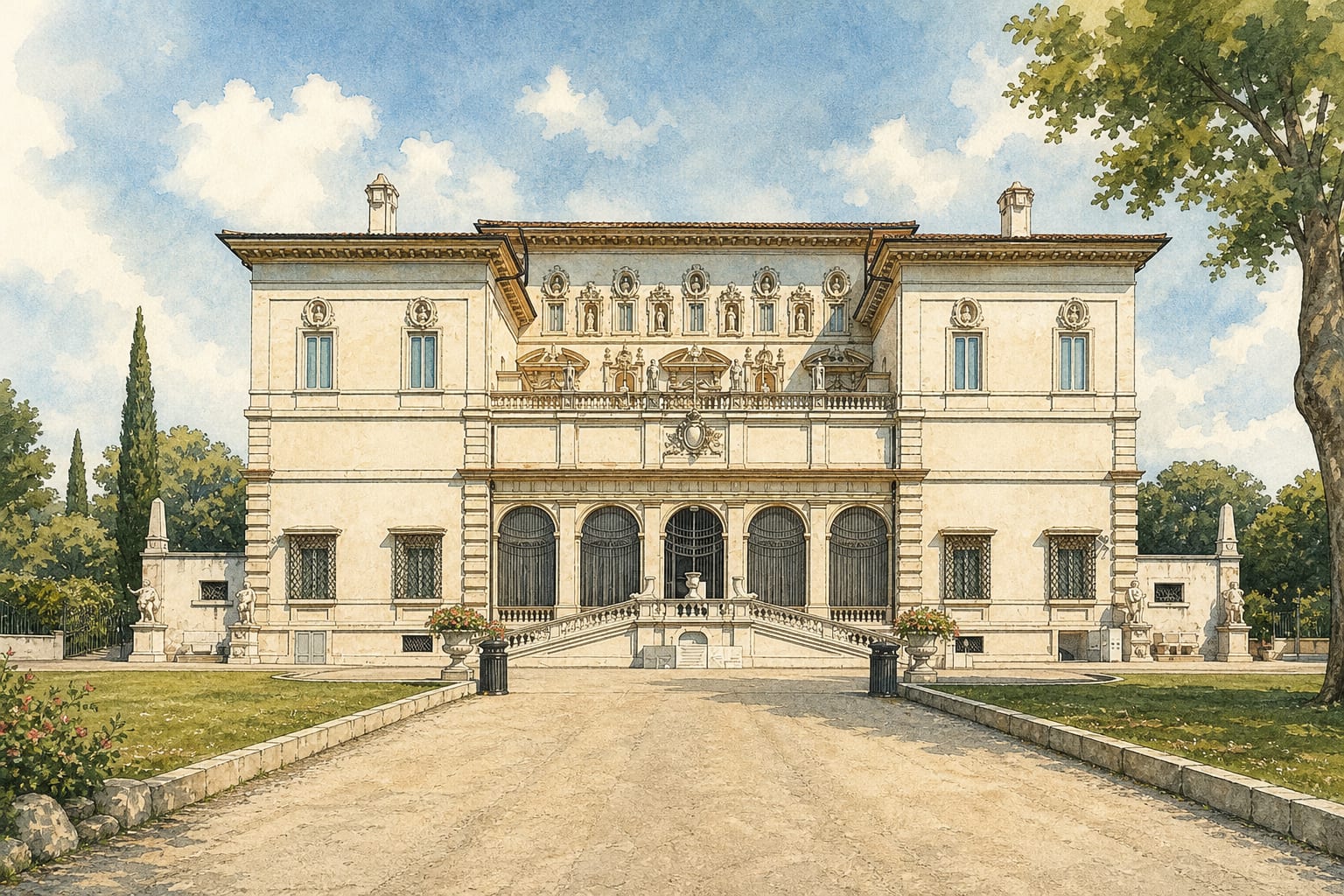
- Borghese Gallery
- The Galleria Borghese fills the former Villa Borghese Pinciana in Rome with the collection that Cardinal Scipione Borghese, nephew of Pope Paul V, assembled: Roman antiquities, Renaissance and Baroque paintings and, above all, marble sculpture by Gian Lorenzo Bernini.
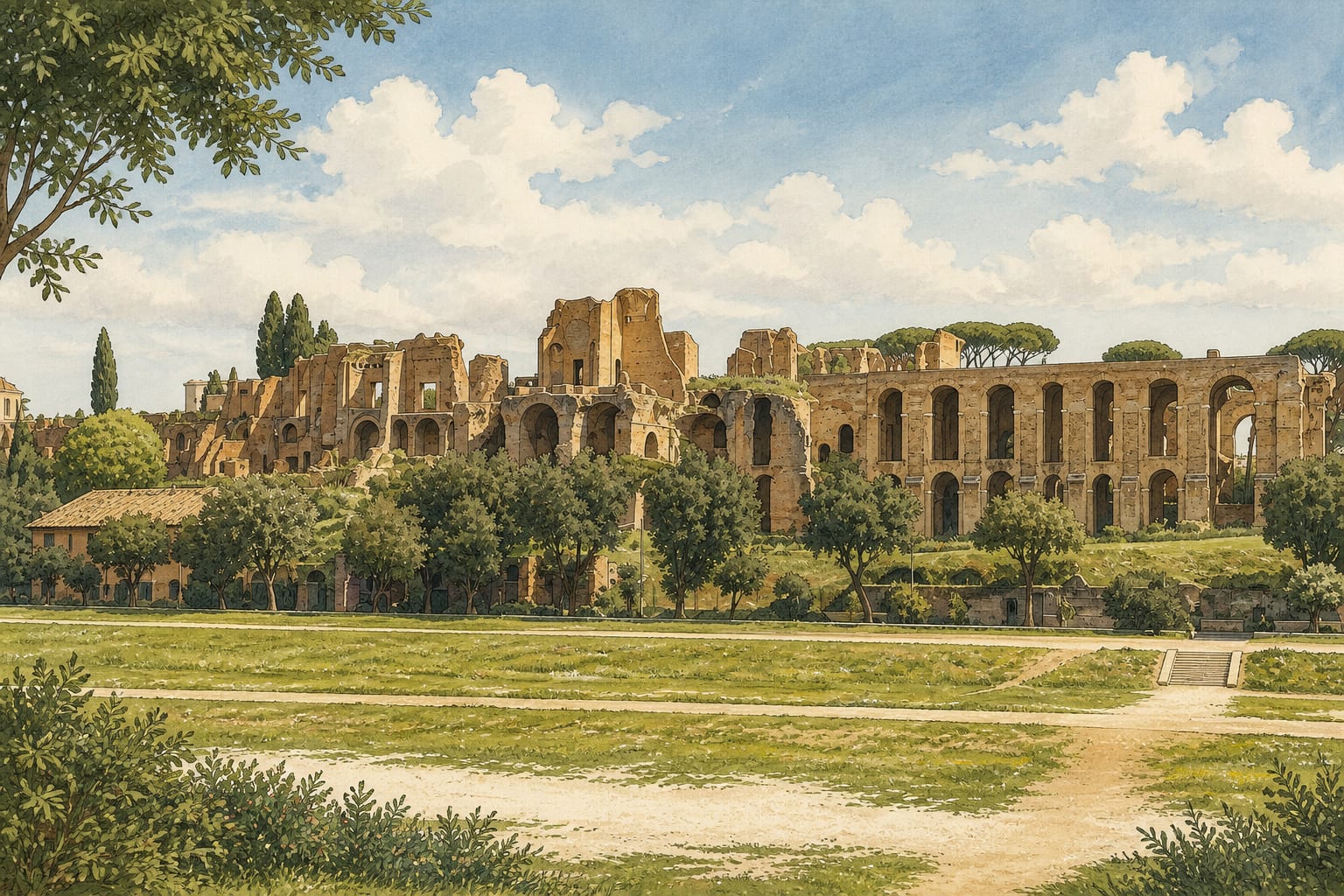
- Palatine Hill
- The Palatine Hill, the centremost of Rome's seven hills, is where the city began: excavations show people living here from the 10th century BC, and the ruins of emperors' palaces still cover its top.
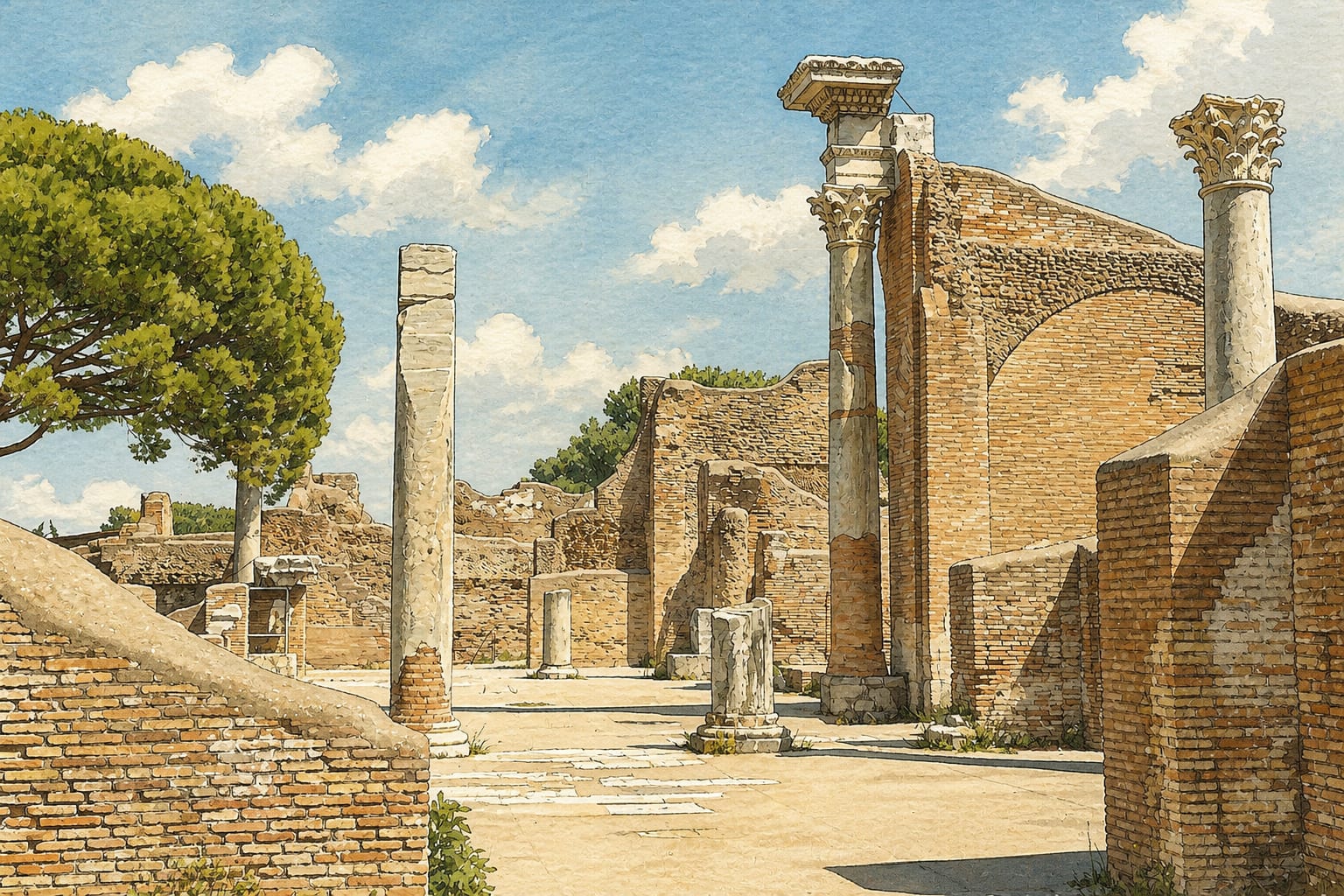
- Ostia Antica
- Ostia Antica is the excavated port city of ancient Rome, spread out near modern Ostia 25 km southwest of the capital, where the Tiber once met the sea.