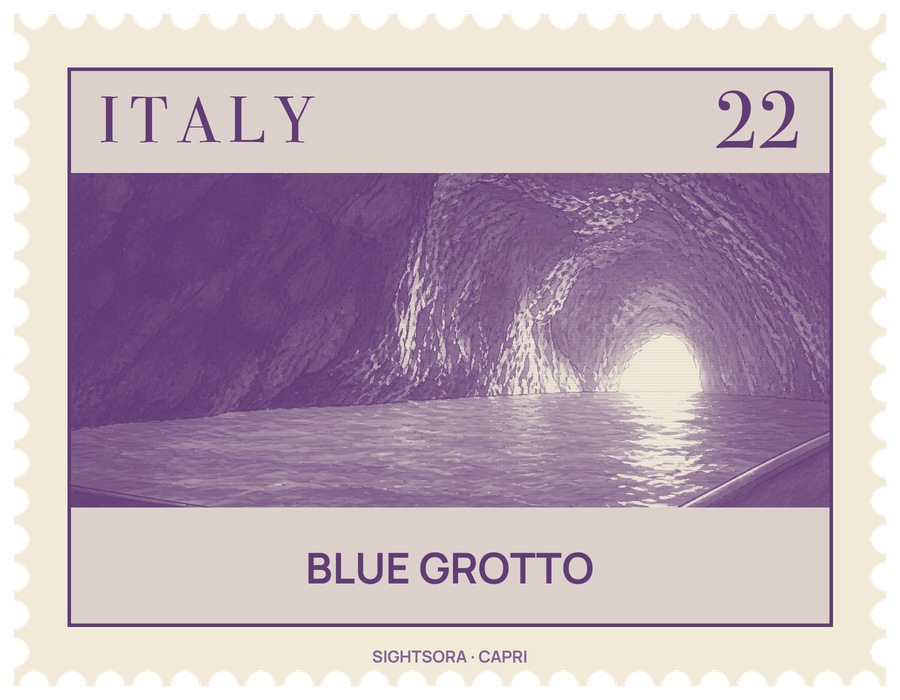
The visible way in is a low arch only 2 metres wide and roughly 1 metre high at low tide, so boats can go in only when the tide is low and the sea calm. Visitors lie flat in the bottom of a small rowboat holding four people while the oarsman pulls it through by a metal chain fixed to the rock.
Light reaches the cave in two ways: through the small arched entrance and through a much larger hole lower down, divided from it by a band of rock one to two metres tall. Less light comes through the lower gap, but because it is deeper and bigger it does most of the work, and the water filters out the red so that only blue passes into the cave. From the boat the source of the glow cannot be made out; the water simply seems brighter than the air. A hand dipped in the water appears to shine, and objects held underwater look silver, because tiny bubbles cling to them and bend the light.
In Roman times Emperor Tiberius, who moved his residence from the capital to Capri in 27 AD, used the grotto as a private swimming place and a marine temple, decorated with statues and resting places along its edge. Three statues of the sea gods Neptune and Triton were lifted from the cave floor in 1964 and are displayed at a museum in Anacapri, and seven statue bases came up in 2009. At the back of the main cave, three linked passages lead to the Sala dei Nomi, the "Room of Names", named after the signatures visitors have scratched on its walls over the centuries; other passages that were once taken for stairways to Tiberius' palace are natural and close off further in.
Local people once avoided the cave, then called Gradola after a nearby landing place, believing it was haunted by witches and monsters. Its wider fame dates from 1826, when the German writer August Kopisch and the painter Ernst Fries were rowed in by the fisherman Angelo Ferraro; Kopisch published his account of the visit in 1838. Mark Twain came in 1867 and wrote about it in The Innocents Abroad, and the blue of its water gave its name to the colour Capri.