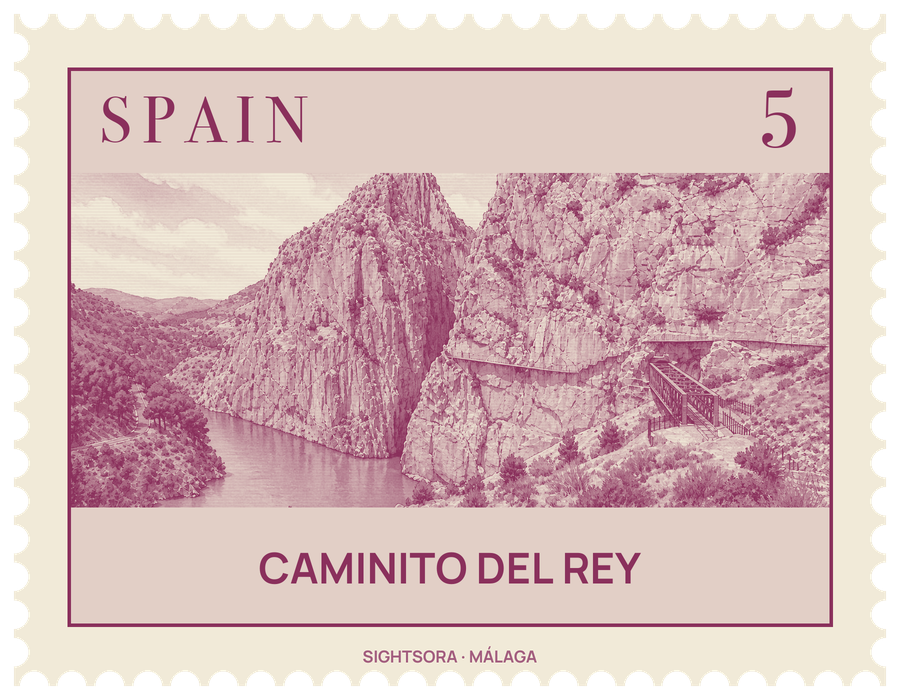
The path is about 1 metre wide and runs more than 100 metres above the river, and since its reopening on 29 March 2015 it gives a 2.9 km walk along the rock face. Its name, "the King's Little Path", is the local shortening of Camino del Rey.
It was never meant for tourists. Between 1901 and 1905 the path was built so that staff of the hydroelectric plants at Chorro Falls and Gaitanejo Falls could move between them, carry materials and inspect the water channel. King Alfonso XIII walked it in 1921 when he came to open the Conde del Guadalhorce dam, and the royal name stuck from then on.
The old concrete path sat on steel rails held up by supports driven into the cliff at roughly 45 degrees. Over the decades whole stretches of the concrete fell away, leaving open gaps spanned only by thin steel beams, with few handrails left. Two deaths, in 1999 and in 2000, led the local authorities to close both entrances, yet people kept trying the route and four more died in the four years before 2013.
In June 2011 Andalusia's regional government and Málaga's local authorities agreed to share the cost of restoring it, a project that also added car parking and a museum. Specialist alpinists laid the cornerstone in March 2014, and the work kept many of the original features, so walkers on the new path can still see the remains of the old one alongside.
The gorge itself, the Desfiladero de los Gaitanes, is made of limestone and dolomite formed from marine sediment when the area lay under water in the Mesozoic Era. The Guadalhorce River cut the gorge, karst weathering opened caves, grottos and jagged outcrops, and water swirling around boulders ground out large potholes in the rock.