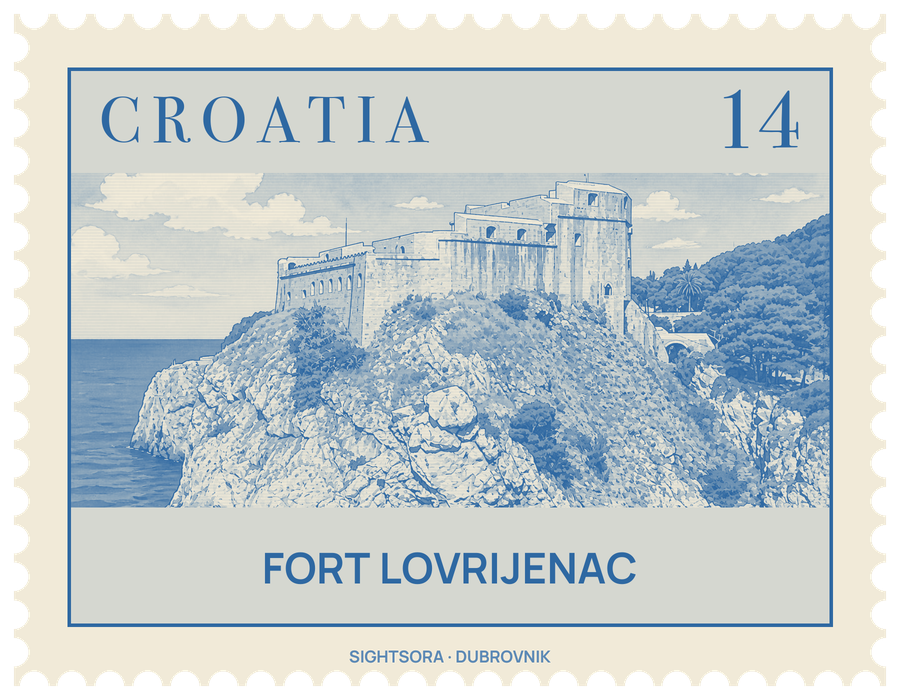
Its position earned it the nickname "Dubrovnik's Gibraltar", and today it serves as a theatre as well as a fortress.
The story told in the Chronicles of Ragusa is that early in the 11th century Venice planned to build its own fort on this very spot, which would have kept Dubrovnik under Venetian control. The citizens got there first and raised a fort in only three months, so that when Venetian ships arrived loaded with building materials they were sent back home. The fort was rebuilt again and again over the centuries; the first written mention of it comes from 1301, when the council voted on its commander.
The fortress is triangular and rises in three terraces. Its walls are strikingly uneven: on the sides that face outward they reach 12 metres in thickness, while the wall turned towards the city is only 60 centimetres. Two drawbridges lead in, and over the gate is carved the motto Non Bene Pro Toto Libertas Venditur Auro, meaning that freedom cannot be bought even with all the world's gold.
Using the fort as a stage came late in its history, but performances of Shakespeare's Hamlet within its walls have become the emblem of the Dubrovnik Summer Festival.