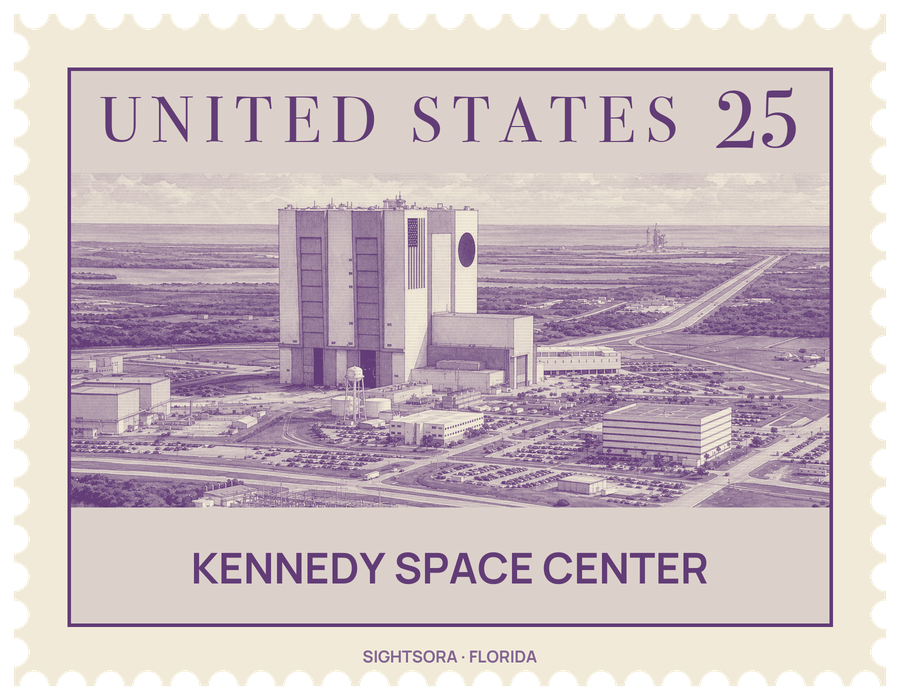
The center lies beside Cape Canaveral Space Force Station on the Atlantic, midway between Miami and Jacksonville and due east of Orlando, and about 700 buildings and facilities are spread across its grounds. Since 1968 it has been NASA's primary launch center.
The site was born of President John F. Kennedy's goal of landing astronauts on the Moon. The Saturn V rocket, 363 feet (111 m) tall, was too large for the existing pads at Cape Canaveral, so NASA bought swamp, beaches and citrus groves on neighbouring Merritt Island, absorbing small communities such as Shiloh and Allenhurst. The Launch Operations Center was activated on July 1, 1962, under its director Kurt H. Debus; Kennedy visited the construction site a week before his assassination, and days later President Lyndon B. Johnson gave it Kennedy's name. The first rocket launched from here was the uncrewed Apollo 4 in November 1967, and Apollo 11 left Pad A on July 16, 1969, carrying Neil Armstrong, Michael Collins and Buzz Aldrin to the first Moon landing.
Launch Complex 39 was built around the Saturn V. Rockets were stacked upright inside the Vehicle Assembly Building, a hangar big enough for four Saturn Vs, then carried by a crawler transporter along the crawlerway to Pads 39A and 39B on the ocean, about 3 miles (4.8 km) to the east. The same pads launched Skylab in 1973 and every Space Shuttle mission from 1981 to 2011, beginning with Columbia's first orbital flight on April 12, 1981, and the 2.9-mile Shuttle Landing Facility brought orbiters home. In November 2022 the Space Launch System lifted off from Complex 39B on Artemis I, and on April 1, 2026, from the same pad on Artemis II.
Kennedy is a working spaceport rather than a museum, and much of it is closed to the public; people coming on official business need a badge issued by the center. NASA describes it as a multi-user spaceport, and private companies such as SpaceX, Boeing and Lockheed Martin lease facilities here, including Launch Complex 39A itself. The center also prepares payloads for the International Space Station and works on growing food and using local resources on the Moon and other worlds. Beyond the launch areas, the center's land takes in coastal dunes, saltwater estuaries, marshes and pine flatwoods where more than 1,500 plant and animal species live, and it works with the neighbouring wildlife refuge and national seashore on the health of the Indian River Lagoon.
Visitors see the center through the Kennedy Space Center Visitor Complex, run by Delaware North since 1995, which has exhibits, artifacts and displays on the past and future of human and robotic spaceflight, and from which bus tours of the center depart. The countdown clock, built in 1969 and listed on the National Register of Historic Places, now stands at the complex entrance. A separate center devoted to Apollo and the Saturn V lies north of the Vehicle Assembly Building, and Lunar Module 9 was moved there in 2019. Central Florida's frequent electrical storms are worth bearing in mind when planning a day here.
Getting there
The center is on Merritt Island, about an hour's drive from the Orlando area. Bus tours of the center leave from the Kennedy Space Center Visitor Complex.