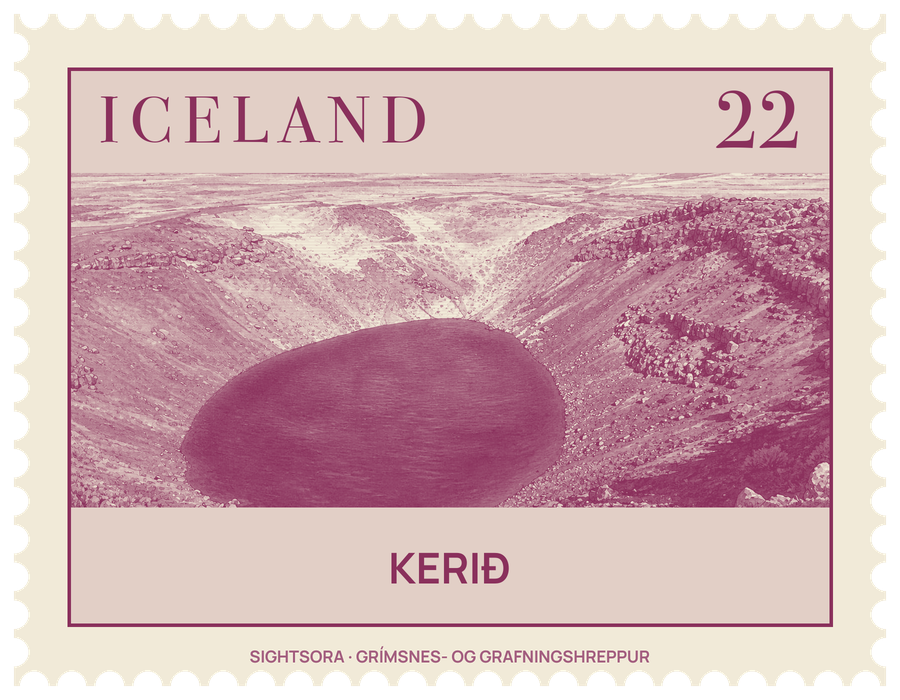
It sits along the Golden Circle and belongs to Iceland's Western Volcanic Zone, an area with several crater lakes, but of these it is the one whose caldera has kept the clearest shape. The crater is about 270 metres across, 170 metres wide and 55 metres deep.
It was formed by an explosive eruption several thousand years ago, the kind of crater geologists call a maar, and is the most northerly of four craters strung along an 800-metre fissure known as the Tjarnarhólar row. The walls are made of basalt and scoria. Most of them are steep and almost bare, but one side slopes more gently under a thick cover of moss, and that slope is an easy way down to the water.
The lake itself is shallow, between 6 and 14 metres depending on the groundwater, and minerals from the soil give it its colour. Researchers have counted 10 taxa of zooplankton living in it, most of them rotifers. The land around the crater is privately owned; the company Arctic Adventures bought it in 2023.