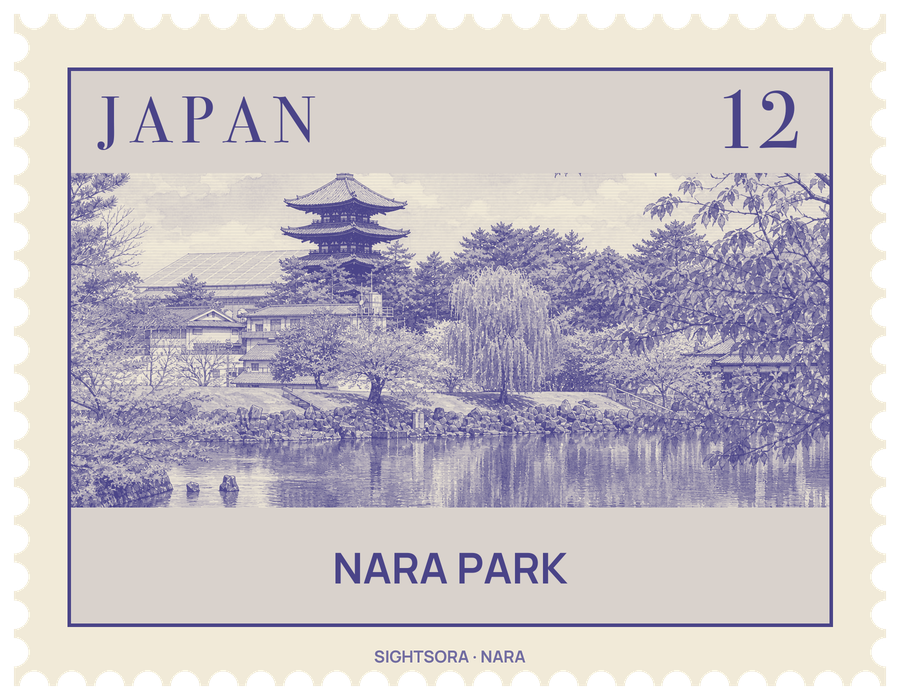
Set up in 1880 and run by Nara Prefecture, it covers about 502 hectares officially, and around 660 hectares once the temples and museum on its edges are counted: Kōfuku-ji, Tōdai-ji, the Nara National Museum and Kasuga Grand Shrine. The government lists the park as a place of scenic beauty.
Much of the old capital's heritage lies within that wider area. The Kasugayama Primeval Forest, Kasuga Grand Shrine, Kofuku-ji and Todai-ji together make up the World Heritage listing called the Historic Monuments of Ancient Nara, and 47 buildings on the grounds of these and other temples and shrines, among them Shōsōin, Shin-Yakushi-ji and Gangō-ji, are National Treasures or Important Cultural Properties. Pine, cherry, maple and plum trees grow across the park, which is also home to wild boar, raccoon dogs and flying squirrels.
The deer are bound up with Kasuga Grand Shrine. Local legend says that Takemikazuchi, one of the shrine's four gods, arrived on Mount Mikasa, another name for Mount Wakakusa, riding a white deer, and from then on the shrine and Kōfuku-ji treated the animals as sacred; killing one was punishable by death until 1637. After World War II their sacred status was replaced by protection as a natural monument. Genetic research published in January 2023 found that the park's deer form a separate population that split from other deer of the Kii Peninsula about 1,400 years ago, close to the founding of the shrine in 768.
Visitors can buy shika-senbei, deer crackers, to feed the animals. The deer are wild, though, and signs in English, Chinese and Japanese warn visitors not to tease them while feeding; most of the people hurt by deer have been tourists feeding them.
Getting there
The nearest stations are Kintetsu Nara Station and JR Nara Station. Kintetsu Nara is reached on the Kintetsu Line from Osaka-Namba Station.