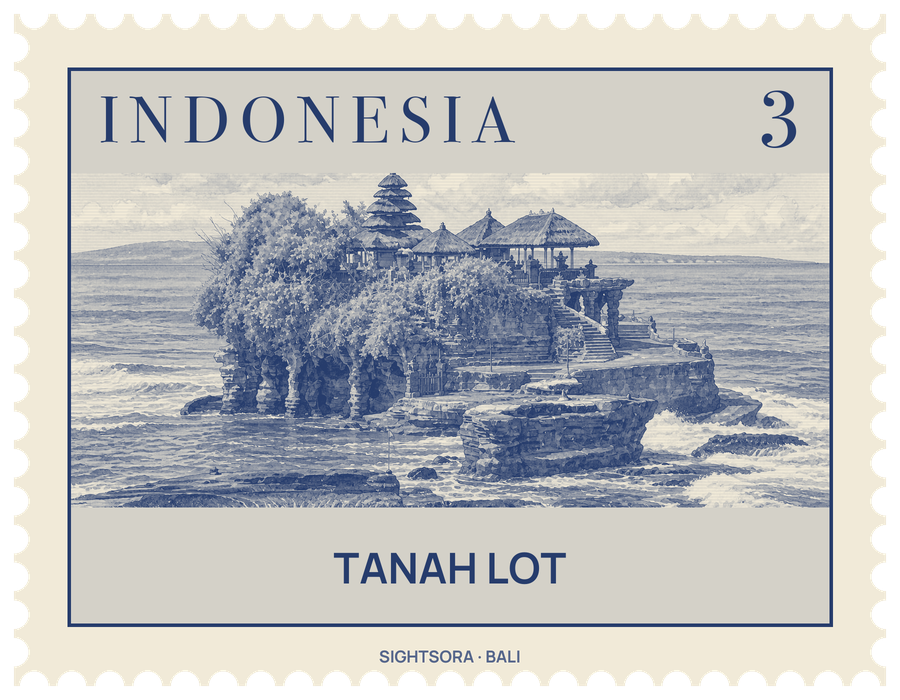
Its name means "land in the sea" in Balinese, and the rock can be reached on foot only when the tide is low. Of the seven principal sea temples that line Bali's southwestern coast, this is one, and its chief deity is the sea god, Dewa Baruna, also called Bhatara Segara.
Tradition credits the temple to Dang Hyang Nirartha, a 16th-century religious figure who is said to have stopped here for a night during his long travels through Bali, Lombok and Sumbawa; he is worshipped at the temple as well. In the 1980s the rock face began to crumble and the temple grounds became unsafe, and a conservation programme paid for by a Japanese government loan stabilised it. More than a third of what visitors see as rock today is in fact artificial rock added during that work.