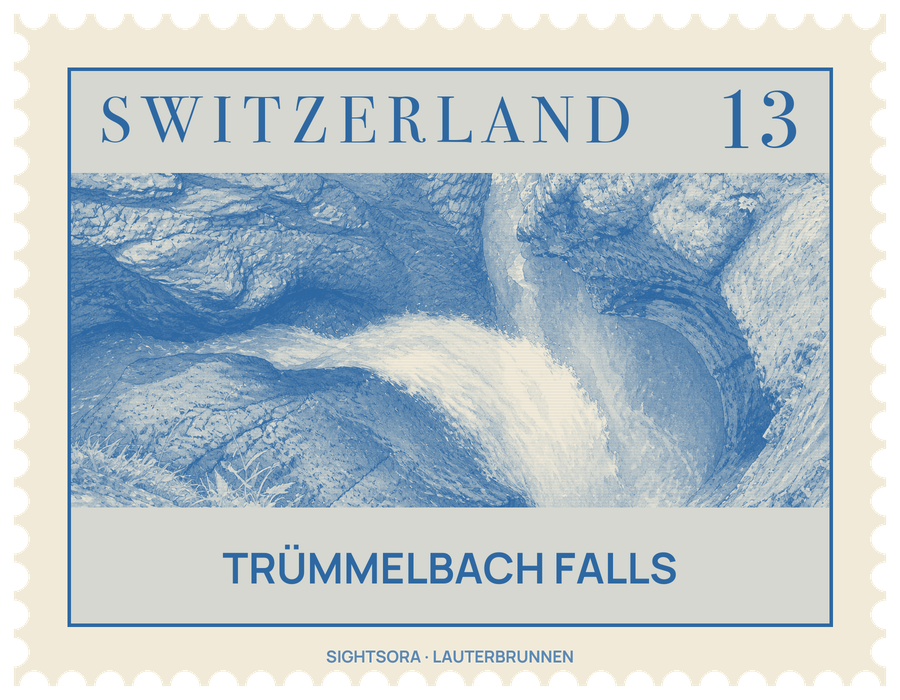
The Trümmelbach is the stream that carries away the meltwater from the vast glacier walls of the Eiger (3970 m), Mönch (4099 m) and Jungfrau (4158 m) on its own. Its catchment covers about 24 square kilometres, up to half of it under snow and ice, and as much as 20,000 litres a second can pour through the falls. Unlike most of the waterfalls in the valley, the water does not drop freely over a cliff face; it churns through a gorge inside the rock, falling about 140 metres on the way. The falls are listed in the national federal inventory of landscapes and natural monuments, and the area lies within the Jungfrau-Aletsch region declared a natural World Heritage Site by UNESCO.
Walkways and bridges first opened the falls to visitors in 1877. Today a tunnel lift carries visitors up into the mountain, and a route about 600 metres long of tunnels, galleries and stairways leads past a series of viewpoints onto the falls. How the falls look depends on the flow, which swings widely through the year: at its height the stream carries about 20 cubic metres a second and runs cloudy with the rock and sediment it drags down, and as the flow drops the water clears.