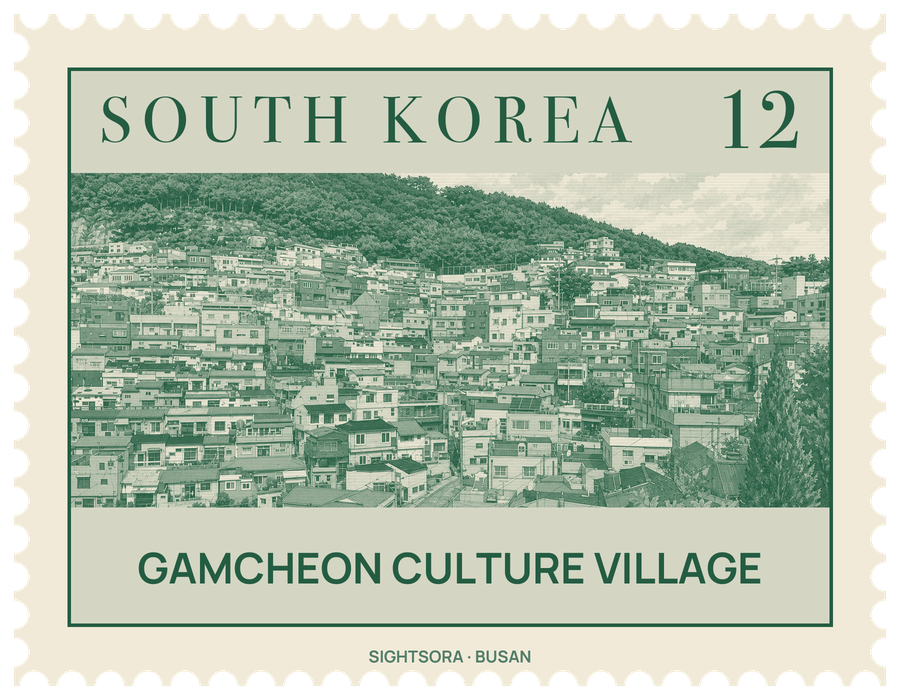
The stacked colours have earned it two nicknames, the "Machu Picchu of Busan" and "Korea's Santorini". Scattered through the lanes are dozens of art installations: bird sculptures, playful pieces in the manner of Murakami, scenes taken from The Little Prince, and shoals of painted fish that point the way along the alleys.
The village began in the 1920s and 1930s, when the city moved working-class families to a spot out of sight of the port but close enough to supply its labour. Around 800 families arrived in 1955, during the recovery after the war, and with them grew a community of Taegeukdo, an ascetic religious movement that branched from Jeungsanism. Wooden houses gave way to two-storey homes in the late eighties and early nineties as families grew, but poverty and poor living conditions persisted.
The change came in 2009, when the Ministry of Culture, Sports and Tourism launched a public art project that brought in art students, professional artists and residents to repair, repaint and decorate the village. Infrastructure was improved, and through the Empty House Residency Preservation Project abandoned homes were turned into galleries, museums and shops. Visitor numbers climbed to about 1.4 million in 2015. Not every resident welcomed the crowds: some took part in the project, while others moved away, and around 300 houses stood empty that year. People still live in the painted houses along the lanes.