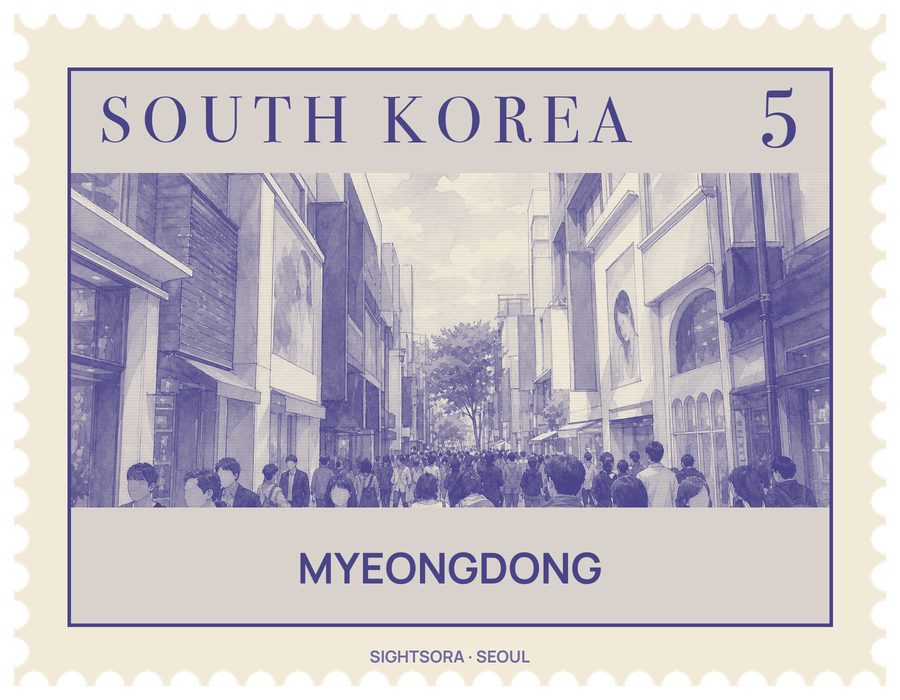
Cars are kept out of the main street and most side alleys except when deliveries arrive early and late in the day, so visitors wander among department stores, shopping centres, international brand outlets and shops selling Korean cosmetics without dodging traffic. Mid-to-high prices are the norm, and the district draws large numbers of young people and tourists for fashion and for simply looking around.
In the Joseon period the area, then called Myŏngnyebang or Chonghyŏn, lay in the southern part of the capital Hanseong. In 1914 the colonial authorities renamed it Meiji-cho after the Japanese emperor, and commerce spread into it from neighbouring Chungmuro; it took the name Myeongdong in 1946, after independence. Banks and finance houses moved in after the Korean War, and by the 1970s its boutiques had made it a meeting place for the young and fashionable.
Myeongdong Cathedral, built in 1898, is the landmark of the district and was a frequent gathering point for political demonstrations in the 1980s and 1990s. The Myeongdong Theater is the other historic building of note, and performances at the Myeongdong Nanta Theater are popular. Other landmarks include UNESCO Hall, the YWCA headquarters and the Chinese Embassy. Since 1982 the Myeongdong Festival has brought parades, music and dance performances and fashion shows to the streets.
Getting there
Myeongdong Station (#424) on Line 4 of the Seoul Subway serves the southern part of the district, while the northern side is closer to Euljiro 1-ga Station (#202) on Line 2.