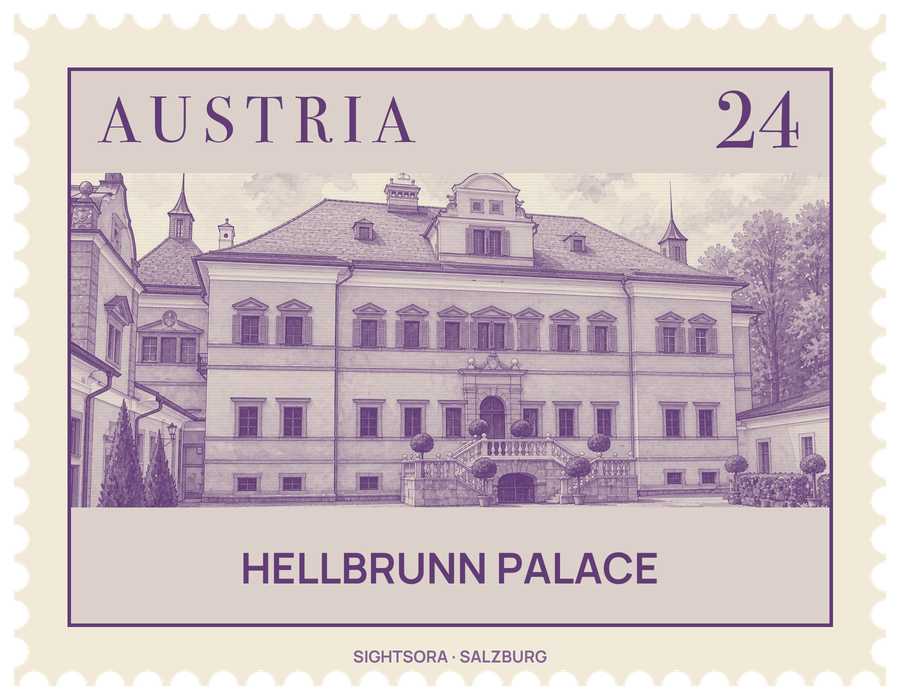
The ruling prince-archbishop, Markus Sittikus von Hohenems, began it in 1613 as a place to entertain visitors just outside the city, and named it after the clear spring that fed it. He used it only by day in summer and returned to Salzburg in the evening, which is why the palace has no bedroom.
The water games were the archbishop's own idea, a set of practical jokes to play on his guests, and they are seen on a guided tour. At a stone dining table, water shoots up through the stone seats when the mechanism is switched on, and concealed fountains catch visitors by surprise along the way. Other stops include a grotto, a crown that a jet of water lifts and drops to show how power rises and falls, and a mechanical theatre from 1750, driven by water and playing music, with some 200 figures at work in different trades. Each scene has one place that never gets wet: the archbishop's seat, which the guide now takes.
The palace stands in a large park laid out in the mannerist style, which also serves as a green retreat for Salzburg, with a stone theatre and a zoo next door. On the hill above is the Monatschlössl, the little month-palace; the story goes that a guest told Sittikus that the view from a palace window would be better with a building on that hill, and when he came back a month later Sittikus had built it.