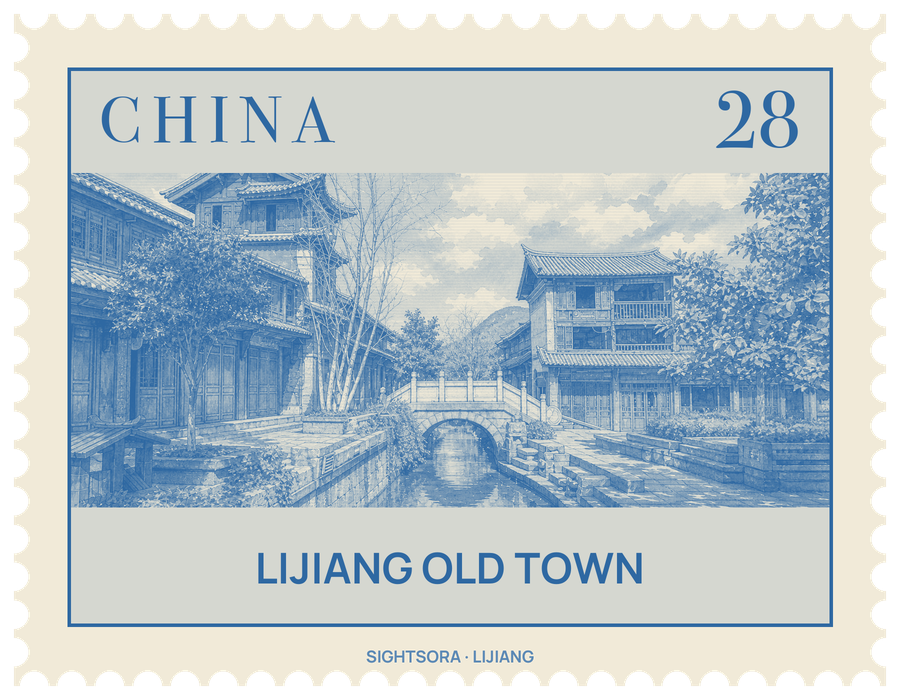
Its history runs back more than 1,000 years, and merchants on the Old Tea Horse Caravan Trail once converged on it. On 4 December 1997 it was placed on the UNESCO World Heritage List together with Baisha and Shuhe, two villages to the north.
The waterways are what the town is best known for. A falling water table and the arrival of mass tourism once weakened the system, and changes to the water supply made by the government brought it back into working order. About two years before the UNESCO listing a severe earthquake struck the area, and many of the old buildings were rebuilt following guidance from the UNESCO World Heritage Centre.
The houses show how two cultures met here. The Nakhi took their timber and mud-brick building style from Han Chinese traders who came from Nanjing during the Ming dynasty, and local carpenters still put up elaborate timber frames without any drawings. Windows are often carved with flowers and birds, the work now done by Bai craftsmen in a Han manner that pictures the plants and animals of each season, and carved panels are sold to visitors.
Music and dance carry the same mix. The Nakhi learned classical Chinese music from those Ming dynasty visitors and still play it, long after it disappeared elsewhere in China; Dongjing Music, a form of Han ritual music, is performed in Dayan as well as in Shuhe and Baisha. On street corners, women in Nakhi dress lead circle dances joined by neighbours of every age, and Tibetan circle dancing appears from time to time as well.
Tourism has left the old streets looking much as they did, but most of the people who lived in them have gone. Around 90 to 95% of residents rented their homes out and moved away, and more than nine in ten of the residential plots are now guesthouses, shops and restaurants.