


Cover: Kiyomizu-dera. The banner above is an illustration, not a photograph. It was drawn to suggest the place, and the details may differ from the real thing. Drawn from a photo on Wikimedia Commons (opens in a new tab) by Martin Falbisoner. Photo licence: CC BY-SA 4.0 (opens in a new tab); the drawing is shared under the same licence.
Sights in Kyoto
- UNESCO
- UNESCO
- UNESCO
- UNESCO
- UNESCO


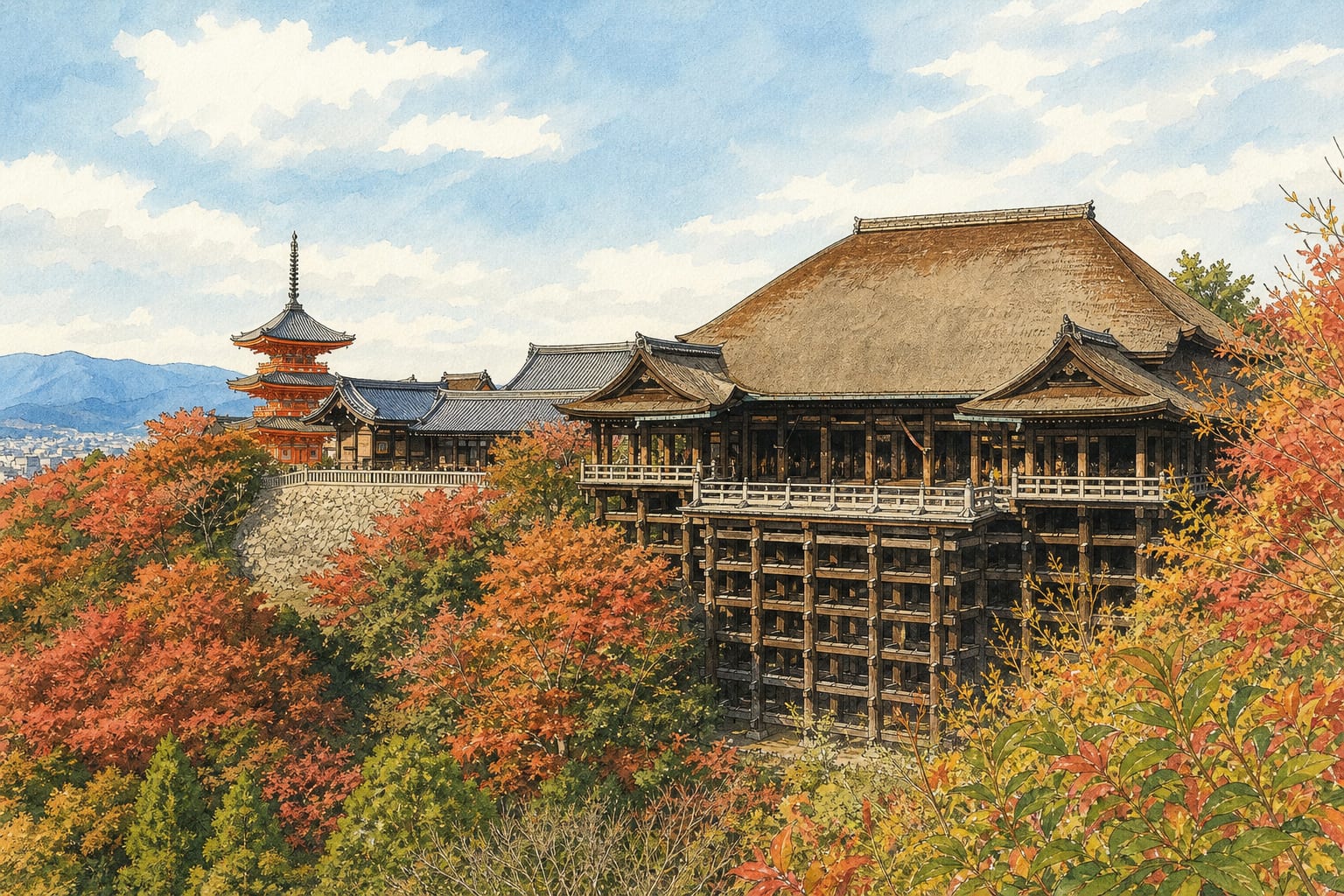
- Kiyomizu-dera
- Kiyomizu-dera spreads over the slopes of Mount Otowa in the Higashiyama hills of eastern Kyoto, and its main hall stands on a great wooden veranda held up on tall pillars over the hillside, looking out across the city.
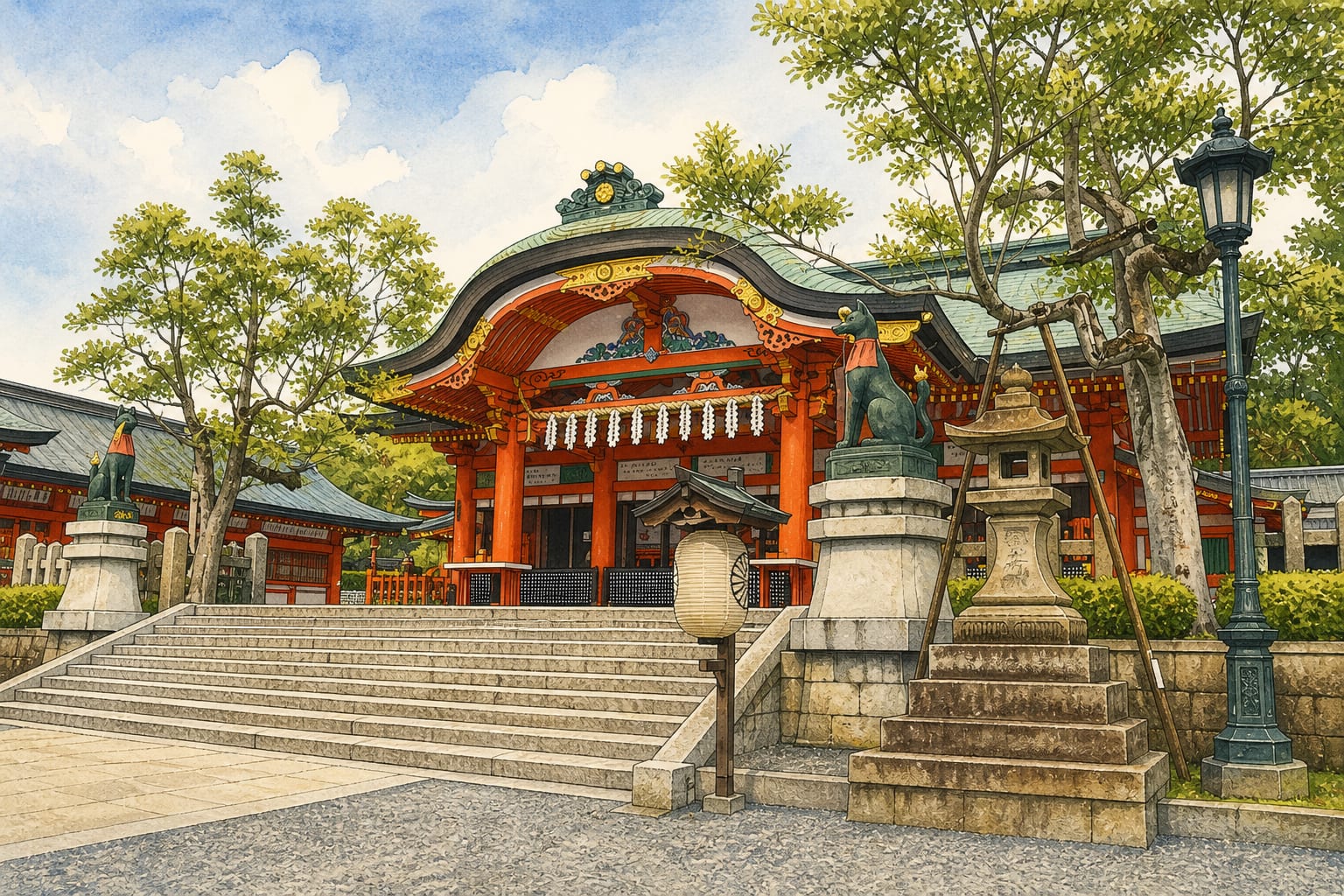
- Fushimi Inari Taisha
- Fushimi Inari-taisha in Kyoto's Fushimi-ku is the head shrine of Inari, the kami of rice and farming whom merchants also honour as the patron of business, and it is known above all for its paths lined with thousands of torii gates climbing Mount Inari.
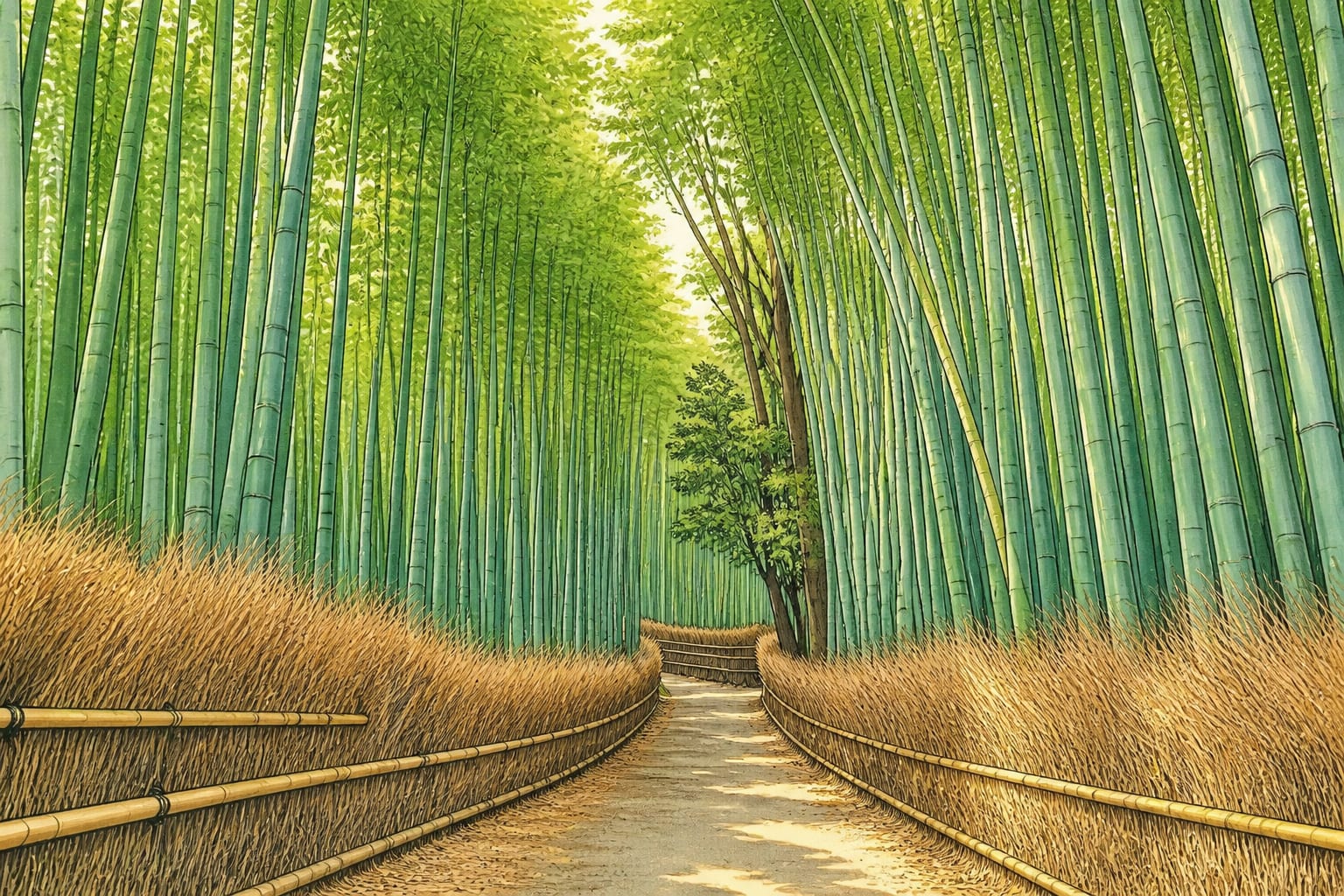
- Arashiyama Bamboo Grove
- In Sagano, on the western outskirts of Kyoto, paths run between tall stands of mōsō bamboo so dense that the light reaches the ground only in moving flecks.
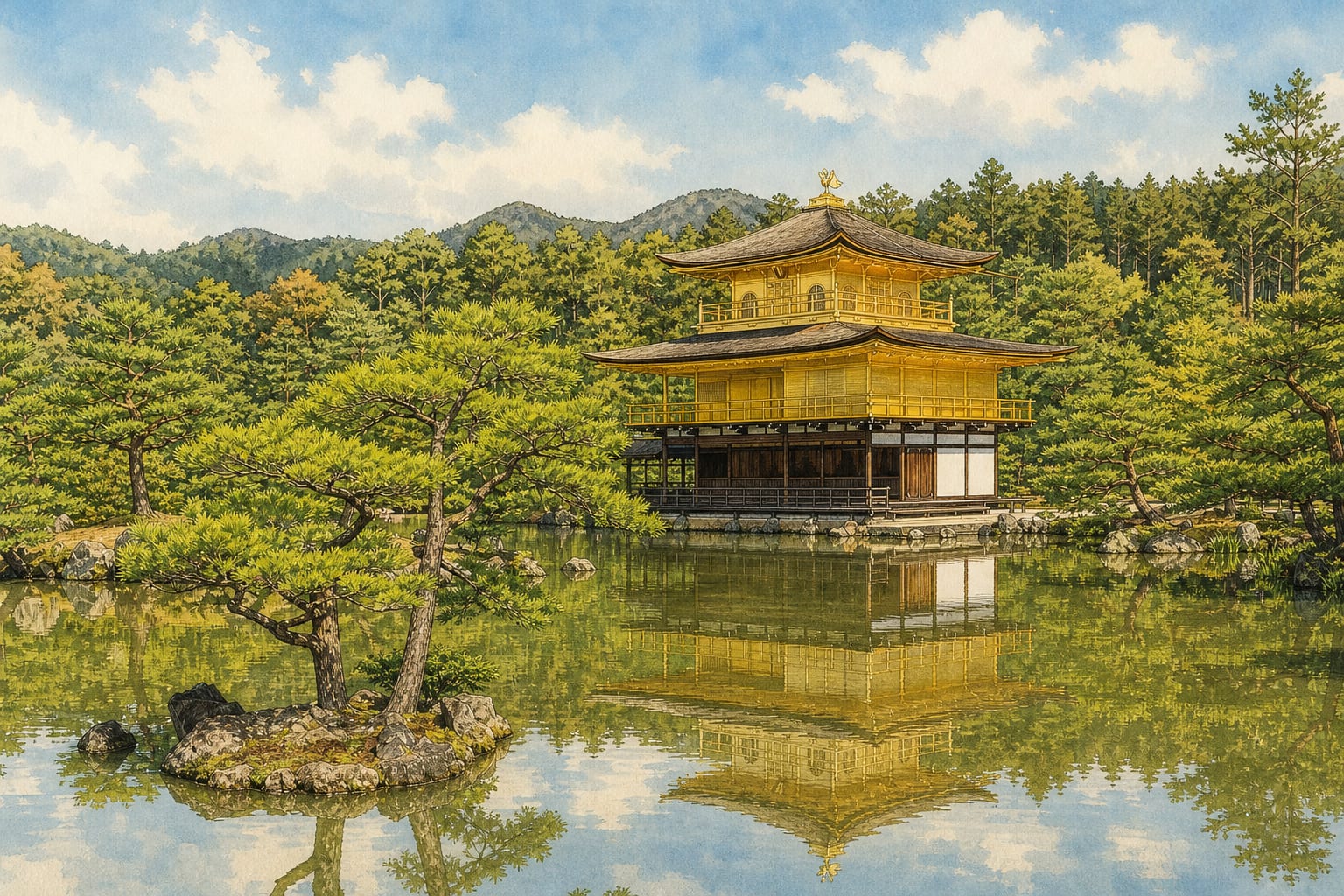
- Kinkaku-ji
- Kinkaku-ji, the Temple of the Golden Pavilion, is a Zen temple in Kyoto whose three-storey pavilion, its upper two floors sheathed in gold leaf, stands at the edge of a pond that mirrors it.
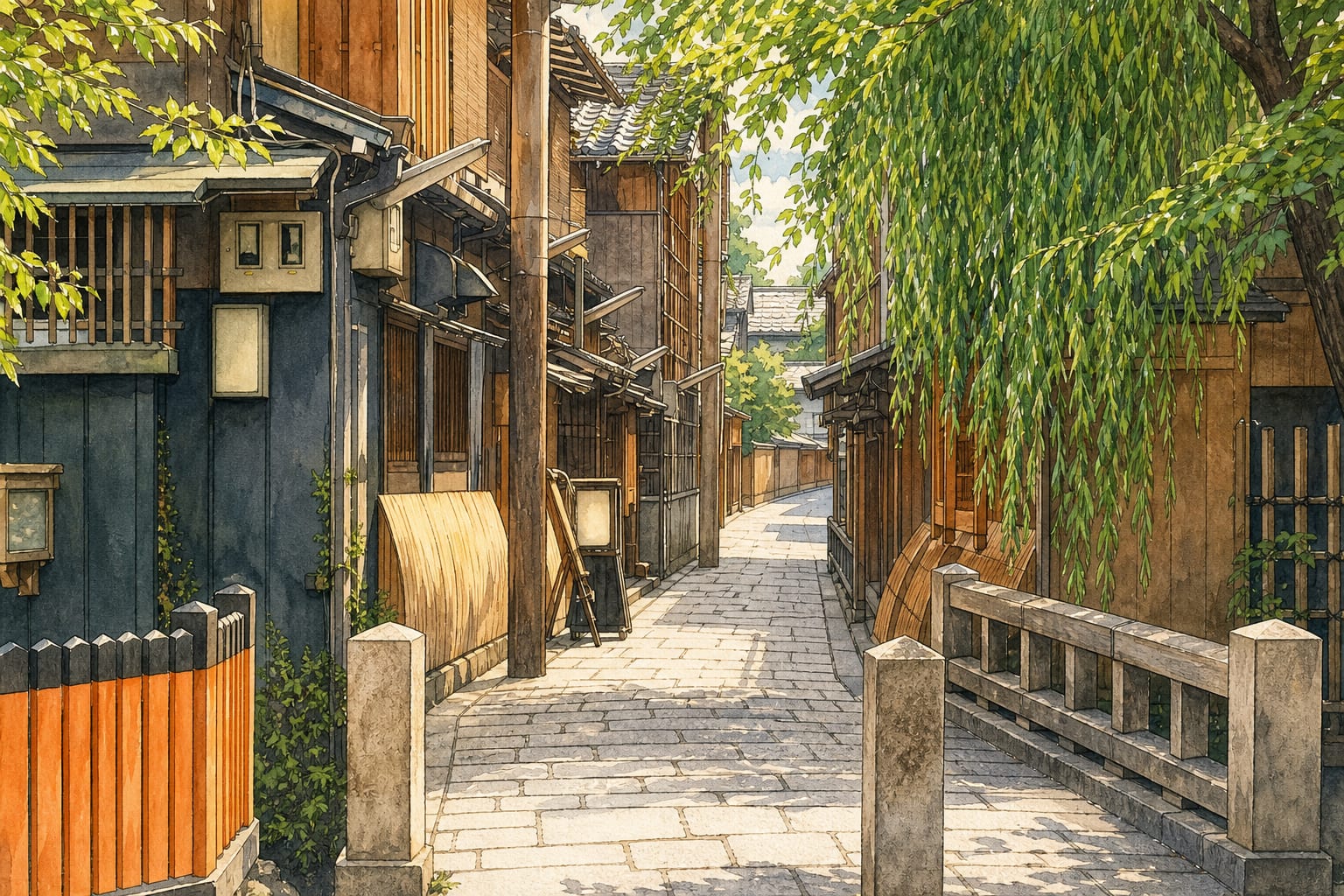
- Gion
- Gion is the old geisha quarter of Kyoto, spread out in Higashiyama-ku in front of Yasaka Shrine, which locals also call Gion Shrine.
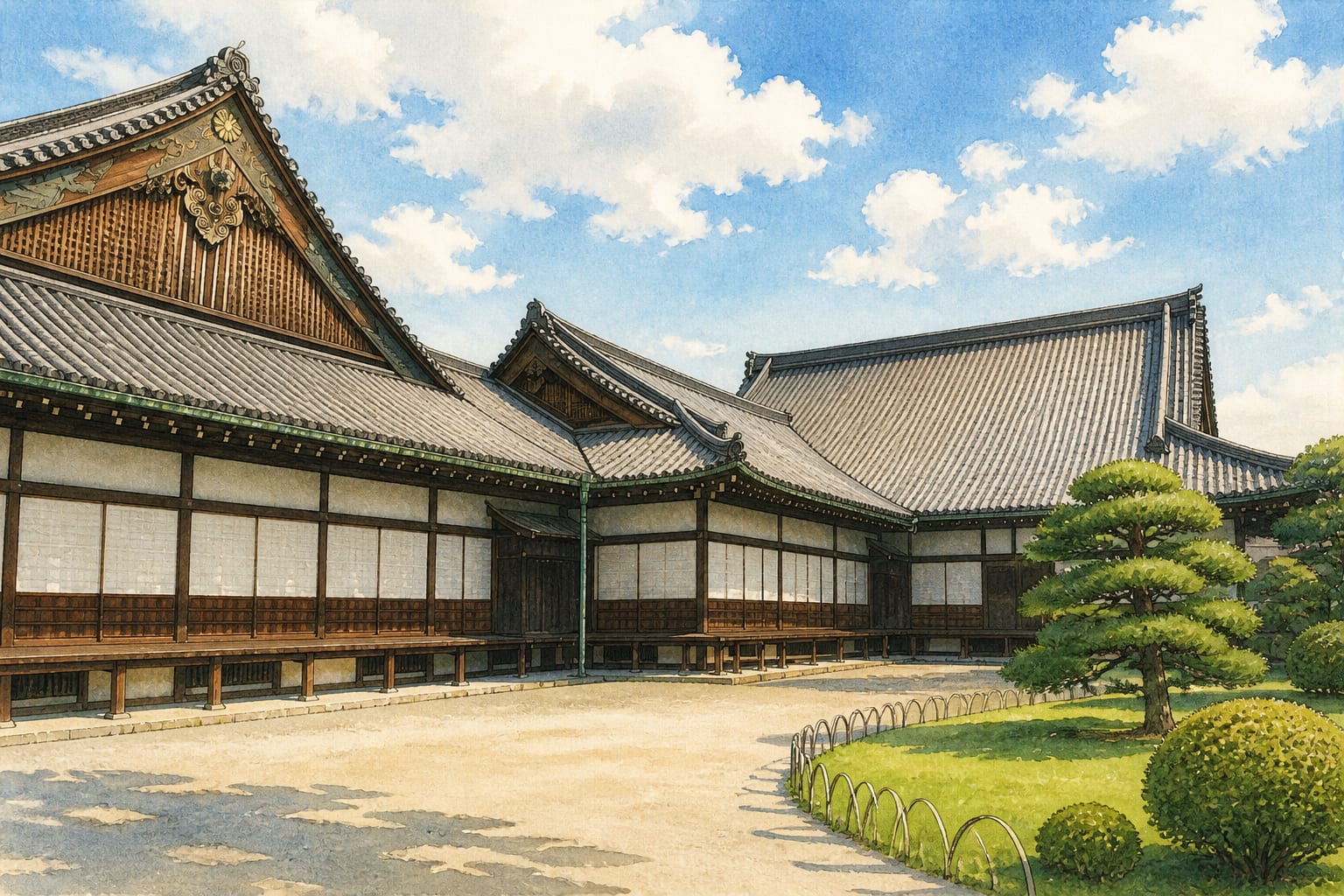
- Nijo Castle
- Nijō Castle is a flatland castle in the middle of Kyoto, ringed by two concentric rings of walls and wide moats, where the Tokugawa shōguns stayed in Kyoto while governing the country from Edo.
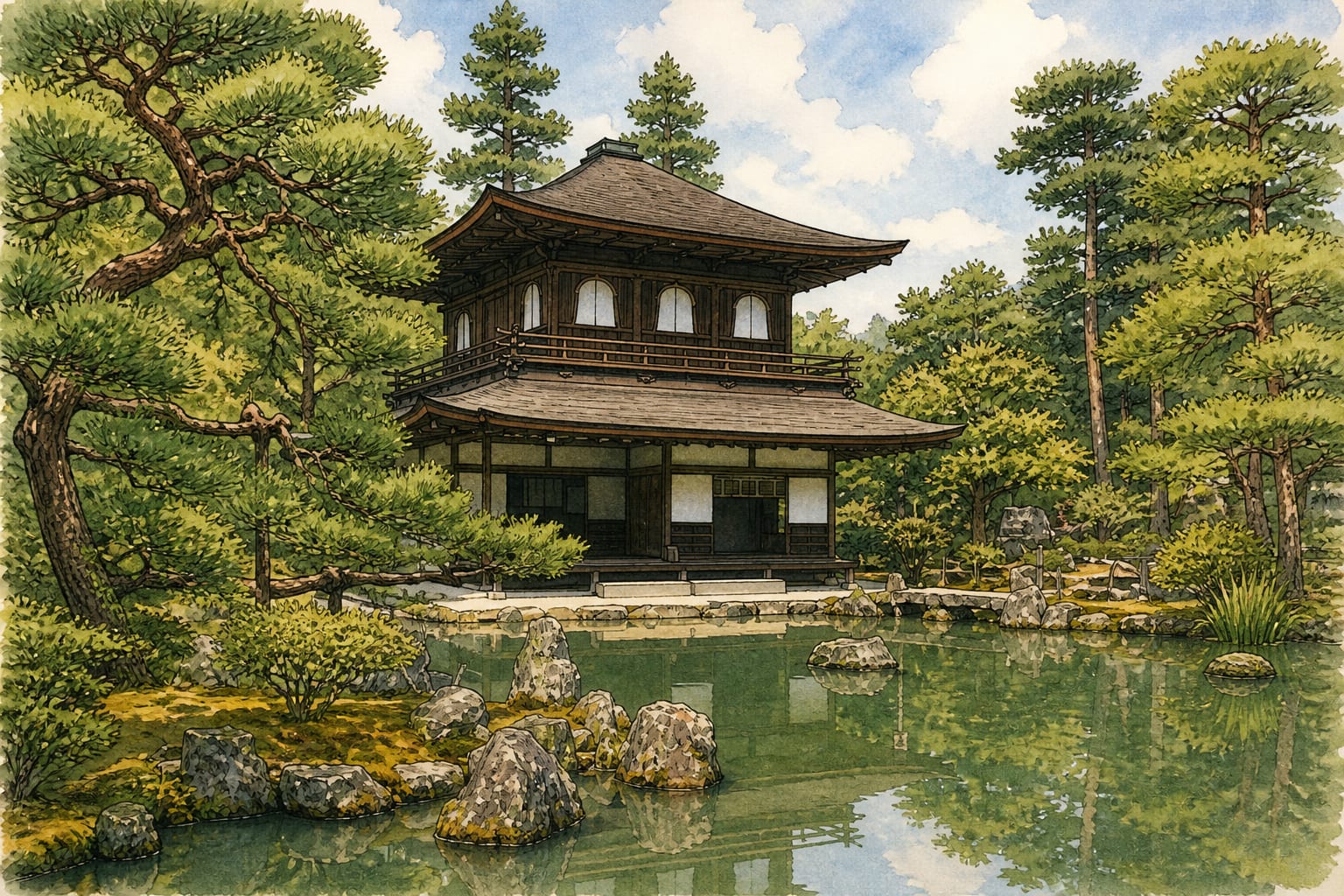
- Ginkaku-ji
- Ginkaku-ji, the "Temple of the Silver Pavilion", is a Zen temple at the foot of the eastern hills in Kyoto's Sakyo ward, built around a two-storey hall that was never covered in silver.
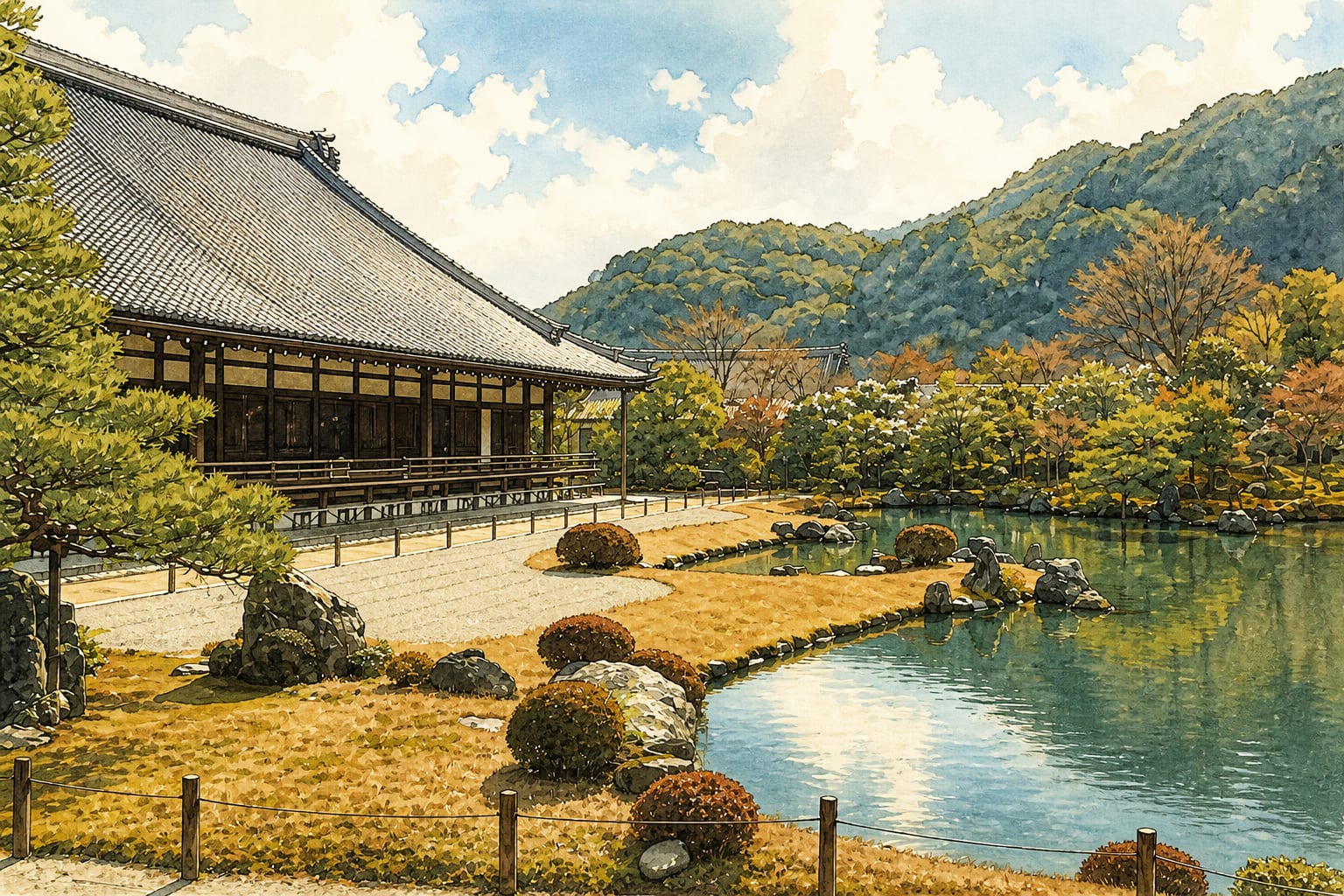
- Tenryu-ji
- Tenryū-ji, in Kyoto's Ukyō Ward, leads its own branch of Rinzai Zen as head temple, and its best-known sight is a garden laid out around Sōgen Pond by its first chief priest, Musō Soseki.