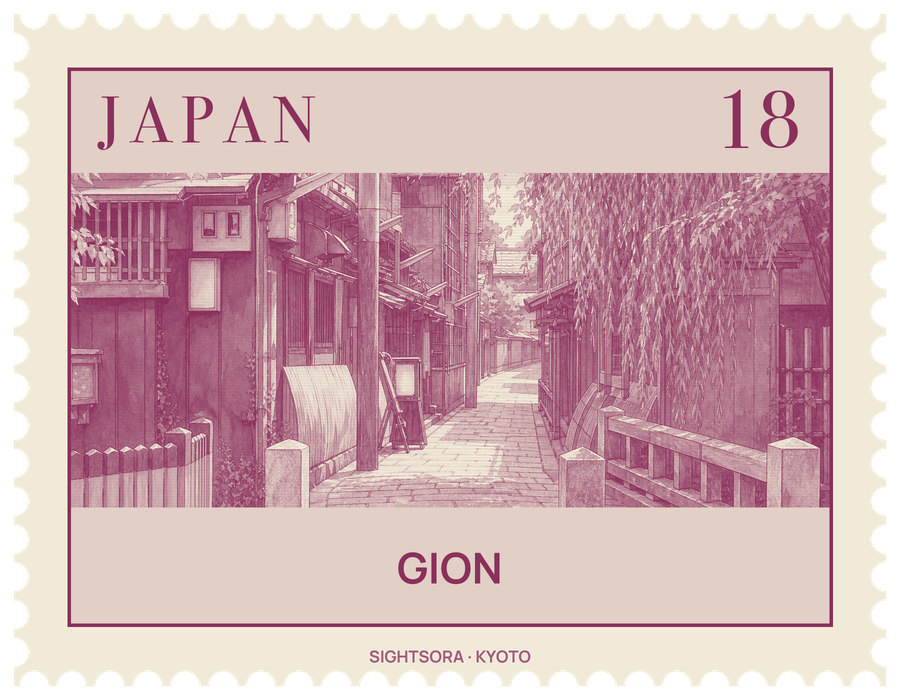
It began in the Sengoku period as an entertainment district serving the travellers and pilgrims who came to the shrine, and grew into a quarter known across Japan for its geisha. In Kyoto they call themselves geiko rather than geisha; the local word stresses a woman of art, while geisha means a person of the arts. The name Gion itself goes back, through Chinese, to the Buddhist term Jetavana.
The district contains two hanamachi, or geisha districts, which separated in 1881. Gion Kobu is the larger, covering most of the area including Hanamikoji street, while Gion Higashi occupies the northeast corner around its rehearsal hall. Part of Gion is a national historical preservation district, and since 1986 the City of Kyoto has buried overhead cables and taken down electric poles along streets such as Nene no Michi and Hanamikoji to restore their historic look.
Many old wooden townhouses, called machiya, survive here, and some of them work as ochaya, teahouses where geisha host parties with song, traditional dance, drinking games and conversation. Geisha and maiko are seen walking between parties, lessons and other appointments.
Two parts of Gion keep the traditional streetscape. Hanami Lane, or Hanami-kōji, runs south from Shijō Street, starting by the Ichiriki Tei and ending at the temple of Kennin-ji. Along the Shirakawa River, just before it flows into the Kamo, traditional establishments line the south bank, some reached by small bridges; the north bank, cleared of buildings in World War II as a fire break, is a pedestrian path under cherry trees that are lit up on spring evenings. Shijō Street itself is busy and modern, full of restaurants, bars, clubs and shops for tourists, and the area is a nightlife spot for locals too.
The geisha and maiko of both districts stage annual public dances, a tradition that goes back to the Kyoto exhibition of 1872. Gion Kobu performs the Miyako Odori, the Dances of the Old Capital, in April during the cherry blossom season, and audiences can sit on floor tatami or book a reserved seat that comes with a short tea ceremony first. Gion Higashi holds the smaller Gion Odori in November, when the autumn leaves turn. Some geisha and maiko also dance for visitors at Gion Corner.