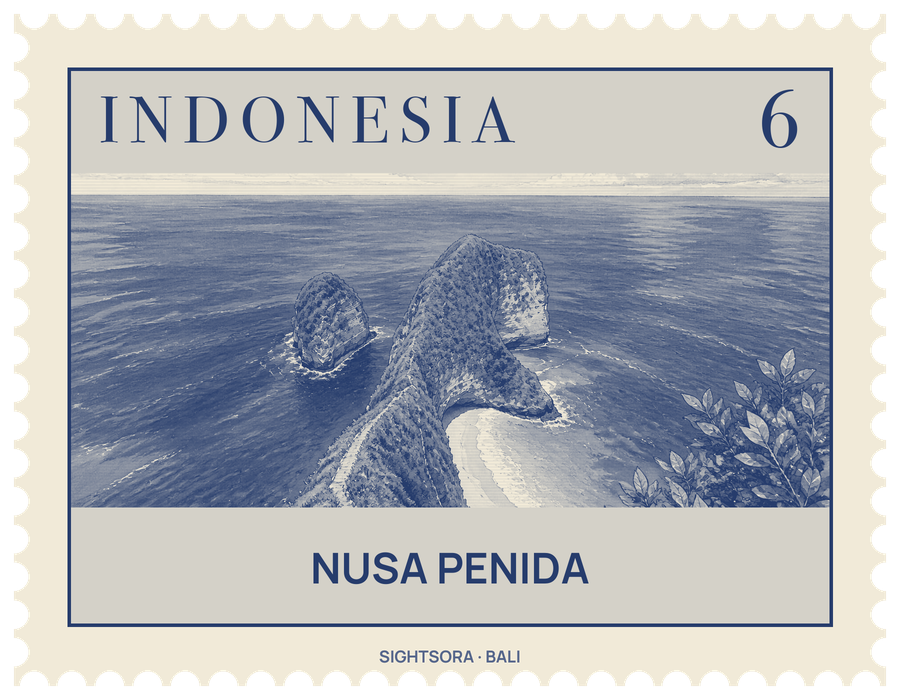
Its name means "island of priests" in Balinese. Together with Nusa Lembongan and Nusa Ceningan and eleven smaller islets it forms a single district, and its people speak their own dialect of Balinese, Basa Nosa, which mainland Balinese speakers cannot follow.
The island's written history begins with the Belanjong pillar of 914 AD, whose inscription records an expedition by Sri Kesari Warmadewa, the first Balinese king, to conquer it. Nusa Penida held off many Balinese campaigns until a Gelgel Dynasty expedition conquered it in the later 17th century, killing its last king, Dalem Bungkut, after which it belonged to Klungkung. The Klungkung kingdom used it as a place of exile for criminals, political opponents and practitioners of black magic, and a Dutch map of 1900 labels it Bandit Island.
Nusa Penida, Lembongan and Ceningan together form a bird sanctuary created through traditional village regulations, awig-awig, which all the villages agreed to in 2006. The Friends of the National Parks Foundation has released rehabilitated birds here, most notably the critically endangered Bali starling: 64 cage-bred birds were set free over two years, and by 2009 their number had passed 100.
Underwater, the coasts are known for diving, with Manta Point (Batu Lumbung), Penida Bay, Malibu Point, Toya Pakeh, Batu Abah and Batu Meling among its sites. A 2009 survey counted about 1,419 hectares of coral sites. The currents through the straits are strong and shift with the monsoons.