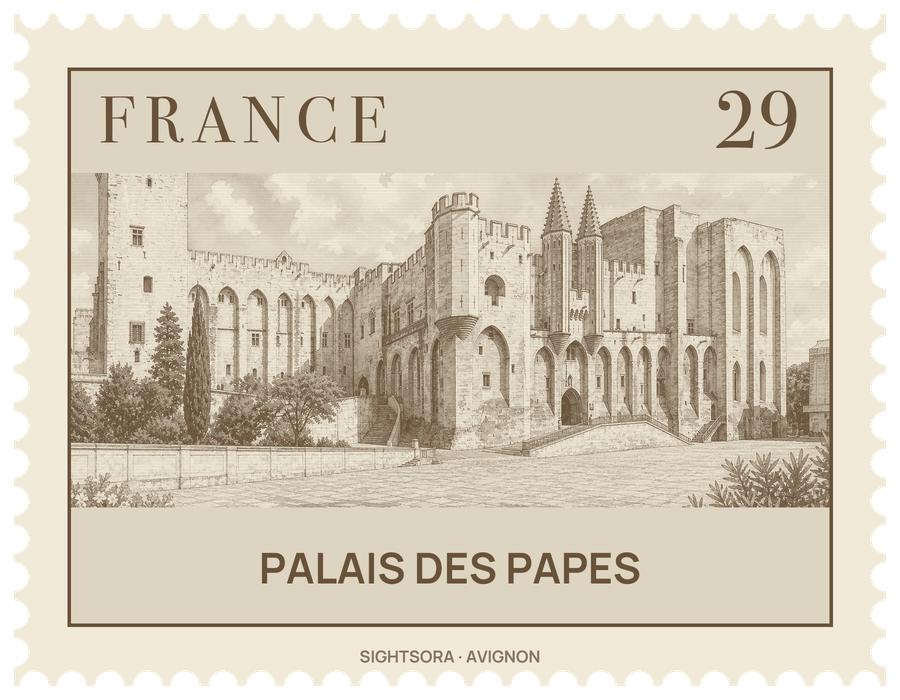
Behind its fortified walls and towers lie some 15,000 square metres of floor space. It has been a UNESCO World Heritage Site since 1995, and six conclaves met here, electing popes from Benedict XII in 1334 to Benedict XIII in 1394.
The building is really two palaces joined together. The austere Benedict XII pulled down the old bishops' palace and built the Palais Vieux around a cloister, its four wings guarded by high towers. His successor Clement VI, far more lavish, had Jean de Louvres add the Palais Neuf, with a new tower and a Grand Chapel 52 metres long; Innocent VI and Urban V finished the main courtyard. The popes went back to Rome in 1377, but during the schism that followed the antipopes Clement VII and Benedict XIII lived here, and the palace stayed under papal legates for centuries more.
Little of the original furnishing survived. Revolutionaries sacked the palace, and it then served as barracks and a prison, its woodwork stripped out and many frescoes covered and lost. It became a national museum in 1906 and restoration has gone on ever since. What remains of the painted decoration is the reason to come: the Chambre du Cerf, Clement VI's study, is covered with 14th-century hunting and courtly scenes, and in the Saint-Martial chapel and the Saint-Jean chapel below it Matteo Giovannetti painted the lives of their saints in 1344–1345 and 1347–1348, setting the stories inside illusionistic painted architecture.
Other rooms show how the papal court worked. In the Grand Tinel, a reception hall, the cardinals were walled in during conclaves, with only a small opening left to pass food through. The Grande Audience was one of the palace's main courts, where papal justice was delivered beneath a painted scene of the final judgement, and together with the Grande Chapelle, the setting for the court's major ceremonies, it formed the heart of papal power in Avignon. The courtyard is a main stage of the Festival d'Avignon each July, a festival that grew out of an exhibition René Char organised in the Grand Chapel in 1947.
A visit to the palace and the papal gardens takes around two hours. A web app usable on any smartphone follows the room numbers and offers its content in six languages, English among them.